
Explore our services
AI solutions
What we do
Services
Experts in
How we work


SaaS outsourcing means bringing in an external team to build, maintain, or extend your product. Set up well, it gives you four things: faster hiring, access to specialist skills, flexible team capacity that scales up or down with your roadmap, and tighter control over development spend.
However, these benefits don't come automatically. Success depends on choosing a team with the right expertise for your product, defining clear responsibilities, setting realistic expectations, and making timely decisions throughout the project.
We’ve built 25+ SaaS products, and this guide draws on that experience. For each benefit, you’ll see how it plays out in practice, what conditions it needs, and which metrics show it’s working. That way, you can check real results first and then decide whether to scale the engagement.
SaaS development outsourcing benefits matter most when they address a constraint your business already faces. A founder preparing an MVP may need a team to start sooner. A CTO managing an established platform may need specialist support without diverting engineers from the core roadmap.
The table connects six potential benefits with the conditions and indicators that make them useful.
| Business problem | Potential benefit | What must be true | Success indicator |
| Recruiting delays the first release | Faster team setup and delivery | Suitable specialists are available; release priorities are clear | Time to team readiness and first usable release |
| Critical SaaS skills are missing | Access to relevant expertise | Proposed specialists have solved comparable problems | Fewer revisions caused by missed technical requirements |
| Workload changes between product stages | Flexible team capacity | Staffing changes and knowledge transfer are planned | Time to fill a skill gap; reduced unused capacity |
| Development spending is difficult to manage | Better total cost control | Estimates include coordination, testing, and transition work | Actual spending against an agreed scope |
| Internal leaders spend too much time coordinating delivery | More time for product and business priorities | Management responsibilities are explicitly assigned | Internal hours spent on delivery coordination |
| Releases and support lack continuity | More reliable operation after launch | Quality, support, and documentation have named owners | Fewer production defects and shorter incident recovery time |
Start with the row that matches your most pressing problem, and track its indicator from the first week of the engagement. Keep in mind that the benefits depend on each other. A faster start pays off when release priorities are clear enough for the team to ship something usable.Now, let’s look at each benefit in detail, starting with how outsourcing shortens the time it takes to build a working team.
An unfilled engineering role can delay more than development. It can postpone customer feedback, a pilot commitment, or the evidence needed for a funding decision. Meanwhile, salaries and other operating expenses continue to consume the runway.
One of the benefits of outsourcing SaaS development is reducing the gap between an approved product priority and a team’s ability to act. That creates value when hiring or missing capacity is the actual bottleneck.
Building an internal team involves recruiting, interviews, offers, notice periods, and onboarding. When you hire each specialist individually, the problem is that different roles may become available at different times. So, you might hire a backend engineer, but they cannot start until the business analyst and designer are hired and done with their job.
An external partner can provide a full team of specialists you need. Plus, they usually already have an established delivery process. At Clockwise, we can provide a team that covers a full cycle: product discovery, architecture, design, engineering, QA, and launch. This reduces the need for clients to assemble and coordinate each function separately.
Availability still needs confirmation. Before planning around an earlier start, establish which specialists will join, their allocation, and the access they need. Repository permissions, stakeholder availability, and integration documentation can delay an external team too. The advantages of outsourcing development for a SaaS product depend on removing these blockers alongside hiring delays.
An earlier start matters most when it leads to a release that can test a product assumption. A focused MVP should support one complete user journey, with appropriate security and testing. Additional features can follow once users provide evidence.
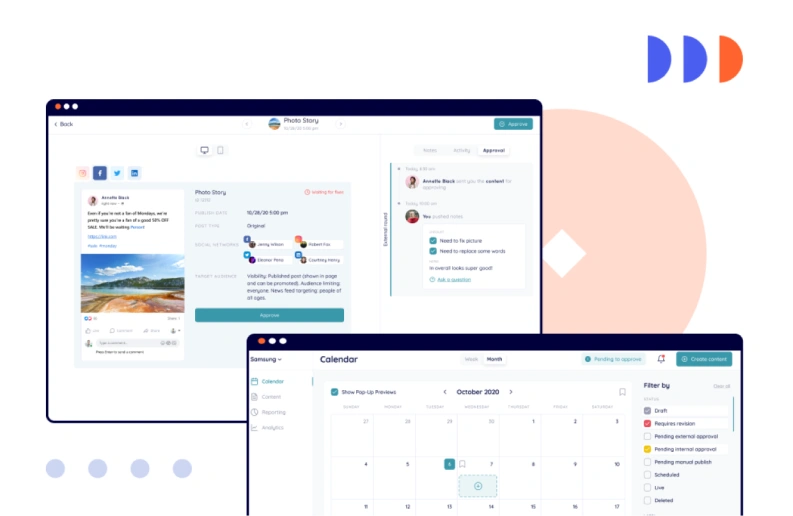
For example, when working on Attention Nest, an SMM platform, the client needed their software released fast. The goal was to get it in front of early adopters, validate the idea with their feedback, and then move on to a full SaaS. We started with a discovery phase and produced a short, agreed list of essential functionality, which cut time to the first release and let the client start collecting feedback early. The speed came from structured discovery and fixed release priorities, the same conditions any team needs to move this fast.
Measure both team readiness and time to a usable release. A fast kickoff cannot compensate for delayed approvals, unresolved integrations, or an expanding backlog. Earlier feedback comes from available capacity and controlled scope working together.
A SaaS application can pass a demo and still carry decisions that slow down growth later. Tenant isolation, subscription logic, permissions, and integrations are the usual risk areas. Get one of them wrong early, and the fix touches the database, backend, and interface at once.
Outsourcing gives you access to engineers who have already solved these problems on other SaaS products. They know which early decisions get expensive to change and can flag them while the fix is still cheap. Below, we cover which specialists bring this expertise and how it catches costly decisions in practice.
SaaS-specific risks sit in different layers of the product, so the expertise comes from several roles. A solution architect maps data boundaries, system dependencies, and expected usage. Backend engineers turn subscription plans into billing rules and feature access. QA specialists test failures and edge cases, and DevOps engineers set up repeatable deployments, monitoring, and recovery.
Their work overlaps, which is why hands-on SaaS experience matters. A subscription downgrade can change permissions, storage limits, and scheduled jobs in one go. An integration needs retries that don’t create duplicate records. Tenant isolation has to hold across APIs, background tasks, caches, and file storage. A specialist who has handled these cases knows to check every affected part.
At Clockwise, we review tenancy, permissions, integrations, and infrastructure during technical planning. For each decision, we also assess how it affects the initial scope and future operating costs.
Here’s an illustrative case. A B2B SaaS product launches with email-and-password accounts, but its planned enterprise customers require single sign-on (SSO) through their corporate identity provider.
If the team discovers this after launch, they may need to rework account linking, organization membership, login flows, and access tests, all while existing customers keep signing in. A specialist who has added SSO to other SaaS products spots the requirement during planning. At that point, the team can still compare identity options and pick the one that fits.
The decision then goes into an architecture decision record (ADR): the requirement, the options considered, the chosen approach, its trade-offs, and the conditions for revisiting it. QA tests against that record, including failed logins and attempts to access the wrong organization.
Some uncertainty stays no matter who’s on the team. Experienced specialists help you sort the decisions that can safely wait from the ones worth investigating while changes are still cheap.
The benefits of outsourcing SaaS development can include lower recruitment overhead and more focused use of specialist time. But a lower hourly rate does not establish that the engagement will cost less. The meaningful comparison is the total investment required to deliver the same scope at the same quality.
The business benefits of SaaS outsourcing become clearer when spending is connected to approved outcomes. That includes the work needed to test, deploy, document, and maintain what the team builds.
A useful planning model is:
Total delivery cost = team fees + internal coordination + tools and infrastructure + rework + transition costs.
Even team fees vary with hours, and hours vary between vendors. Say one vendor quotes 600 hours at 60/hour(36,000), and another quotes 400 hours at 80/hour(32,000). To compare proposals fairly, send every vendor the same requirements and acceptance criteria. Then check whether each estimate includes architecture, QA, deployment preparation, and documentation. If a quote leaves these out, the work still has to happen, and the cost lands on your internal team or a later contract.
Team fees are the easiest part of the formula to compare. Coordination and transition costs are harder to spot in a proposal, and that’s where low-rate options most often lose their savings.
Coordination cost is the time your own team spends on the project: reviewing work, making decisions, answering questions, and giving feedback. It grows fast when requirements are unclear. Every open question turns into a call, a revision, or a delay, and those hours can eat the savings a lower rate promised. Frequent changes on the vendor’s side add to it, since each new team member needs onboarding and the same explanations again.
Transition costs appear whenever work changes hands: from the vendor to your in-house team, to another vendor, or between people on the same team. Knowledge that lives only in someone’s head has to be rebuilt, and missing access to code or infrastructure can stall work completely.
You can keep both costs predictable by agreeing on the rules upfront. Before delivery starts, settle how often you’ll communicate, who makes which decisions, what documentation the vendor maintains, and how handover works. That last part should cover continued access to repositories and infrastructure, plus the time needed to transfer knowledge.
For the bigger picture, our SaaS development budget guide explains how to split costs into initial development, operating expenses, and continued product investment. That split shows whether outsourcing saves money over the product’s whole life, including the period after launch.
SaaS outsourcing cost savings come from two places: you skip paying for features you don’t need yet, and you pay for specialists only while their skills are in use.
The first comes from scope. An experienced outsourcing team starts with discovery: they map the user journeys your first release has to support and rank features by how much each one contributes to testing your core assumption. Because they’ve worked on other SaaS products, they also know which features users tend to ignore early on, like advanced reporting, custom roles, or white-labeling, and can suggest postponing them. Every feature on the list gets its own estimate, so you see the cost of each one and can decide whether it belongs in the first release. Whatever doesn’t make the cut waits until user feedback shows it’s worth paying for.
The second comes from team structure. For example, an in-house solution architect is a full-time salary, even though the role is most needed during planning and only periodically after that. With an outsourced team, the architect works intensively during planning, joins at key points in development, and you’re billed for those hours.
Both savings depend on knowing what the work involves. At Clockwise, we break the scope into small tasks and give each one a realistic and a pessimistic estimate. The gap between the two shows where uncertainty sits, so you can decide what to investigate further, what to postpone, and what to cut. This approach keeps our cost and timeline variance under 10%.
A SaaS product needs a different mix of specialists at each stage. Architecture decisions call for senior technical input. Implementation calls for engineering capacity. Release preparation adds testing and infrastructure work.
Outsourcing lets you adjust this mix as you go, so you don’t have to hire every role as a permanent position. The two subsections below cover how to time each specialist’s involvement and how to grow the team without losing what it already knows.
Each role has its own peak. An architect reviews tenancy and integration boundaries during planning, then stays available for major changes. QA reviews requirements early and ramps up testing as working features appear. DevOps starts planning the release setup well ahead of launch, even though production preparation happens later.
Timing matters in both directions. Bring a specialist in too early, and you pay for idle hours. Bring them in too late, and their missing input blocks development, or they arrive needing onboarding just when the team is under the most delivery pressure. At Clockwise, we pick roles based on the work each stage requires and agree on their involvement at the start, so you know when each one is involved.
To make this work, agree on the details in the contract: expected allocation for each role, lead time for adding a specialist, notice periods, and how staffing changes are requested and approved. Good specialists are booked in advance, so these terms protect your timeline
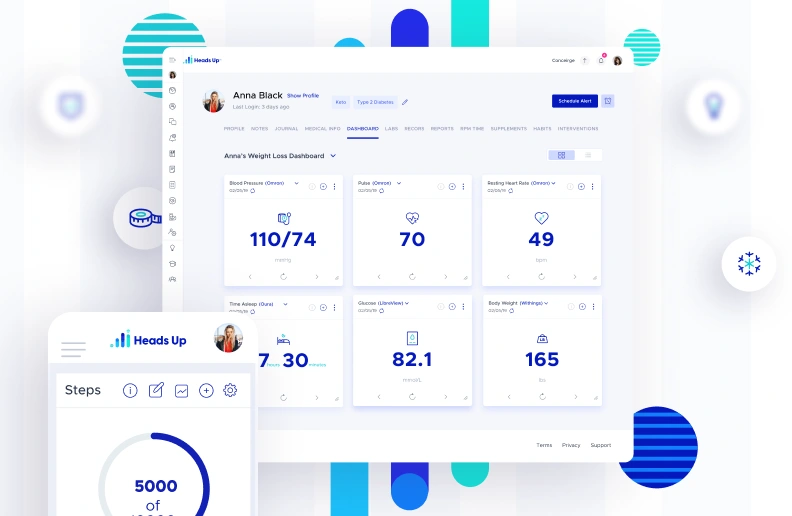
One of our projects, HeadsUp Health, a US-based health analytics product, is a great example of how this works over time. The client has its own in-house team and first brought us in for frontend and mobile development. As its needs grew, we added specialists, rewrote the frontend, rebuilt the mobile apps, and set up a dedicated QA team with its own testing framework. The engagement has been running since 2019, and our team still works alongside the client’s engineers.
A partnership this long holds together because new people can pick up where others left off. Architecture decision records, documented workflows, shared repositories, and planned handovers let each new specialist start contributing without rediscovering decisions the team made months ago.
The same rules apply to any engagement that changes size. Keep technical ownership clear, keep the same people in key roles, and plan time for onboarding. Then measure success by how quickly each new specialist starts delivering useful work
A founder or CTO can spend much of the week recruiting engineers, resolving delivery questions, and coordinating releases. That leaves less time for customer conversations, product priorities, and business decisions. Outsourcing SaaS development can reduce this workload by assigning those responsibilities to the partner.
How much management work you hand off depends on the engagement model you choose. There are two common ones.
In a full-cycle (managed) engagement, the partner owns delivery. Along with recruiting, staffing, and onboarding specialists, they run sprint planning, track dependencies, coordinate team members, and report on progress. Your team sets priorities, makes product decisions, and accepts the results.
With team augmentation, the partner adds specialists to your existing team and handles their recruitment and onboarding. Everything else stays with you: your managers assign tasks, review technical decisions, and run releases. You get more engineering capacity, and your management workload stays about the same, or grows a little with a bigger team.
So before signing, list the responsibilities you want covered and check which model matches them. At Clockwise, we work in both models and help clients figure out whether they need engineering capacity, coordinated delivery, or a mix of the two.
Delegating execution should preserve your ability to direct the product. Agree on decision owners before work begins, including who approves scope changes and accepts completed functionality.
| Client retains | Partner can own | Shared decisions |
| Product vision and business priorities | Engineering execution and agreed delivery management | Release scope and sequencing |
| Budget approval and investment decisions | Estimates, progress reporting, and risk tracking | Responses to budget or schedule changes |
| Customer commitments and product acceptance | Technical recommendations, QA, and deployment preparation | Architecture trade-offs and release readiness |
Assign a product owner who’s available to answer questions, review each working increment as it’s ready, and make decisions quickly when the team needs them. With these roles clear, coordination takes less of your time, and the business decisions stay with you.
A release that breaks billing, permissions, or a critical integration creates support work and costs you customer trust. An outsourcing partner brings quality and release practices that have already worked on other products. The value comes from applying them to your product’s specific risks and making it clear who is responsible for what.
Explicit quality ownership starts with agreeing on what the team is responsible for testing. That list should cover the workflows your customers rely on, including the ways those workflows fail. For billing, a successful payment is the easy case. The team also needs to cover failed payments, duplicate webhooks, and plan upgrades or downgrades mid-cycle. Security belongs on the same list, whoever writes the code: access controls, tenant isolation, dependency checks, and incident responsibilities each need an owner and a way to verify them.
Before each deployment, the team confirms what’s been approved, reviews test results and open defects, and checks that monitoring and recovery steps are ready. Two roles need a named owner: the person who approves the release, and the person who responds if production behaves differently than expected.
At Clockwise, every release comes with documented test coverage, release criteria, defect reports, and deployment preparation, so you have evidence to review before you approve it. The platforms we deliver typically run at 99.99% uptime.
To see whether release quality improves over time, track three numbers:
Agree on severity levels and review periods upfront, so the numbers stay comparable from one release to the next.
After launch, real customer behavior reveals conditions that testing couldn’t fully reproduce. When the same people who developed the product also support it, they already know its integrations, data flows, and the reasons behind earlier technical decisions. That knowledge shortens investigations.
It only holds up with documentation and shared access in place. Your support agreement should also define response times, escalation paths, and who owns issues in application code, infrastructure, and third-party services.
At Clockwise, post-launch work covers maintenance, infrastructure, and continued development within one team. We are also ready to help prioritize features for the next release when findings from production start piling up in the product backlog.
Review recurring incidents together with your feature priorities. If the team keeps fixing the same failure, it needs time to address the cause. That’s where continuity pays off: production experience makes the product more reliable and gives you better input for what to develop next.
The benefits of SaaS outsourcing that are valuable to your business change as your product matures. Before launch, the priority may be reaching users sooner. For a growing platform, it may be improving release capacity or resolving a technical constraint. The benefits of outsourcing SaaS development are easier to assess when tied to one immediate outcome.
The scenarios below illustrate how priorities differ. They are planning examples, not claims about specific client results.
A founder has a defined customer problem but lacks the team to deliver a usable first version. The most relevant benefit is accessing SaaS expertise with enough capacity to build and validate the core workflow fast.
The prerequisite is a focused scope and an available decision-maker. Measure time to a usable pilot and whether users can complete the task the product promises. A faster build provides little evidence if the release contains many disconnected features.
To avoid this on our projects, we start with discovery during which we define requirements, release priorities, technical risks, and estimates. This gives early development a clearer purpose and development plan.
A scale-up has paying customers, but may lack engineering or management capacity to grow and improve as fast as users expect. Additional specialists can help the internal team address that constraint.
First, confirm where work accumulates. If approvals cause the delay, more engineers will not solve it — it’s a call for a dedicated project manager or tech lead who will bring structure to coordination. If testing capacity is insufficient, targeted QA support may be more useful than a larger development team.
Measure the time affected work spends waiting, release defects, and progress against agreed priorities. Preserve technical leadership and product context as capacity expands.
When a SaaS product already has paying customers and an in-house team, the roadmap is usually full. Then a new requirement shows up: an enterprise client asks for single sign-on, the product needs an AI feature to stay competitive, or one slow component starts limiting growth. Pulling your engineers onto it delays everything else, and hiring for a skill you need for a few months is hard to justify.
That’s where outsourcing helps most at this stage. An external team takes on one well-defined piece of work with the specialists it requires, and your team keeps moving on the core roadmap.
Working inside an existing product comes with its own overhead. The external team needs time to learn the codebase and its legacy behavior, production access may be restricted, and larger companies often run procurement and security reviews. Plan onboarding, approvals, and knowledge transfer as part of the project timeline.
Define “done” by the result you need: SSO working with your customers’ identity providers, a recovery procedure tested end to end, or a component handling an agreed load. With ownership and completion criteria agreed upfront, the engagement stays focused on the problem you brought the team in to solve.
The business benefits of SaaS outsourcing should appear in measurable results: shorter delivery times, fewer production problems, controlled spending, or less internal coordination. Counting completed tasks alone does not show whether the engagement is solving your original problem.
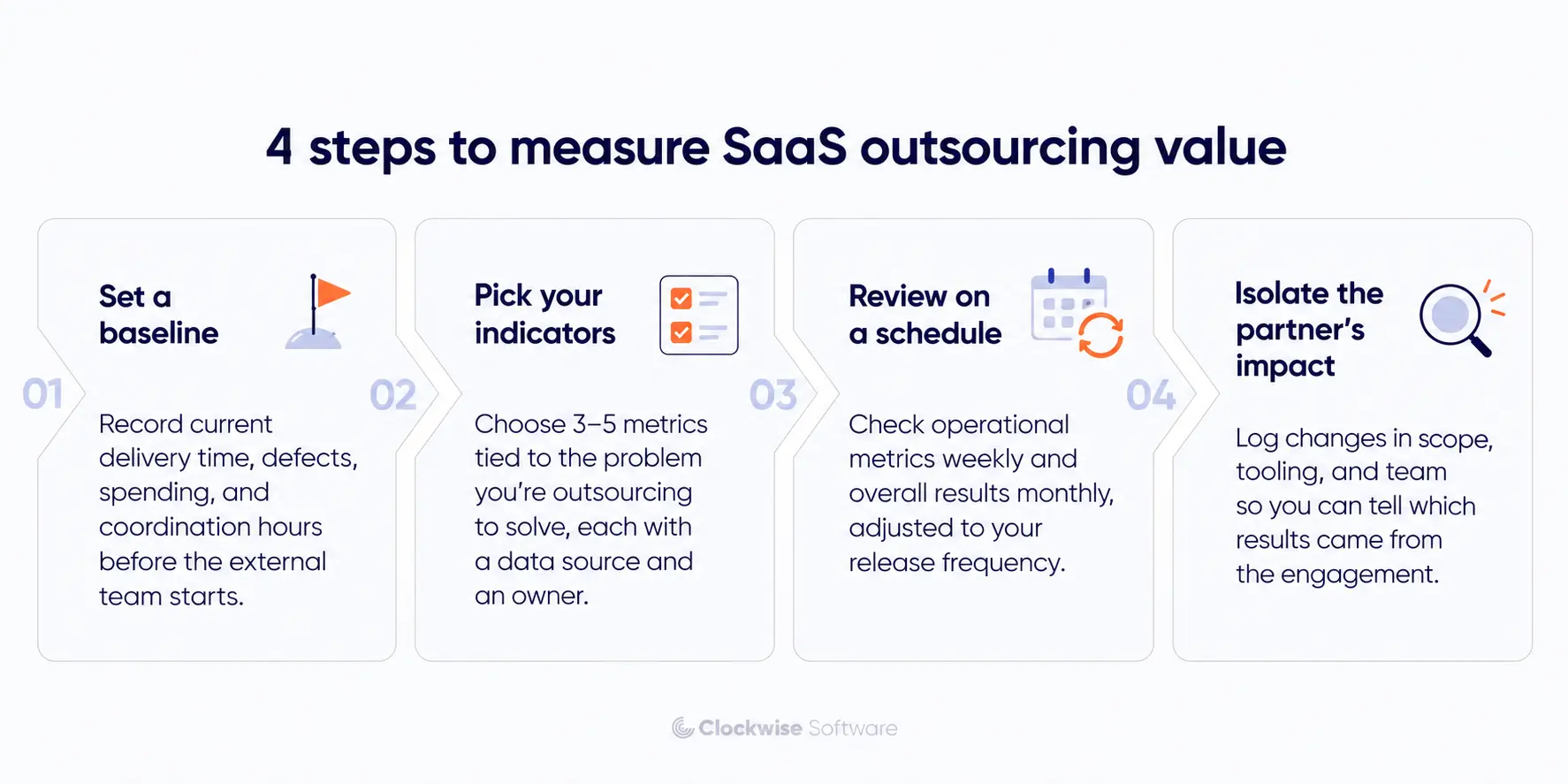
Record current performance before the external team starts. Use a representative period and note unusual events, such as a major migration. Define where each number comes from, who maintains it, and when both teams review it.
For example, measure delivery time from task approval to production using issue-tracker and deployment records. Include waiting time so delayed reviews remain visible. For coordination effort, use a simple weekly time log covering planning, clarification, and delivery meetings.
If historical data is unavailable, establish an initial observation period. Treat the resulting baseline as provisional rather than inventing a comparison.
Use a small scorecard tied to the engagement’s purpose:
| Goal | Indicator | Evidence source |
| Faster start | Time until the agreed team is ready to work | Staffing and onboarding records |
| Faster delivery | Median time from approved work to production | Issue tracker and deployment logs |
| Better quality | Production defects by severity; failed releases | Defect reports and incident records |
| Cost efficiency | Total spending against approved scope | Invoices, internal effort, and change records |
| Less management work | Internal hours spent coordinating delivery | Weekly time logs |
| Continuity | Time to contribute independently; incident recovery time | Onboarding and incident records |
Assign an owner to each indicator. Review operational measures weekly and broader results monthly, adjusting the cadence to your release frequency.
Here is an illustrative comparison, not a Clockwise project result: median delivery time for a feature set falls from 18 to 12 days. That suggests improvement only if work complexity and acceptance standards remain comparable. A smaller release or reduced testing could explain the difference.
At Clockwise, documented scope, estimates, and delivery reviews provide a basis for this assessment. The benefits SaaS development outsourcing can deliver should be evaluated against agreed outcomes.
Assess SaaS outsourcing ROI using evidenced gains and the full engagement cost, including internal coordination and transition work. Keep projected gains separate from realized savings.
Document changes in scope, tooling, and team composition. Do not compare story points across teams; their estimation scales differ. Revenue growth also needs separate analysis. A faster release may support sales, but it does not prove that outsourcing caused additional revenue.
The benefits of outsourcing SaaS development can disappear when the engagement adds activity without resolving the underlying constraint. A capable team still needs clear priorities, timely decisions, and access to the systems required for its work.
Without an available product owner, developers may waste time waiting for answers or implement conflicting stakeholder requests. The expected delivery advantage then becomes waiting time or rework.
Assign someone who can clarify requirements, approve trade-offs, and accept completed functionality. Agree on response expectations for decisions that block active work. If priorities change, review the effect on scope and timing before implementation continues.
A promised team expansion provides little value if suitable specialists are unavailable. Frequent replacements also consume time as new people learn the product. Confirm availability, allocation, notice periods, and handover expectations before relying on additional capacity.
For teams in different time zones, insufficient working-hour overlap can delay questions that require discussion. Establish when decision-makers and technical leads are available together. Clear documentation helps, but some decisions still require direct conversation.
Vendor-controlled repositories or cloud accounts can also undermine continuity and make transitions harder. Make sure your access to project documentation, accounts, etc., and operational ownership are explicit throughout the engagement.
A request for “more developers” describes a staffing preference. It does not explain the problem they must solve. To realize the benefits of SaaS outsourcing, define the desired improvement before deciding which roles or delivery responsibilities to add.
Choose the constraint with the greatest immediate impact. It might be delayed integration work, insufficient regression testing, or missing architecture expertise.
Use this brief structure:
Current bottleneck → Desired outcome → Baseline → Required capability → Owner → Review point.
For an illustrative QA engagement, the bottleneck could be incomplete regression coverage before releases. The desired outcome is fewer production defects. Record defects by severity, define the critical workflows requiring tests, name the QA lead, and review results after six comparable releases.
When choosing a partner, bring the brief, relevant delivery records, and known constraints to the first discussion. Include your current team’s responsibilities and the decisions you expect to retain.
This gives both teams a basis for selecting the engagement and assessing progress. You can then review whether the agreed outcome is improving and what evidence supports continued investment.
Delayed releases, missing expertise, changing workloads, and repeated rework require different responses. Start by identifying the constraint that has the greatest impact on your product.
At Clockwise, we are ready to help you with any stage of your product. Our team provides SaaS development services that can cover required engineering, QA, architecture, and delivery capabilities. We also help with preparation, scope definition, estimates, and alignment on the technical approach before implementation.
Tell us about your product stage, current team, bottleneck, and desired outcome. We’ll discuss the context, clarify which capabilities are missing, and determine whether targeted specialist support or broader delivery ownership fits your needs. That gives the conversation a concrete starting point before you commit to additional development capacity.