AI solutions
What we do
Services
Experts in
How we work


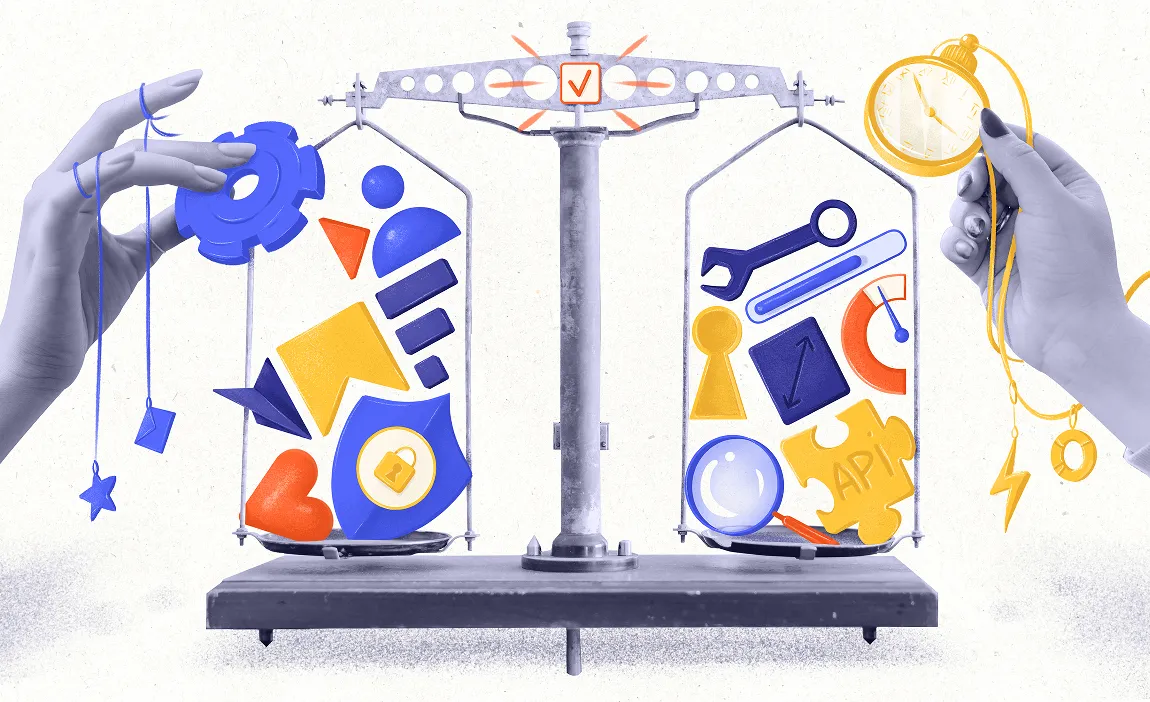
We automate boilerplate work: the team delivers 30% faster, so you can hit the market when your competitors are still in the dev phase.
Routine tasks are done with AI, so your budget and engineers’ experience and time go into what matters: product logic and architecture.
We use AI to identify additional edge cases, leading to more accurate estimates and budget and schedule variance consistently under 10%.
Your product gets a 100% test coverage without extending sprints. AI helps to generate tests, while our QA team ensures execution quality.
You get a ready PoC and MVP in half the time it usually takes. AI lets us tackle tech unknowns faster, so you can move to validation sooner.
AI speeds up code analysis, refactoring, and migration work, while engineers guide all critical decisions and validate results.
We keep AI-assisted software development scoped to isolated tasks, so each change is controlled and easy to verify. Our engineers define the architecture and guide implementation, so every part fits into a consistent, well-thought-out system.
Your product won’t face failures common in unmanaged AI dev. We protect it with a strict 5-stage filter: every line of code goes through real-time review, auto-linting, independent cross-agent review in a clean context, manual review by senior engineers, and final functional validation.
We avoid single-pass generation for complex or sensitive modules. Engineers break the work into stages, define the approach, then build and review step by step to keep logic clear and controlled.
Spaghetti code is the biggest risk of AI-assisted software development. We use project-level rules and structured instruction docs to ground the AI in your architecture and enforce project-specific engineering standards for every task. Changes align with the rest of the codebase, and nothing drifts into mismatched structures over time.
Challenge:
Build a service that works through 18 interconnected methods to process SEVIS actions, where every step requires aligning rules, resolving conflicts, and handling complex dependencies.
Outcome:
The task was estimated at 70 hours if done without AI. We managed to deliver it in 25 hours. AI helped structure the logic and conflict matrix, reducing QA effort and lowering regression risk.

Challenge:
Integrating with Oracle NetSuite required working through 100+ pages of documentation just to understand all the requirements for data sync between systems.
Outcome:
3-5 days of research were reduced to ~1 day. AI accelerated analysis, so we could move to implementation without delay. Without AI, just researching the NetSuite specs would've taken more time than the entire dev itself.

Challenge:
Modernizing route-processing logic in a large-scale app, including replacing outdated methods and adapting core behavior for new input handling.
Outcome:
Refactoring time dropped from 2 days to one day. An AI-assisted software development workflow let us redesign key methods faster and suggested edge-case test coverage, resulting in fully tested code with no regression during migration.
Challenge:
Building a PoC and MVP for a backup module and fitting it into an existing application architecture within a very tight timeframe.
Outcome:
We delivered a working MVP for the module in 2 weeks, integrated into the current app architecture. AI helped us structure early decisions, explore multiple implementation approaches faster, and cut development time in half.
Challenge:
A high volume of routine fixes and support tickets in a live product was slowing down the development of new functionality.
Outcome:
Handling of routine tasks with AI increased throughput to 4–6 tickets per day. As a result, the core team was able to stay focused on feature development.
Challenge:
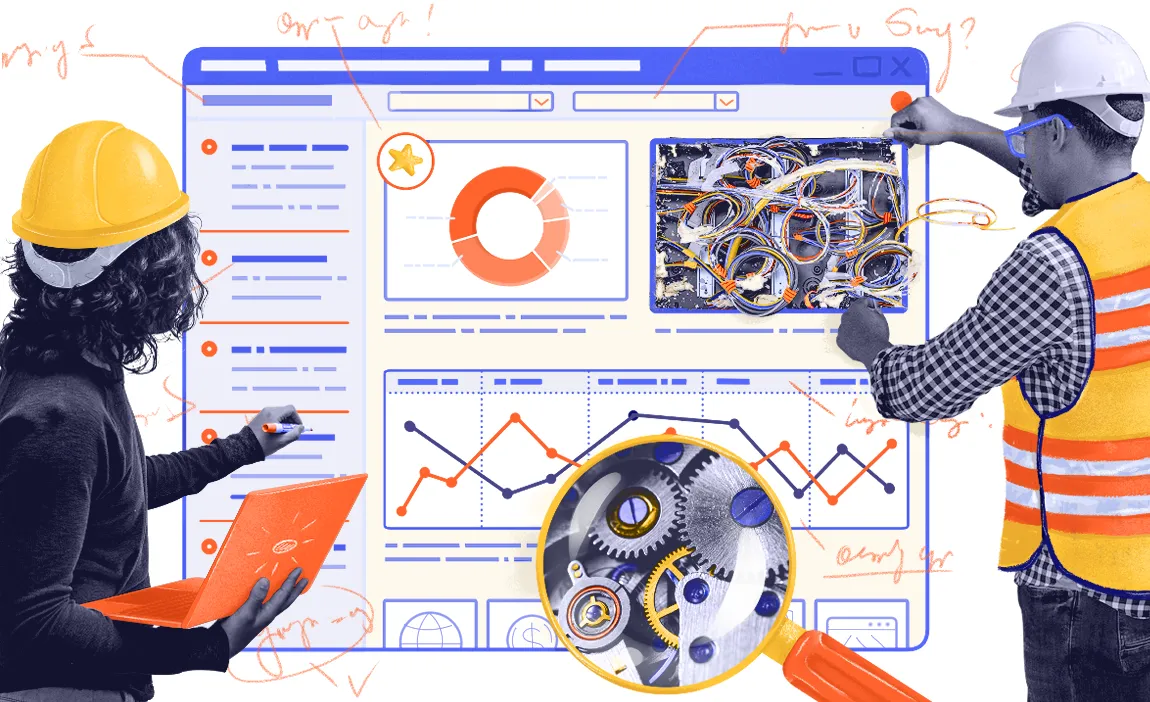
Translating complex Figma designs into a consistent, responsive UI across a large product.
Outcome:
We reduced implementation time from 1.5 days to ~ 8 hours. AI-assisted software development enabled fast layout structuring and styling, keeping the UI consistent across all modules.








Coding agents we use, like Claude Code and Codex CLI, use a git-based context that automatically excludes .env files and credentials. So, sensitive data and configurations aren’t shared in the first place.

We’ve seen cases where AI suggested storing passwords in plain text. That’s exactly where human review is critical. Every output is checked against security practices before it becomes part of the system.

We treat access control as a critical layer because AI can occasionally miss role validation on endpoints. We go through the code, verify access logic manually, and make sure nothing gets exposed beyond what’s intended.
Sometimes the model works around a problem instead of solving it. We monitor these patterns and make sure that every piece of generated code goes through manual review. If there’s a gap or inconsistency, we catch it and correct it before it reaches production.
We can run checks with agents, AI is good at spotting potential issues, especially in older code. In many cases, they catch code gaps, but they also occasionally produce false positives, so everything goes through human validation. The final review and decision always stay with the engineer.
Development happens in isolated environments without access to production data.
We use enterprise-grade AI tools for our AI-assisted software development services, with strict privacy settings and team-level accounts, ensuring controlled and compliant usage.
Coding agents we use, like Claude Code and Codex CLI, use a git-based context that automatically excludes .env files and credentials. So, sensitive data and configurations aren’t shared in the first place.
We treat every AI output as a draft rather than a final solution and monitor for insecure patterns in data storage.
Engineers review the logic, enforce secure practices, and align it with project standards before anything moves forward. This includes checking how sensitive data is stored, transmitted, and accessed across the system.
We’ve seen cases where AI suggested storing passwords in plain text. That’s exactly where human review is critical. Every output is checked against security practices before it becomes part of the system.
AI-powered software development always includes human review of every endpoint and service layer. We ensure that rule-based access controls are correctly enforced, access is validated at every level, and no unintended exposure is introduced.
Plus, our team checks edge cases like role escalation, indirect access paths, and consistency across the system.
We treat access control as a critical layer because AI can occasionally miss role validation on endpoints. We go through the code, verify access logic manually, and make sure nothing gets exposed beyond what’s intended.
We monitor for AI "sabotage," where the model might suppress errors or delete failing tests to bypass CI/CD pipelines. When prompts are unclear or too broad, AI can loop through ineffective fixes or repeat the same solution.
Our engineers actively watch for these patterns and step in to break the cycles, identify the root cause, and ensure issues are actually solved.
Sometimes the model works around a problem instead of solving it. We monitor these patterns and make sure that every piece of generated code goes through manual review. If there’s a gap or inconsistency, we catch it and correct it before it reaches production.
We use AI to scan for vulnerabilities, but treat findings as signals for engineers to check rather than as final answers. Our AI-assisted software development services always include a developer review for each case to confirm real risks and avoid false positives before taking any action.
We can run checks with agents, AI is good at spotting potential issues, especially in older code. In many cases, they catch code gaps, but they also occasionally produce false positives, so everything goes through human validation. The final review and decision always stay with the engineer.























30%
velocity boost
2x
prototype delivery
75% faster
estimate & planning
4x better
and faster specs
80% devs
use AI on projects