AI solutions
What we do
Services
Experts in
How we work


















We turn your idea into a build-ready plan: feature requirements, user flows, architecture design, tech stack decisions, and an estimate. You get everything needed to start development without risky gaps that could stall your project mid-build.
We build your product around the logic you defined, with every specific requirement intact. Custom logic where your business is genuinely different, but proven patterns where it isn't. This way, you're not paying to reinvent authentication or billing.
Our team has built dozens of MVPs, so we bring the patterns that keep launches on schedule, on budget, and fully aligned with expectations. We scope to what validates your core assumption, build it, and leave you with working software and a codebase that's ready for growth.
Your product works, but the codebase slows releases or infrastructure buckles under load? Our SaaS development company audits what you have, defines the refactor-vs-rewrite path, then handles preparation, implementation, testing, and deployment — module by module — so your live SaaS keeps serving users.
We build AI-powered SaaS from the ground up, and we extend AI into products already in production. Either way, you get a properly designed data pipeline, retrieval, and evaluation, with fallbacks, guardrails, and defined behavior for when the model gets it wrong.
Ongoing maintenance and iteration under a defined SLA: uptime monitored, security handled, new features shipped as your roadmap moves. You keep the team that already knows your product and vision, so nothing needs to be re-explained.
An MVP helps test an assumption with much lower investment because you build only a few core features. A full custom product development implies building a full-featured product to serve a market you've already proven.
Go with an MVP if you're guessing about demand, pricing, or which features people will pay for. You spend less to get those answers, while the architecture we design is ready to handle the next version of your product when you decide to scale.
Go with a full product if you already have customers asking for it or a competitor whose gaps you understand. Shipping a stripped-down version at that point loses you the deal.
Still deciding? That's what the first discovery calls are for.
The full cycle: discovery, design, development, QA, deployment, and support after launch, with one team accountable for all of it.
Third-party costs sit outside our fee, but we estimate them during discovery and put them in the breakdown: cloud hosting, API subscriptions, licenses. So you see the full picture of what running the product costs, alongside what building it costs. These expenses stay with you as ongoing running costs after our engagement ends.
You can skip it if you already have what discovery produces: feature requirements, user flows, wireframes, and a decided architecture. In this case, we first review these docs to confirm everything a development team needs is in place, and then we can proceed to the development stage right away.
If you don’t have ready specifications, it’s better to start with discovery. Without clarity on scope, requirements, flows, and risks, estimates stay wide and the first months get spent settling questions that could have been answered in weeks. Our clients save $30K+ on average by resolving them upfront.
There's also a middle path: a short discovery covering the riskiest parts, then development starts while the rest of the requirements get refined alongside it.
Head of Client Relations

Send us your project details — we’ll set up a call, then provide an initial estimate within 2 weeks.
Our timelines stay steady because the work is clear from the beginning. We estimate effort realistically, explore potential risks upfront, and use AI to surface even more edge cases, dependencies, and hidden complexity.
During development, we track progress weekly, and if anything shifts, you hear about it before it becomes a problem.
We track earned value, burn rate, and planned vs actual work to show how efficiently the budget is used. We also apply AI to automate the routine parts of development (boilerplate code, unit tests, documentation), so your budget goes to high-value tasks around architecture and core logic instead of repetitive output.
You get one team to handle the entire product lifecycle, from discovery and design to development, release, and post-launch improvements. And with a controlled AI embedded in our SDLC, you're getting a delivery engine that moves faster without cutting corners on quality.
We bring patterns and lessons from 25+ SaaS products we’ve delivered. From designing architecture to picking an API, defining data flows, and shaping feature details, our team will explain the options, trade-offs, and best paths forward.
The code, the project boards, the documentation — everything stays accessible to you. We keep information up to date, plus have regular syncs and a clear communication routine. You’ll always know what’s done and what’s next.
We build software with the bigger picture in mind: user experience, retention, unit economics, all of it. Providing SaaS development services for us is not just shipping code, but also helping your SaaS grow and hit its goals.
Look for a team with experience building SaaS products similar to yours, especially when it comes to multi-tenant architecture, subscription and billing logic, and integrations you need. Ask how they approach technical design, project estimation, and how they structure delivery (what sprints include, how you’ll communicate during the project, what’s their algorithm for handling changing requirements, etc.).
At Clockwise Software, we’ve delivered 25+ SaaS products across martech, real estate, healthtech, logistics, and other domains. This experience helps us identify technical risks early, recommend approaches proven in similar products, and make decisions that support your SaaS as it grows.
Before signing a contract with a SaaS development company, make sure you have clear answers on what’s included in the scope, what you’ll receive at each stage, and what happens if requirements change. Clarify who is responsible for key decisions, how additional work is estimated and approved, and how progress, budget, and risks will be reported. It’s also worth confirming code and IP ownership, access to repositories and documentation, and what support is included after launch.
At Clockwise Software, we agree on these details upfront. Plus, we take care to keep the project’s progress and details visible throughout development through shared access to project boards and docs, regular demos, project tracking, and communication tailored to your preferences.
We help invest where it pays off and streamline where a simplified feature can save up to 3 weeks with no loss in quality.
We deliver functionality that lets clients safely manage data, accounts, and more without involving dev resources every time.
We’ve planned SaaS products that stay stable even with 3x more functionality and users.
There’s always more than one way to build a feature. We help you map out the exact logic that works for your case.
We have helped our clients spot inconsistencies in product ideas early and avoid $30K+ spending on mid-project reworks.
We know how to save up to 4 weeks of interface creation without compromising on UI/UX uniqueness.
Our SaaS products pass external audits with zero critical issues, thanks to strict guidelines for code writing.
We’ve worked with 100+ APIs and know their capabilities, limitations, and edge cases.

Over 10 years of delivering SaaS products gives us a base of tested approaches for architecture, billing, AI, and more. New projects benefit from everything we’ve already validated in real systems.
Over 10 years of delivering SaaS products gives us a base of tested approaches for architecture, billing, AI, and more. New projects benefit from everything we’ve already validated in real systems.
Over 10 years of delivering SaaS products gives us a base of tested approaches for architecture, billing, AI, and more. New projects benefit from everything we’ve already validated in real systems.
Over 10 years of delivering SaaS products gives us a base of tested approaches for architecture, billing, AI, and more. New projects benefit from everything we’ve already validated in real systems.
Over 10 years of delivering SaaS products gives us a base of tested approaches for architecture, billing, AI, and more. New projects benefit from everything we’ve already validated in real systems.
Over 10 years of delivering SaaS products gives us a base of tested approaches for architecture, billing, AI, and more. New projects benefit from everything we’ve already validated in real systems.
Over 10 years of delivering SaaS products gives us a base of tested approaches for architecture, billing, AI, and more. New projects benefit from everything we’ve already validated in real systems.
Over 10 years of delivering SaaS products gives us a base of tested approaches for architecture, billing, AI, and more. New projects benefit from everything we’ve already validated in real systems.
Over 10 years of delivering SaaS products gives us a base of tested approaches for architecture, billing, AI, and more. New projects benefit from everything we’ve already validated in real systems.
Your product's logic, built as specified: conditional steps, role-dependent paths, and the exceptions that come with them.
Over 10 years of delivering SaaS products gives us a base of tested approaches for architecture, billing, AI, and more. New projects benefit from everything we’ve already validated in real systems.
Architecture design that meets your needs. We build SaaS with clear tenancy, clean data separation, and effortless scaling.
Over 10 years of delivering SaaS products gives us a base of tested approaches for architecture, billing, AI, and more. New projects benefit from everything we’ve already validated in real systems.
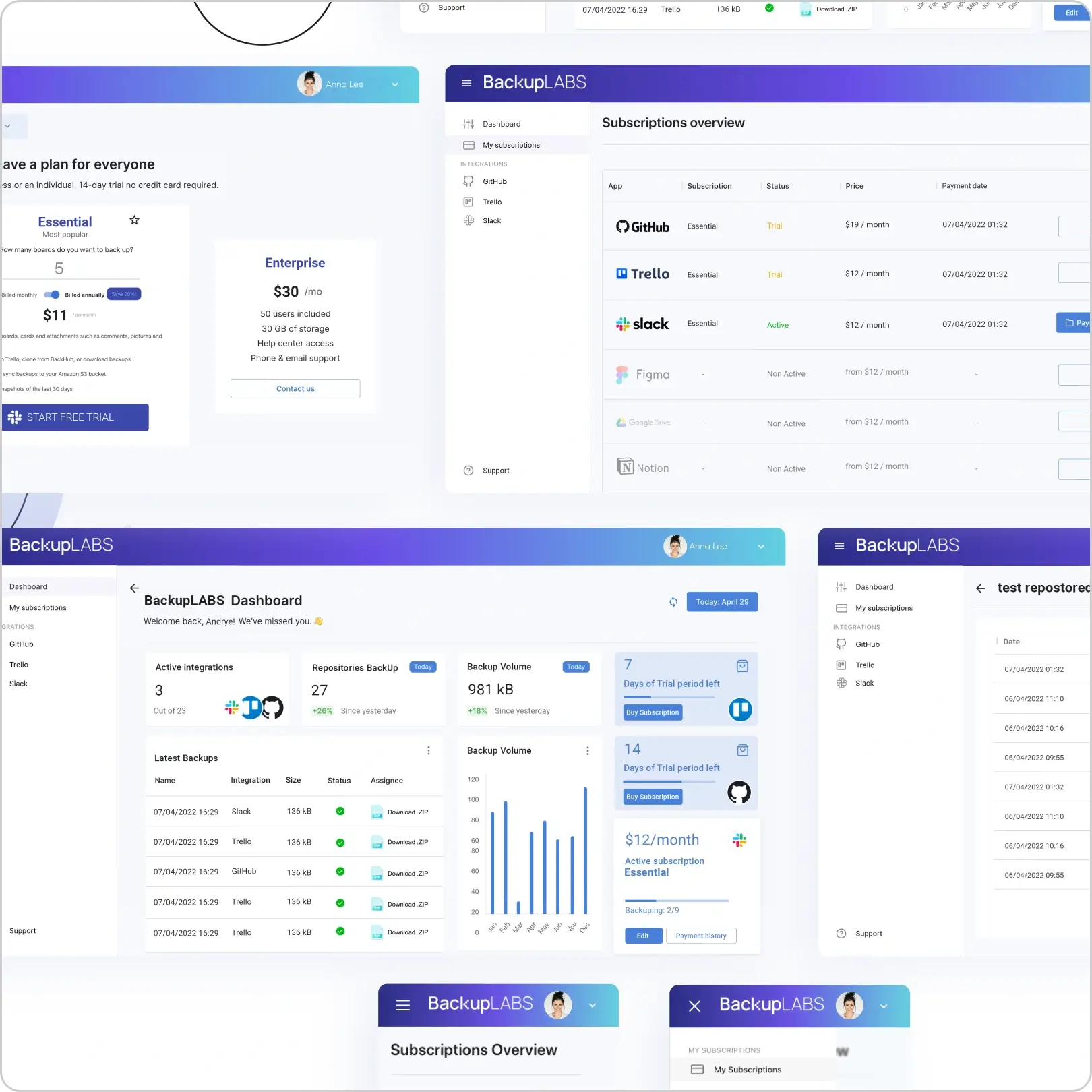
Billing flows that support your business model, from flexible plans and net-30 terms to trials and refund logic.
Over 10 years of delivering SaaS products gives us a base of tested approaches for architecture, billing, AI, and more. New projects benefit from everything we’ve already validated in real systems.
We take care of clear permission logic for admins, users, or teams, so every user sees exactly what they should.
Over 10 years of delivering SaaS products gives us a base of tested approaches for architecture, billing, AI, and more. New projects benefit from everything we’ve already validated in real systems.
Stripe, HubSpot, custom internal tools, and local systems — we connect your SaaS with anything your users need.
Over 10 years of delivering SaaS products gives us a base of tested approaches for architecture, billing, AI, and more. New projects benefit from everything we’ve already validated in real systems.
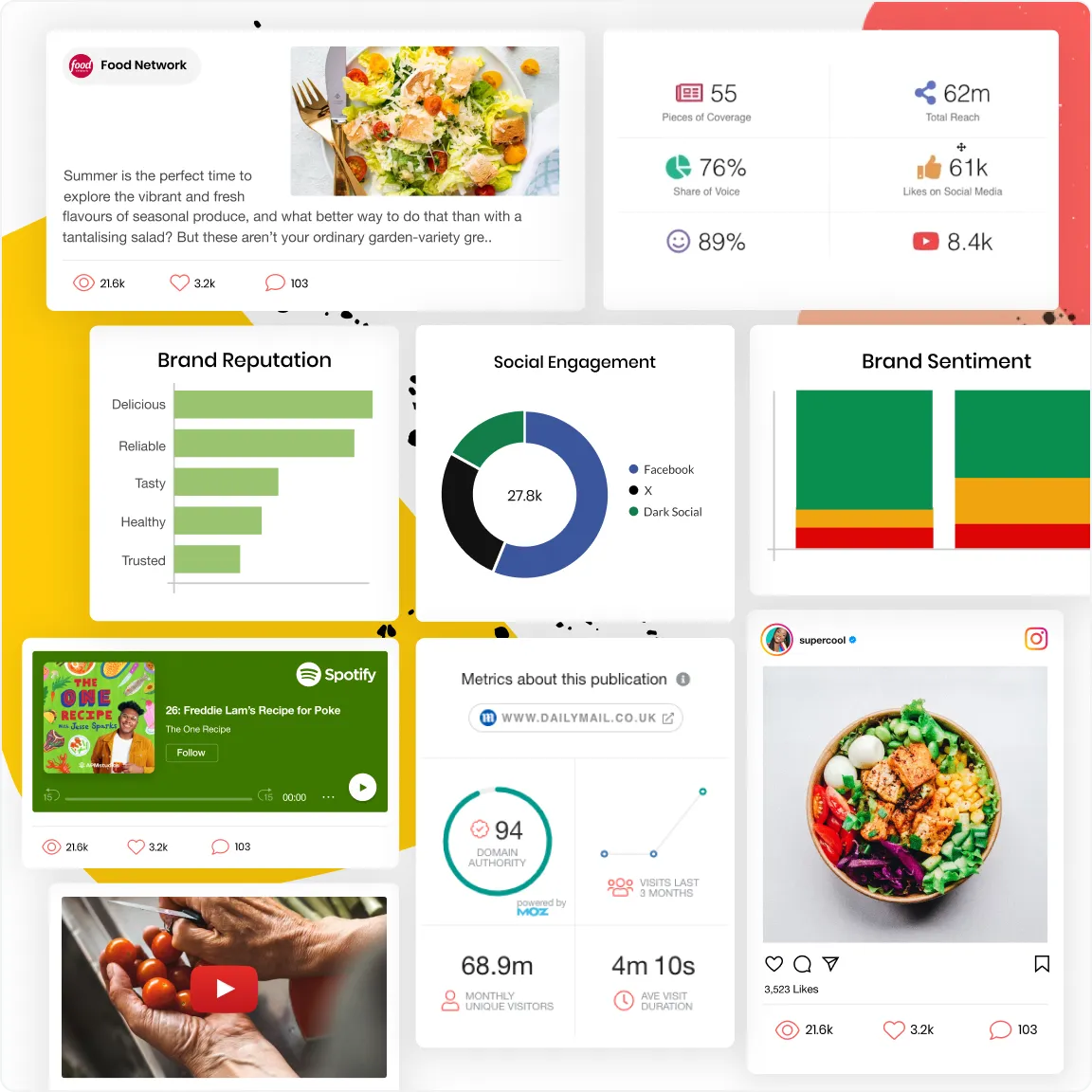
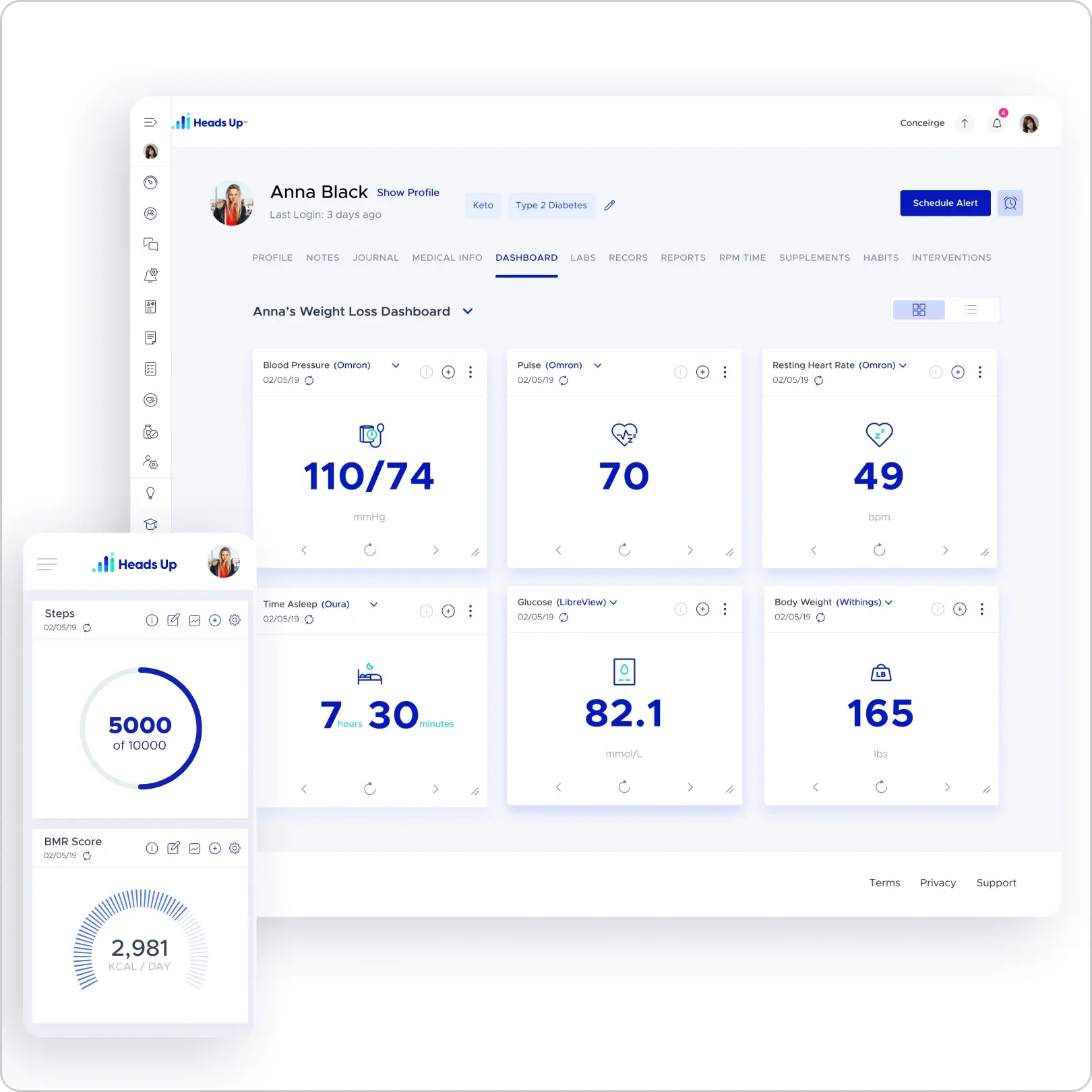
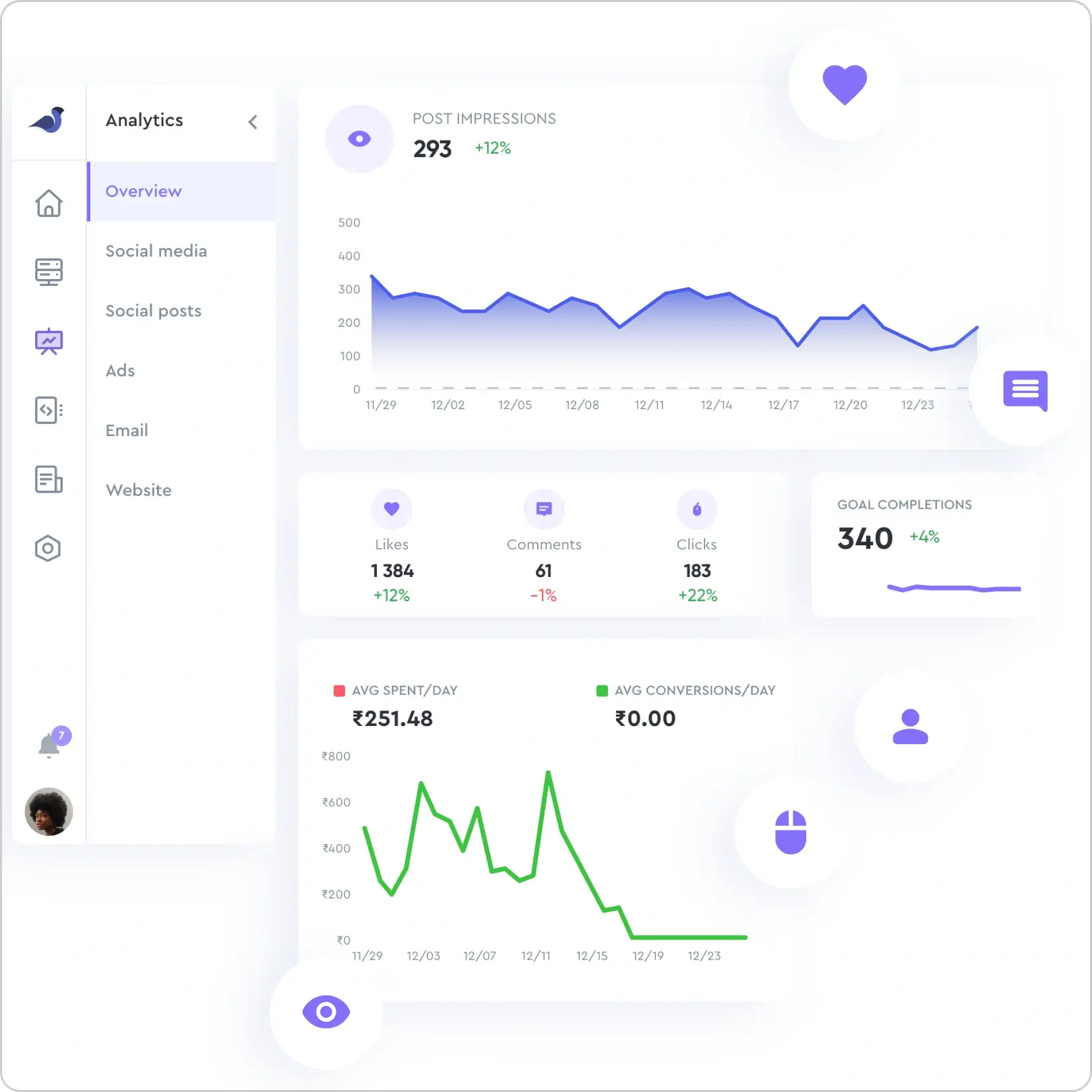
Interactive dashboards, report constructors, and data visualizations — we did it all, for healthtech, marketing, and more.
Over 10 years of delivering SaaS products gives us a base of tested approaches for architecture, billing, AI, and more. New projects benefit from everything we’ve already validated in real systems.
AI for SaaS without lab-level budgets. We deliver AI features that improve workflows and user experience in months, not years.
Over 10 years of delivering SaaS products gives us a base of tested approaches for architecture, billing, AI, and more. New projects benefit from everything we’ve already validated in real systems.
Recommendation engines so your SaaS easily guides users to what they need: a product, service, or person.
Over 10 years of delivering SaaS products gives us a base of tested approaches for architecture, billing, AI, and more. New projects benefit from everything we’ve already validated in real systems.
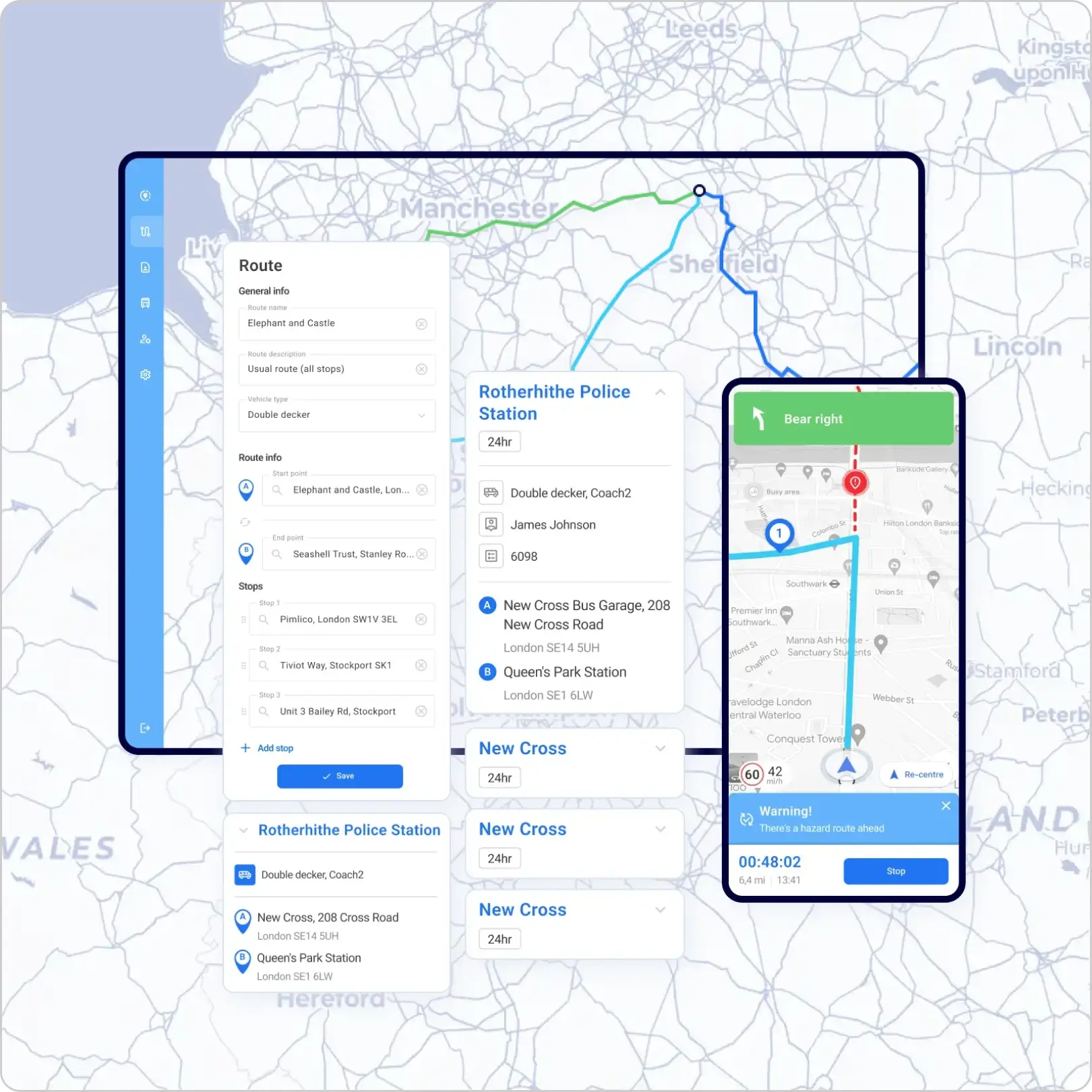
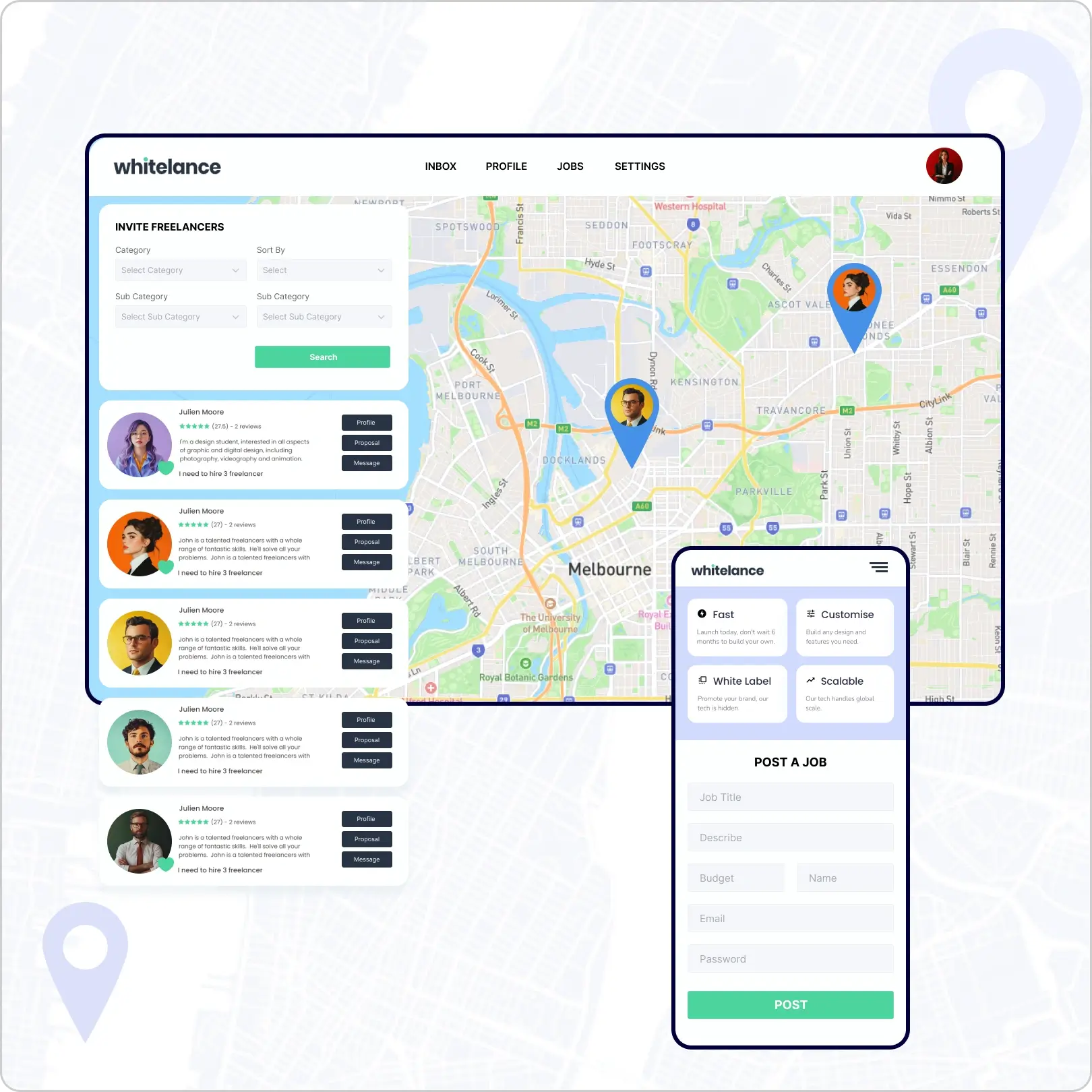
Custom maps, routing, or logic for distance-based offers. We create location-powered features that boost operations and user satisfaction.
Over 10 years of delivering SaaS products gives us a base of tested approaches for architecture, billing, AI, and more. New projects benefit from everything we’ve already validated in real systems.
Head of delivery

By tracking CPI & SPI, we keep projects within 10% variance, so development progress aligns with your SaaS launch plan.
Replace static filters with adaptive recommendations so users can find what they need more easily and quickly.
Make your product a must-have decision tool. Let users uncover patterns and generate forecasts based on their historical data.
Reduce support load with AI that learns from every interaction and automates repetitive tasks in customer support.
Turn recurring steps on your SaaS platform into smart, self-running processes that keep operations fast and UX smooth.
Stay ahead of competitors by spotting user needs faster. AI analyzes feedback at scale and guides you to improvements users want.
Let users create listings, product copy, and other text automatically, helping teams publish faster and stay consistent.
AI can make your SaaS more valuable by solving specific customer and business problems like reducing manual work or personalizing user experience. For example, we’ve built AI-powered recommendation engines, forecasting functionality, chatbots, customer feedback analysis, content generation tools, and automation of different parts of user flows, from profile filling to report generation.
AI accuracy depends on the quality of the data, how clearly the model is instructed, and how thoroughly its output is tested and monitored.
We address each of these areas – first, by preparing relevant, well-structured data to feed into the model, so it has a strong foundation for accurate outputs. Next, we set clear instructions and guardrails that keep the model within your product’s scope, and test outputs against real use cases before launch. After release, we monitor performance and refine the system as new edge cases emerge.
Across the AI features we’ve built for clients, this approach has delivered 95%+ accuracy in production.
No. API data is excluded from training by default and has been since March 2023. On our side, we design the retrieval layer so sensitive fields never reach the prompt in the first place.














We map out how the whole SaaS system fits together: services, databases, APIs. Then we compare options against your expectations on performance, scalability, and budget. Our job is to find the balance that makes sense for your product and goals. If needed, we also prepare an architecture decisions report, explaining why this setup works and what it means long term.
We map out how the whole SaaS system fits together: services, databases, APIs. Then we compare options against your expectations on performance, scalability, and budget. Our job is to find the balance that makes sense for your product and goals. If needed, we also prepare an architecture decisions report, explaining why this setup works and what it means long term.
We map out how the whole SaaS system fits together: services, databases, APIs. Then we compare options against your expectations on performance, scalability, and budget. Our job is to find the balance that makes sense for your product and goals. If needed, we also prepare an architecture decisions report, explaining why this setup works and what it means long term.
A SaaS with several clients, teams, or user roles needs data rules before development starts. We define which setup fits best (single-tenant, multi-tenant, or hybrid), who can access what, and how tenant data is separated.
We map out how the whole SaaS system fits together: services, databases, APIs. Then we compare options against your expectations on performance, scalability, and budget. Our job is to find the balance that makes sense for your product and goals. If needed, we also prepare an architecture decisions report, explaining why this setup works and what it means long term.
We design subscription and payment logic that fits the way your SaaS earns money. From pricing plans and trials to upgrades, team seats, usage limits, refunds, and wallet flows, our SaaS development services help you implement billing that’s simple for users, clear for your team, and ready for future pricing changes.
We map out how the whole SaaS system fits together: services, databases, APIs. Then we compare options against your expectations on performance, scalability, and budget. Our job is to find the balance that makes sense for your product and goals. If needed, we also prepare an architecture decisions report, explaining why this setup works and what it means long term.
Our SaaS development company sets up cloud infrastructure that grows with your SaaS instead of holding it back. Using services from AWS, Azure, or Google Cloud, we configure auto-scaling, load balancing, and request-based scaling to keep your product stable during traffic spikes and cost-efficient when demand is lower.
We map out how the whole SaaS system fits together: services, databases, APIs. Then we compare options against your expectations on performance, scalability, and budget. Our job is to find the balance that makes sense for your product and goals. If needed, we also prepare an architecture decisions report, explaining why this setup works and what it means long term.
$15,000 to $50,000
Refine your SaaS idea and test with a prototype
$50,000 to $100,000
Start testing your SaaS platform with minimal initial investment
$100,000 to $500,000
Launch a monetization-ready SaaS application
$500,000+
Build a SaaS platform designed to dominate the market
The more engineering effort your SaaS takes to build, the more it will cost. The biggest drivers here are product scope, number of integrations and complexity of their configuration, number of user roles your SaaS serves, billing logic, security requirements, and scalability needs.
A SaaS with multiple complex features, integrations with custom tools without API documentation, and several user roles will cost more than a simple MVP with core features, two roles, and three integrations with well-known third-party services.
In two passes. After a few calls with you we will have enough info to create a ballpark estimate along with a rough work breakdown, initial tech assumptions, and a risk register. That takes about a week and costs you nothing.
The precise number comes after discovery, once features are specified, wireframes exist, and the tech approach is decided. Then a PM, developers, and a QA engineer estimate time to build (realistic and pessimistic) each feature, against similar functionality we've already built. Those hours then become an accurate cost estimate for your project.
The biggest saving is scope discipline. Most first releases carry features that exist because someone assumed they were necessary. Cutting those in discovery costs nothing and removes months.
Second, proven patterns where your product isn't unusual: authentication, billing, notifications, admin panels. Nobody should pay for a custom version of those.
Third, AI-assisted development. Our engineers use AI to speed up routine work: boilerplate code, generating unit tests, creating system documentation, brainstorming edge cases, and researching tech documentation. This cuts hours on the repetitive parts but doesn’t affect the quality of your product, because senior engineers still review and validate the code and make all architecture and business logic decisions.
<10%
CPI & SPI variance
99.89%
acceptance rate
30%
boost TTM & Velocity
200+
products built
All code, documentation, and deliverables we create during the project are yours to keep. We make it crystal clear in our contracts, so you can be sure you own everything.
Where we know priorities are likely to shift, we flag it as a risk during discovery and add buffer time to the plan. When a change comes up mid-build, we estimate what it adds in hours, analyze what it pushes out, and suggest what could move to the next release to keep the date. You make the call with the numbers in front of you.
The first few weeks after launch we stay to fix issues that might come up as users start to engage with a product. Beyond that, we can sign a maintenance agreement covering monitoring, bug fixing, and new feature development as your roadmap moves. You get the same team, so nothing needs re-explaining and nobody spends three weeks reading the codebase before they can help.
That's a normal outcome, and the handover is short because the documentation already exists. Your team gets the architecture diagrams, data flow diagrams, user stories with acceptance criteria, the design system in Figma, and the decisions behind the tech choices, all produced during the project.
We run onboarding sessions with your developers, stay available for questions during the transition, and can keep a reduced engagement while your team ramps up.
Solution architect

We stress-test every release and design for redundancy, having a track record of SaaS products that run with 99.99% uptime.
We help you shape and prioritize your product idea into a clear roadmap, cutting time-to-market without losing the core value that sets you apart. From MVP to traction, you get a product built smartly, ready to validate, scale, or pitch.

We turn your domain expertise into a SaaS that opens new revenue streams. Your industry know-how becomes a working product: automated, scalable, and built to serve others like you, without slowing down your main business.

We help you build SaaS that extends your ecosystem: modernizing legacy tools, bringing new value to customers, or launching standalone products. Enterprise-grade architecture, ready for scale, security, and long-term ownership.

There are four key things to take care of. The first is preparing your tool for multi-tenancy: your data model assumes one company, and separating tenants cleanly is usually the largest piece of work.
You also need to add billing functionality: plans, upgrades, proration, failed payments, and what happens to data when someone stops paying.
Next, it’s important to turn some flows into self-service features: internal users get accounts from IT, external ones need signup, password reset, and roles they manage themselves.
Lastly, adjust security so it survives a customer's review: audit logs, permissions per tenant, and data isolation you can explain to their compliance team.
We select from the top 1% of engineers through live coding, technical interviews, and interviews led by our CEO and tech leads. 82% of candidates we put forward get approved by clients on the first try, which helps you add the right expertise without spending weeks on technical screening.
Our developers have shipped multi-tenant architecture, subscription billing, access management, and user-role systems across 25+ SaaS products. They come with SaaS patterns already tested in production, so the team can move faster from project context to implementation.
Developers stay on our projects for 3.3 years on average, and senior engineers have been with us for 6-10 years. This gives your product a stable team that builds knowledge of your codebase, domain, and delivery routine over time.
Start with 1-2 SaaS developers or extend your team with a full squad, including a PM, BA, architect, and QA. As your roadmap changes, you can scale the team up or down without HR overhead or long-term lock-in.
You tell us, and we swap them. The first few weeks are effectively a trial: if the fit isn't right technically, in communication, or in how they work with your team, we replace the developer at no extra cost and manage the handover ourselves.
Head of Client Relations
Describe your project and we'll propose a team with the right stack experience, seniority mix, and start date.