








AI solutions
What we do
Services
Experts in
How we work

Track assets, workflows, system health, and operational KPIs in one live view, so teams always know what is happening across operations.

Reduce manual checks, troubleshooting hours, and emergency fixes by detecting issues earlier and giving teams the data to act faster.
Spot anomalies, failures, delays, and performance drops as they happen, before they affect users, teams, or business continuity.
Move from delayed reports to real-time insights, helping teams adjust priorities, respond faster, and prevent avoidable disruptions.
Continuously monitor infrastructure, workflows, and connected systems to detect weak points early and keep critical operations stable.
Keep ERP, CRM, IoT devices, internal tools, and connected platforms aligned, so every team works with accurate real-time data.
We’ve delivered 14 custom real-time monitoring projects for startups, SMBs, and enterprises across multiple industries. This experience helps us design monitoring systems that bring measurable results early, from faster issue detection to clearer operational control.
We handle the full development lifecycle, from discovery and architecture to design, development, testing, deployment, and post-launch growth. One team owns the process end-to-end, so context stays clear, decisions stay aligned, and delivery moves without gaps between stages.
Your monitoring solution connects with ERP, CRM, IoT platforms, internal tools, and third-party services without disrupting ongoing operations. We plan data flows early, handle API constraints, and keep information synchronized across systems in real-time.
We design data pipelines that continuously ingest, process, and deliver high-velocity telemetry from multiple sources. Live streams, alerts, and dashboards stay accurate and responsive, giving your team the visibility needed for fast operational decisions.
Real-time systems often process sensitive operational and user data, so security is built into the architecture from the start. We implement encrypted data flows, secure APIs, role-based access, and audit-ready controls to keep your platform protected.
We use AI to speed up both routine and large-scale development tasks without giving up engineering oversight. Senior specialists stay responsible for architecture, validation, and system design, so you get faster delivery while quality and long-term maintainability remain under control.

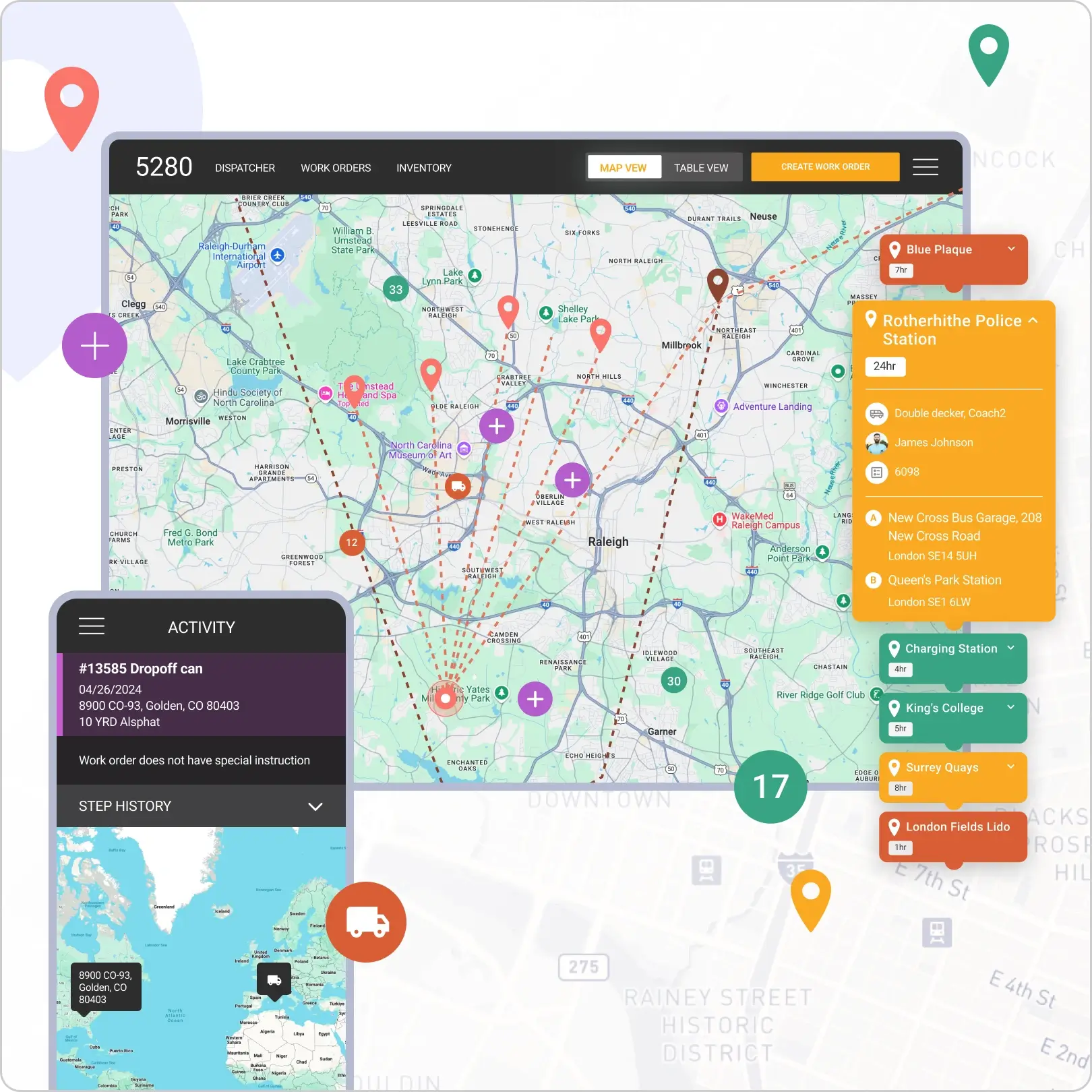
We built a real-time tracking engine with instant geofencing for major aviation and logistics hubs. The system gives teams continuous asset visibility, detects unauthorized movement, and sends automated alerts the moment boundaries are crossed. As a result, the client eliminated idle time, reduced physical security risks, and cut escort labor costs by 80%.
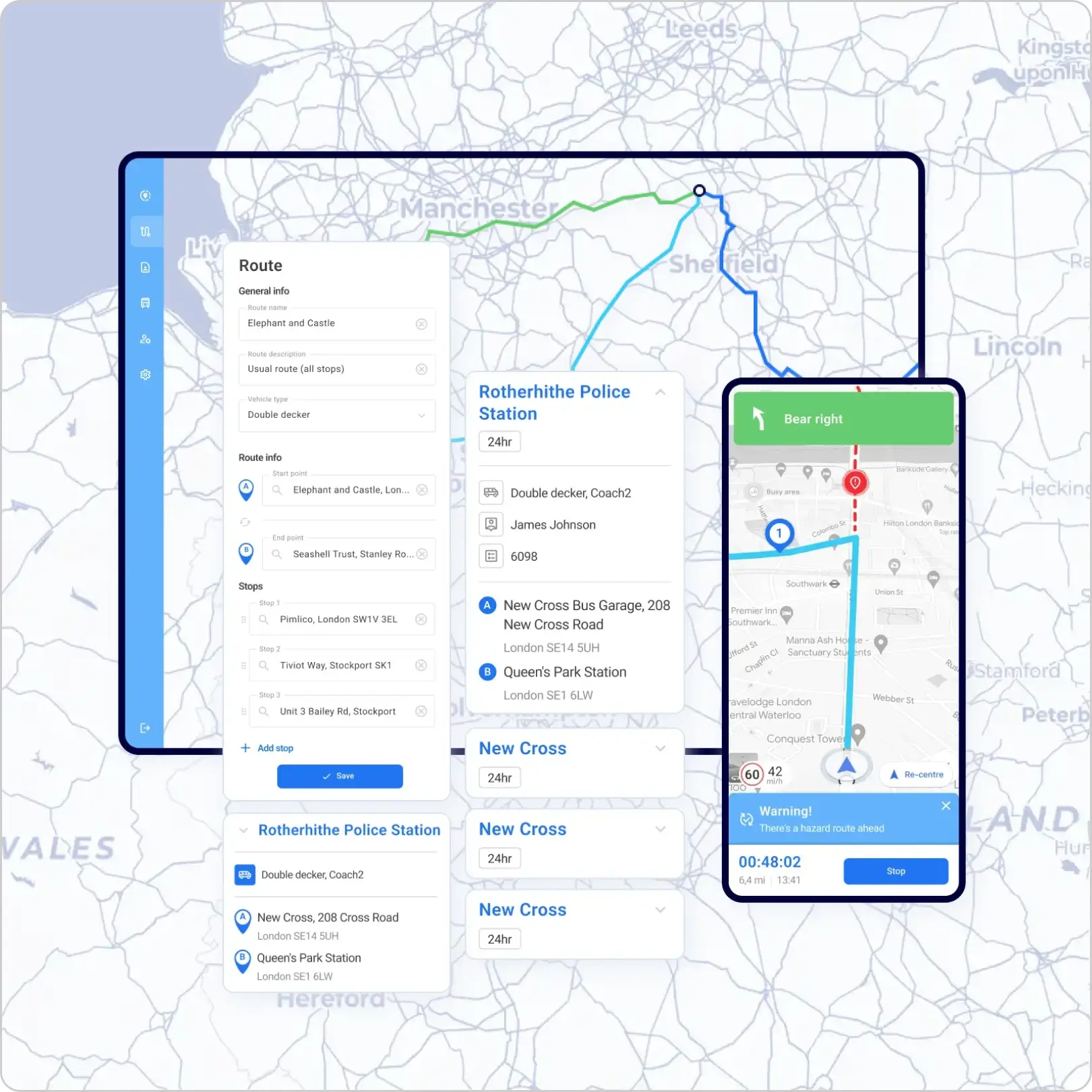
Our company developed a scalable, multi-tenant route planning platform used by major enterprise fleets, including London’s #1 bus operator. The solution processes live vehicle telemetry, supports real-time fleet tracking, dynamically updates routes, and sends instant hazard alerts. This helps dispatch teams reduce friction, react faster to road conditions, and keep large-scale transport operations moving reliably.
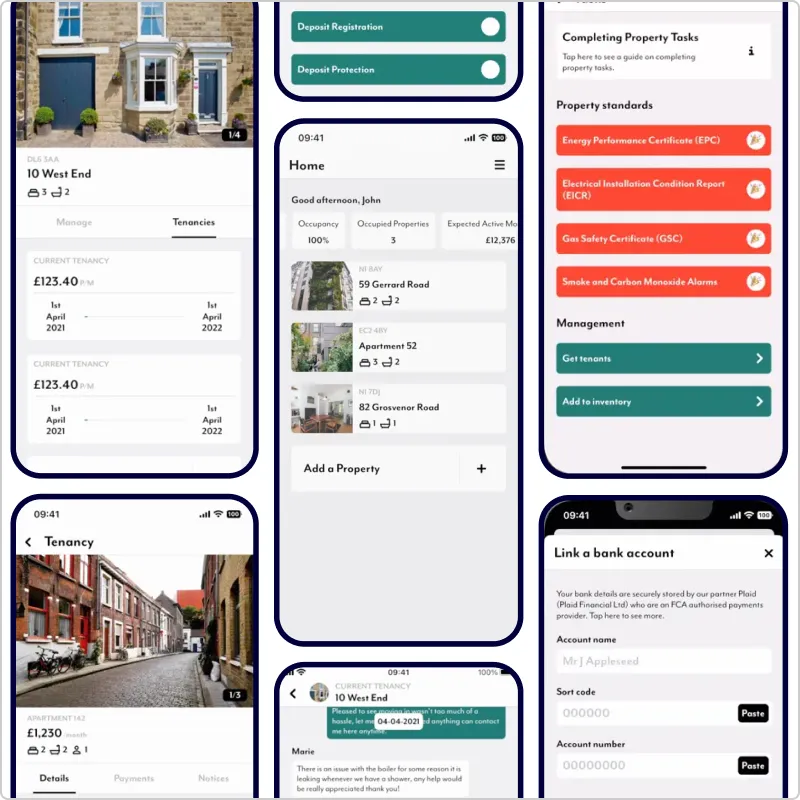
We engineered a high-load backend for an IoT platform that monitors and optimizes commercial HVAC systems in real-time. The machine monitoring solution continuously ingests telemetry streams, integrates with legacy BMS, and converts raw sensor data into automated climate adjustments. This helped the client reduce energy consumption by 15–25% and save nearly 1,000,000 kWh for a single enterprise facility.
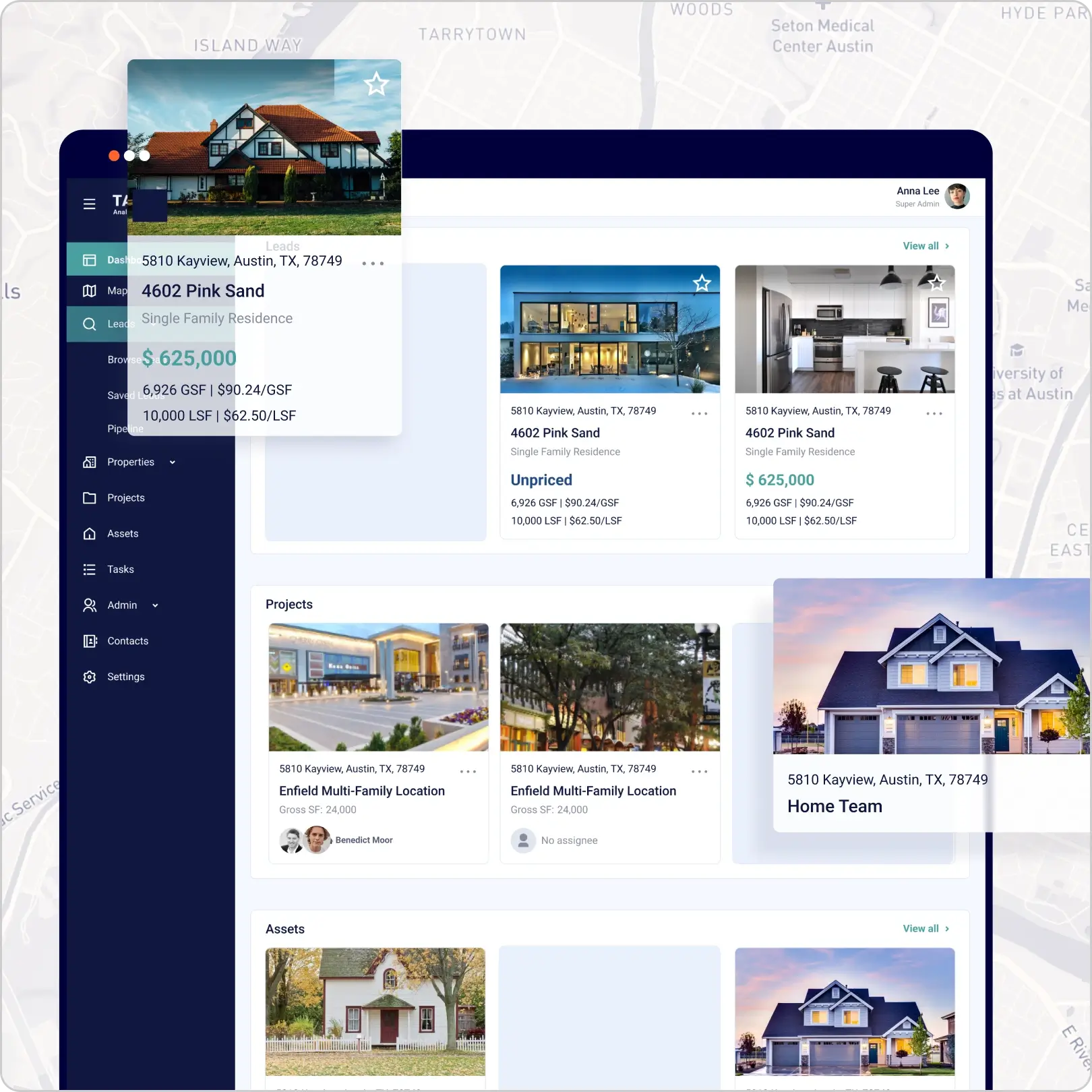
Our team built real-time mapping modules for a digital twin platform used across 35,000+ global events, including the Paris 2024 Olympics. The system overlays live workforce and asset tracking on complex architectural CAD files, creating a shared operational view for teams on the ground. This gives stakeholders instant synchronization, faster coordination, and a single source of truth during high-pressure venue operations.
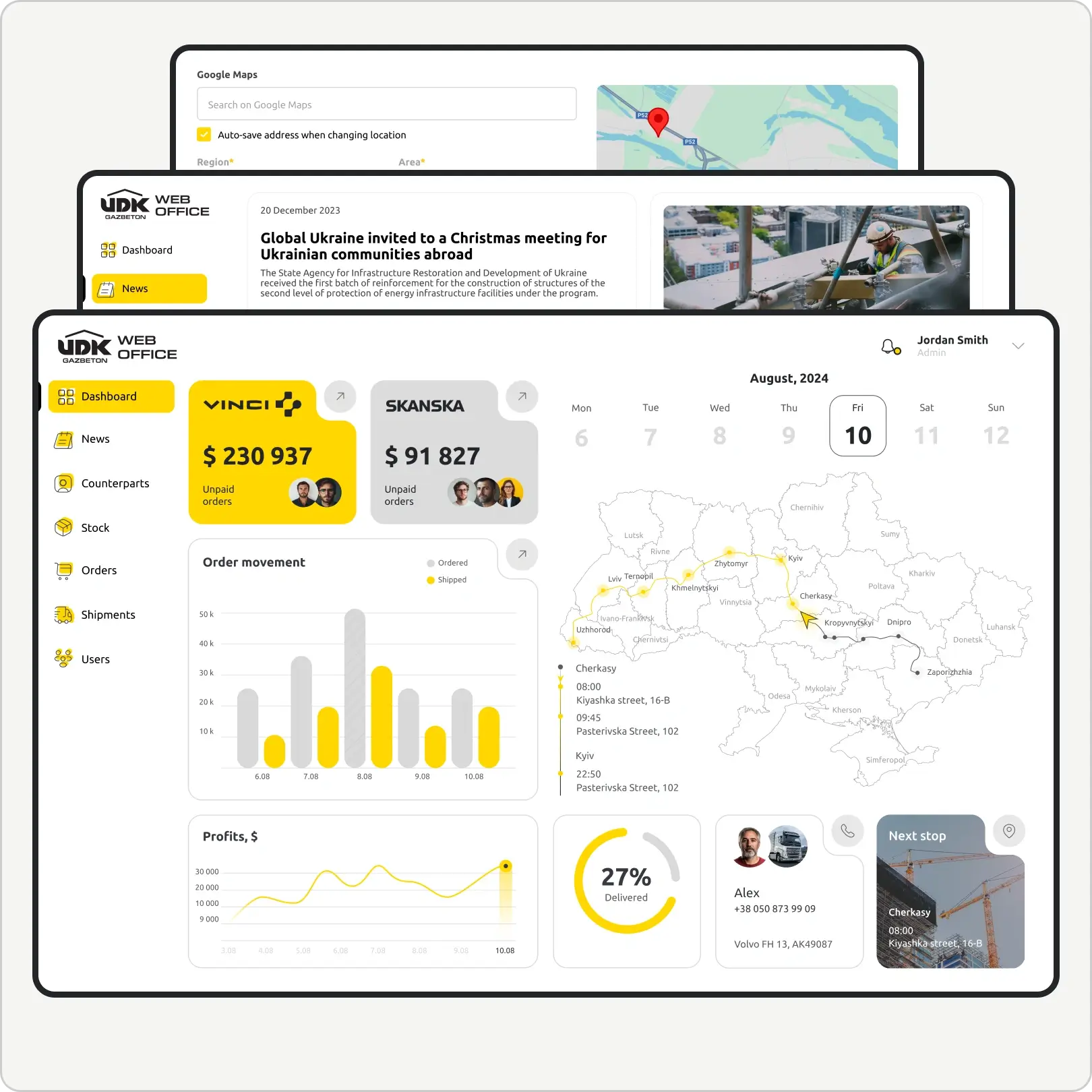
We connected a manufacturer’s legacy ERP with modern real-time dashboards to map live shipment movement and fleet telemetry. The solution gave teams immediate visibility into delivery status, route activity, and operational bottlenecks. This helped the client reduce order errors by 75%, cut dispatch calls by 83%, double truckload capacity, and save over $80,000 annually.
Solution architect

We built systems that helped clients reduce energy consumption by 15–25%, cut escort labor costs by 80%, and reduce dispatch calls by 83%.
Track fleet movement, shipment status, route activity, and vehicle telemetry across live maps and dashboards. Real-time monitoring helps reduce delivery delays, support dynamic route optimization, cut fuel waste, and keep dispatchers, drivers, and managers aligned.
Monitor equipment health, production throughput, downtime, and environmental sensors continuously with machine monitoring systems. Real-time visibility helps you prevent costly machinery failures, react faster to bottlenecks, reduce unplanned downtime, and support workplace safety compliance.
Ingest live data on room occupancy, indoor air quality, energy use, and utility consumption to control building systems more intelligently. Real-time monitoring helps reduce tenant discomfort, optimize energy usage, and simplify ESG reporting without manual oversight.
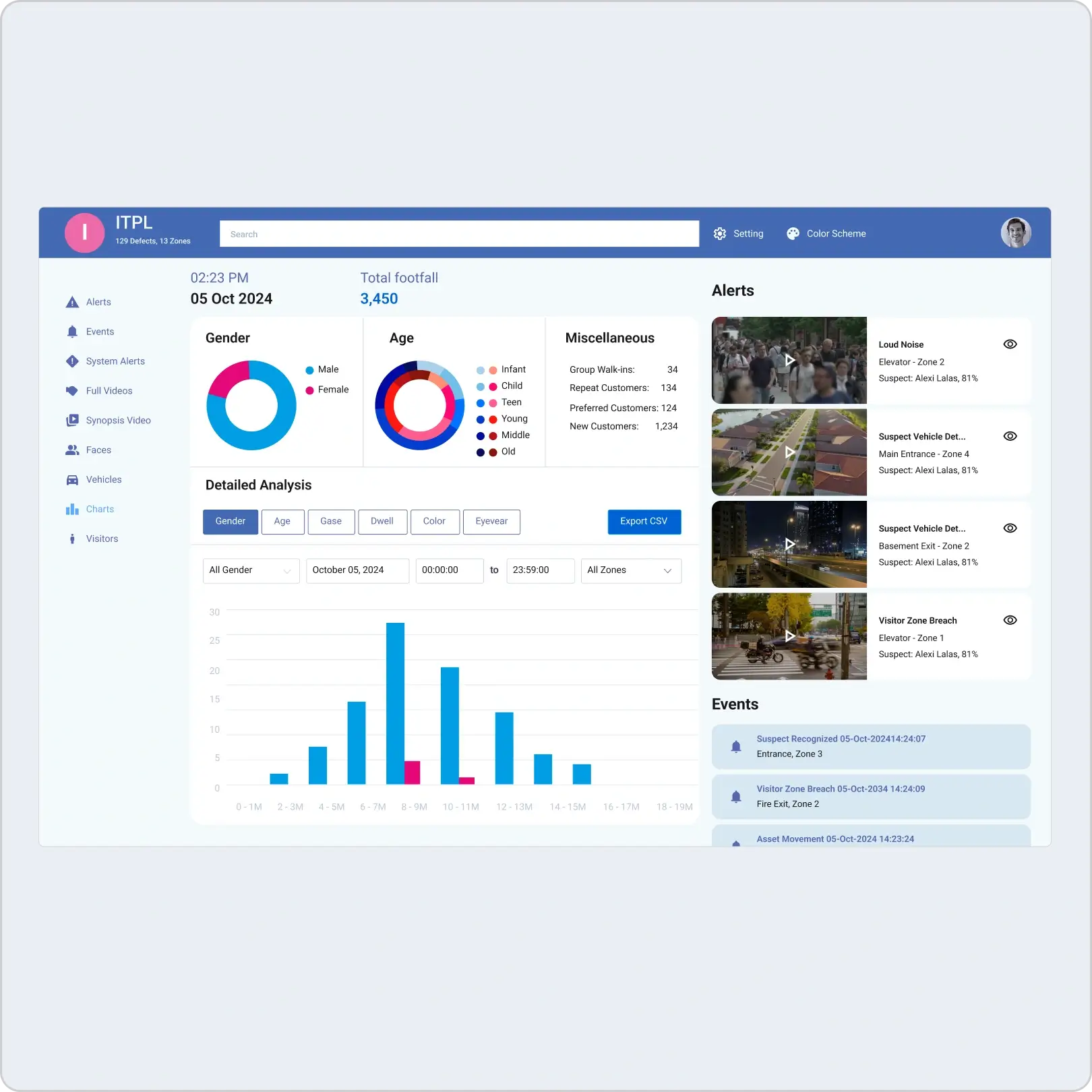
Coordinate workforce positioning, asset security, facility activity, and operational events through live digital twins and dashboards. Real-time monitoring keeps stakeholders synchronized, helps prevent security risks, and creates one reliable view for global-scale operations.
Automate repetitive, data-heavy steps across monitoring workflows, from document processing and alert routing to anomaly triage and operational summaries. AI helps teams reduce manual effort, respond faster, and keep routine decisions moving without constant human input.

Use historical and live operational data to forecast failures, demand spikes, route delays, equipment load, or performance drops. Predictive analytics helps teams spot risks earlier, plan resources better, and act before issues affect operations.

Turn operational, IoT, logistics, or performance data into valuable insights for customers, partners, or internal teams. We help structure raw data, apply AI models, and package insights into dashboards, reports, or product features that create new revenue opportunities.

Stabilize codebases affected by rushed development, quick fixes, or uncontrolled AI-generated code. We review architecture, remove unnecessary complexity, strengthen weak areas, and bring the system back to a maintainable state your team can safely build on.

Real-time monitoring solutions collect, process, and visualize live data from systems, assets, workflows, devices, or infrastructure. Instead of waiting for delayed reports, teams see what is happening right now through dashboards, alerts, maps, or digital twins. These systems help detect issues faster, improve operational control, reduce downtime, and support better decisions across logistics, manufacturing, PropTech, enterprise operations, and other data-heavy environments.
Real-time monitoring software gives your team continuous visibility into operations, so issues are easier to detect and resolve before they grow. It helps reduce manual checks, prevent downtime, improve resource usage, and keep teams aligned with accurate live data. For businesses with distributed assets, high-load systems, or complex workflows, real-time monitoring also improves response speed, supports automation, and creates a reliable data foundation for future optimization.
Real-time monitoring can cover vehicles, shipments, equipment, IoT devices, facilities, energy systems, infrastructure, workflows, user activity, and connected business tools. For example, logistics teams can track fleet telemetry, manufacturers can monitor equipment health, and PropTech companies can collect live data from BMS, HVAC, occupancy, and utility systems. The exact setup depends on your operations, data sources, integrations, and business goals.
Yes. Real-time machine operations monitoring platforms are usually designed to connect with the systems your team already uses, such as ERP, CRM, WMS, TMS, BMS, IoT platforms, telematics providers, mapping tools, and internal software. Before development, we assess available APIs, data formats, sync requirements, and possible limitations. This helps us design stable integrations that keep data accurate, synchronized, and available without disrupting current operations.
Timelines depend on the number of data sources, integrations, dashboards, alerts, user roles, and performance requirements. A focused MVP with core real-time data monitoring features and basic integrations can often be built in 3–6 months. More complex platforms with IoT telemetry, live maps, digital twins, predictive analytics, or high-load data pipelines usually take 6–9 months or longer. A discovery phase helps define scope and set realistic timelines.
The main challenges are data quality, latency, integration complexity, and system scalability. Live monitoring solutions often process data from many sources, so information must be cleaned, synchronized, and delivered without delays. Another risk is alert overload, where teams receive too many notifications and miss what matters. These challenges are reduced through clear data architecture, well-planned integrations, smart alert logic, and testing under realistic load.
Low latency starts with the right architecture. We design data pipelines around your expected data volume, update frequency, and operational criticality. This includes choosing suitable streaming, storage, processing, and alerting approaches, then testing how the system behaves under load. The endgame is to make dashboards, maps, and alerts accurate enough for real operational decisions, without delays that could affect response time or trust in the platform.
Yes. AI can make real-time monitoring more useful by detecting anomalies, predicting failures, prioritizing alerts, forecasting demand, summarizing operational events, or recommending next actions. The best AI use cases are tied to clear outcomes, such as reducing downtime, improving dispatch decisions, or cutting manual review. We first validate whether your data supports the use case, then integrate AI into the product where it improves workflows.
Security is built into the system architecture from the start. Real-time monitoring solutions often handle sensitive operational, location, infrastructure, or user data, so access control, encryption, secure APIs, and audit trails are important. We define user roles, protect data in transit and storage, and limit access to only what each user needs. Additional security requirements can be planned during discovery based on your industry and compliance needs.
Yes, if scalability is planned early. A well-designed real-time monitoring platform can support more users, assets, locations, integrations, and data volume without redesigning the core system. We plan architecture, data flows, and infrastructure with future growth in mind, so new dashboards, modules, devices, or regions can be added gradually. This keeps the platform stable while your operations become more complex.
We help you avoid vendor lock-in by making your system easy to own, maintain, and transfer. Throughout development, you get access to the codebase, infrastructure, APIs, documentation, and other project materials. Our team documents architecture decisions, data flows, integrations, deployment logic, and key technical dependencies, so you understand how the platform works. We also provide knowledge transfer sessions to help your internal team or another vendor maintain, scale, or extend the system after launch.
Clarify whether the vendor has experience with live data, high-load systems, integrations, and operational dashboards. Ask how they approach discovery, data architecture, latency, alert logic, testing, and scalability. You should also confirm ownership of code and IP, access to documentation, communication routines, and post-launch support. Clear answers show whether the team can build a real-time machine monitoring that works reliably in real conditions.