AI solutions
What we do
Services
Experts in
How we work
Start with AI opportunities that can move a real business metric. We map your workflows, find where generative AI can cut costs, remove bottlenecks, improve customer experience, or create revenue, then rank each use case by value, effort, and risk.
Pick the setup that fits your product, data, budget, and growth plans. Our team compares models, RAG, fine-tuning, and orchestration options, then recommends the approach that delivers the required quality without unnecessary complexity.
Control API, infrastructure, and iteration costs before they scale. We model expected usage, define clear delivery phases, and design the architecture around your volumes, so spending stays visible and manageable from pilot to production.
Keep AI outputs reliable enough for real business workflows. Our generative AI consulting company identifies where mistakes could create risk, then adds data grounding, validation rules, confidence thresholds, human review, or fine-tuning where the use case requires it.
Build security into gen AI solutions from the start. We define what data the model can access, how it moves, where it is stored, and who can use it, while aligning the setup with GDPR, HIPAA, SOC 2, and your internal policies.
Keep the freedom to change models and providers as the market evolves. We use modular, model-agnostic architecture, so your team can replace components, retain control of the code and data, and avoid rebuilding the whole system later.


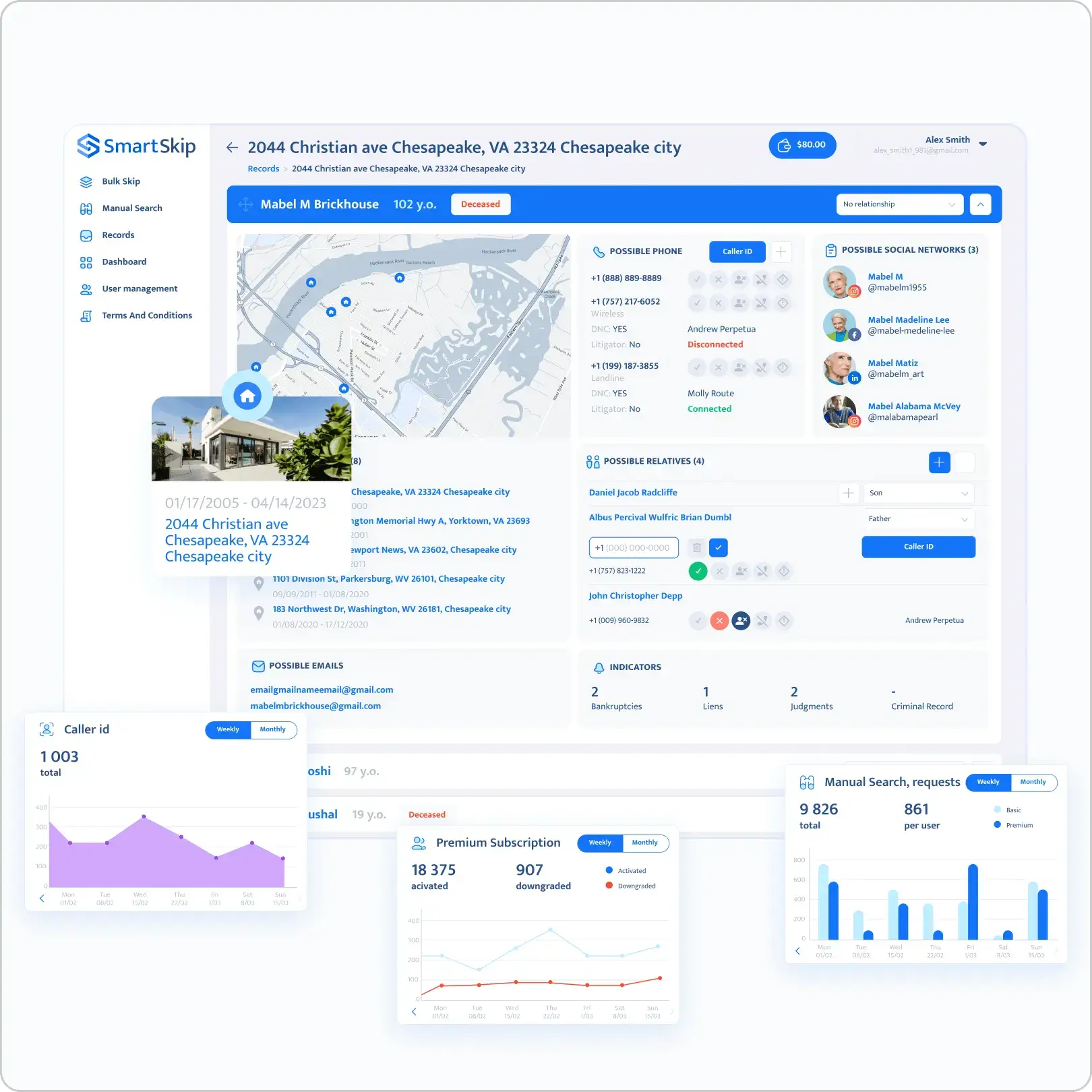
Added AI-powered feature that turned slow, multi-step user onboarding into an automated flow, resulting in enhanced UX and strengthened retention.
3
weeks delivery
67%
faster onboarding
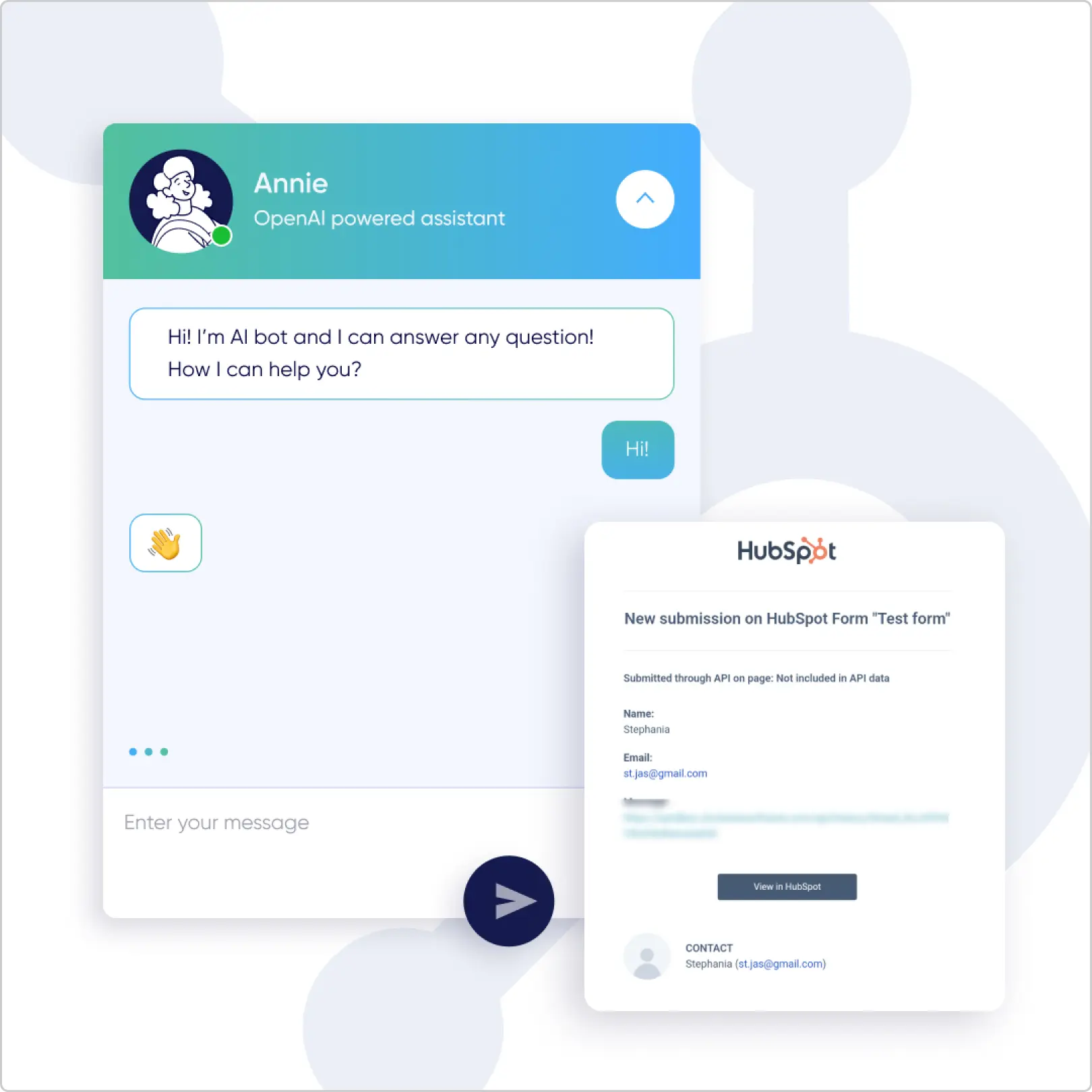
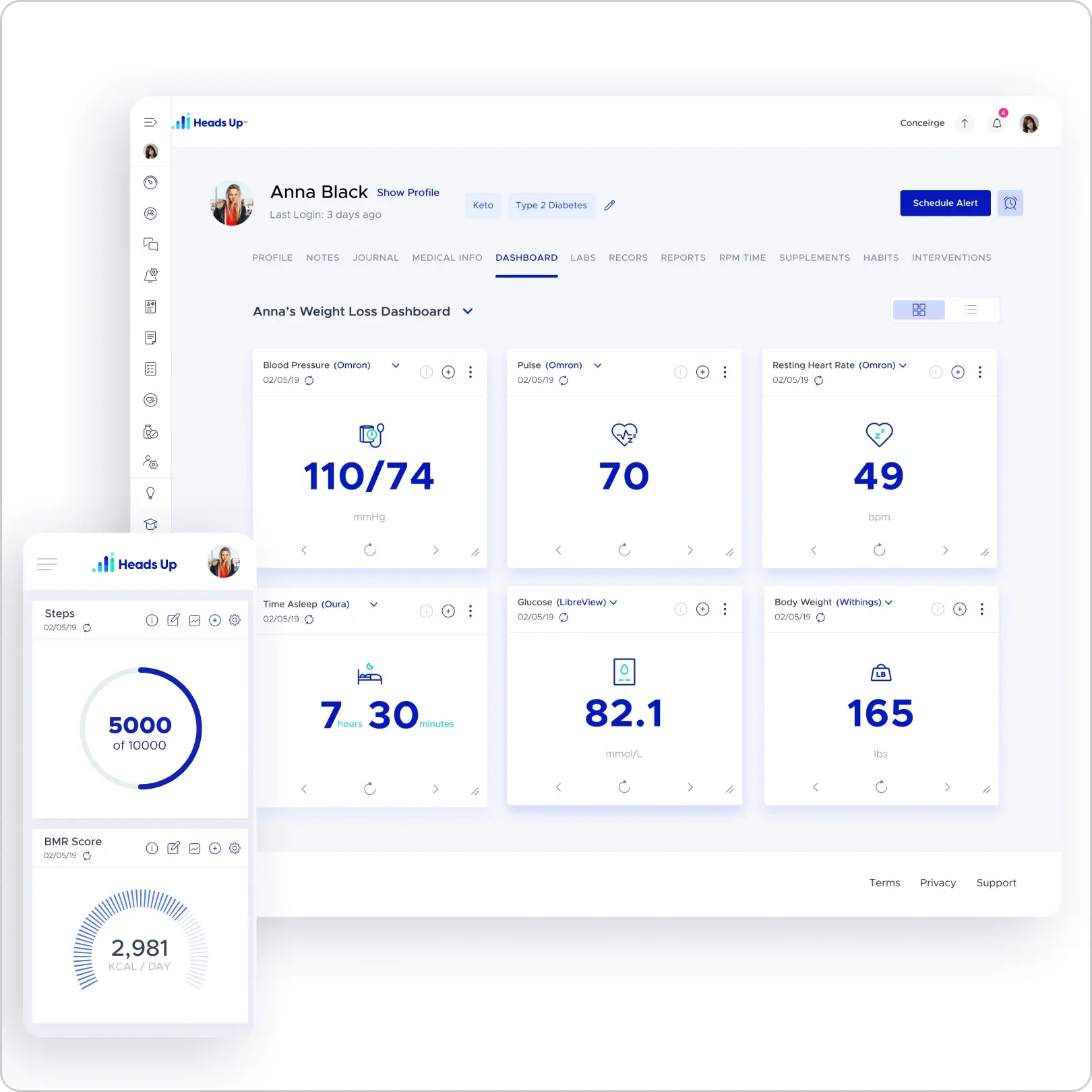
Added a GPT-4–powered assistant to the client's website to improve CRO and capture leads — fully integrated with HubSpot to streamline lead management.
1.5
months delivery
95%+
answer accuracy
500+
leads captured in 1 month
Five AI projects delivered in the last year improved user engagement, reporting efficiency, and revenue per customer. We bring this hands-on experience into generative AI consulting and show what worked for clients with similar challenges with clear business outcomes examples.
20% of our engineers specialize in LLMs and work with RAG, fine-tuning, prompt engineering, and model orchestration. You get generative AI consulting and technical recommendations based on hands-on production experience.
We plan generative AI around your current stack, data flows, and business logic. A decade of integration experience helps us account for APIs, CRMs, SaaS tools, databases, and internal systems from the start.
Since 2014, we have delivered 200+ products across SaaS, marketplaces, ERP systems, and data platforms. This experience helps us identify risks early, keep scope realistic, and build a roadmap your team can execute.
We work with proven models such as GPT, Claude, Gemini, and Llama, adding retrieval, validation, permissions, fallbacks, and monitoring where needed. You get a practical architecture designed for stable production use.






Our generative AI consulting company defines the model setup, business data scope, conversation logic, and CRM integration for AI assistants that handle routine questions, recommend relevant services, and qualify leads. Connected to HubSpot, the solution captures contact details and conversation context automatically, reducing support load and speeding up sales follow-up.
We design secure AI assistants that combine internal documentation with role-based data retrieval. Natural-language requests turn into controlled, read-only database queries, giving employees instant access to HR, management, and product information. One such solution automated 100+ recurring requests and reduced reporting time from hours to seconds.
Generative AI can extract structured information from resumes and other uploaded documents, then populate user profiles automatically. We define the extraction logic, validation rules, and integration approach to keep data accurate. This setup reduced onboarding time from over 2 minutes to 40 seconds and contributed to time-to-fill improvement by 40%.
We plan generative AI architectures for products that process large data volumes and operate under continuous load. Our experience with platforms used by Aston Martin, WHO, Dyson, Oracle, and Unilever helps us account for model limits, latency, infrastructure costs, data flows, and scaling requirements before implementation begins.
We connect generative AI outputs with clear interfaces, dashboards, and product workflows. Users receive structured insights, recommendations, and next steps instead of raw model responses. This makes complex AI functionality easier to understand, trust, and use in everyday business decisions.



















Head of delivery

We evaluate impact, feasibility, data, and operating costs to focus your investment on functionality with clear business potential.
Add AI features that improve onboarding, product guidance, content creation, reporting, and customer support. We assess your product data, workflows, and architecture to identify the strongest use cases and define the right model and integration approach. The result is higher product value, lower support load, and stronger retention without a full rebuild.
Improve listing quality, buyer-seller communication, moderation, search, and matching with generative AI. We help you define which data the system should use, how outputs should be validated, and where AI should fit into existing marketplace workflows. Through gen AI consulting, we identify and shape solutions that can reduce manual operations, improve transaction quality, and support growth without adding rule-heavy processes.
Turn internal documentation and operational data into secure AI assistants, automated reports, and faster request handling. We map high-volume workflows, define access permissions, and select the right retrieval and validation setup. Employees get reliable information faster, while HR, IT, compliance, and management teams spend less time on repetitive requests.
Automate research, drafting, summarization, reporting, and knowledge retrieval without lowering output quality. Gen AI consulting helps identify repeatable work, define reusable AI workflows, and add the right review and approval steps. Teams complete routine cognitive tasks faster and keep specialists focused on strategy, creative decisions, and client work.
Validate the AI use case before committing budget to full development. We assess business value, data readiness, model options, integration needs, and operating costs, then define a focused PoC or MVP scope. This helps you test the strongest idea sooner, avoid overengineering, and build only what supports real product demand.
Automate document processing, request handling, data entry, routing, reporting, and customer communication. We connect AI to your existing systems and add validation, permissions, and fallback logic to keep workflows fast and controlled.

Turn historical and live data into forecasts, risk signals, and actionable recommendations. We build predictive models and integrate the results into dashboards and workflows, helping teams plan earlier and make better-informed decisions.

Convert operational data into products, reports, and insights your business can sell or embed. We identify valuable data use cases, shape the delivery model, and build AI-powered tools for customers, partners, or internal teams.

Stabilize codebases affected by rushed or uncontrolled AI-generated development. We review the architecture, remove fragile logic, rewrite weak components, and restore a clear structure your team can maintain and scale.

Gen AI consulting makes sense when your team has several promising ideas but no clear basis for choosing where to invest. We compare each use case by business impact, data readiness, implementation effort, operating cost, and error tolerance. You get a prioritized shortlist, with weak ideas removed early and the strongest opportunities mapped to users, success metrics, technical requirements, and next steps. This keeps the first investment focused on a problem AI can realistically solve.
The scope depends on how far you have already progressed. We can start generative AI consulting services with use case discovery and feasibility analysis, then move into data assessment, model selection, architecture planning, integration requirements, cost forecasting, and security. The final output may include a technical roadmap, PoC scope, delivery estimates, success metrics, and clear recommendations for implementation.
We start gen AI consulting with workflows where teams already lose time, money, or capacity. Each opportunity is evaluated against expected impact, available data, technical complexity, error tolerance, and integration effort. The strongest use cases usually have a clear user, repeatable input, measurable output, and a realistic path into existing operations.
Gen AI consulting is the planning and preparation work that happens before development begins. We validate the business case, assess the data, compare technical approaches, estimate operating costs, and identify integration and security risks. This helps the development team start with a clearer scope, reduce rework, and build a solution that supports the intended business outcome.
Not always. Many solutions can use pretrained models together with product data, documentation, CRM records, or internal knowledge through RAG and structured prompting. What matters more than raw volume is whether the information is relevant, accessible, current, and consistent enough for the task. A generative AI consultant can assess your sources, identify missing or unreliable data, and recommend the lightest approach that meets the required quality. Custom training only makes sense when it provides a clear advantage over existing models.
Yes. Documents, emails, support tickets, reports, CRM notes, and knowledge bases often provide enough material for an initial solution, even when the data is not perfectly structured. We identify reliable sources, define cleanup or enrichment steps, and add validation where needed. When inputs remain incomplete, the system can request clarification, limit the action it takes, use fallback logic, or route uncertain cases to a person. This allows you and a gen AI consulting company to work with current data realities instead of waiting for a perfect dataset.
The decision depends on what the system needs to know and how consistently it must behave. Prompting may be enough for simple, repeatable tasks. RAG works well when answers must rely on current or proprietary information. Fine-tuning becomes relevant when the model needs to follow specialized patterns at scale. During generative AI consulting, we compare quality, cost, maintenance, and data requirements before recommending an approach.
There is no single switch that removes hallucinations. Reliability comes from the system around the model. Depending on the workflow, we combine trusted data retrieval, structured prompts, constrained output formats, validation rules, confidence thresholds, source references, and human approval. We also define what the system should do when information is missing, outdated, or conflicting. A strong gen AI consulting company treats uncertainty as a design requirement and builds clear refusal, clarification, and escalation behavior into the solution from the start.
Initial development is only part of the cost. Our generative AI consulting company also accounts for model usage, infrastructure, data preparation, integrations, testing, monitoring, and future iteration. Usage forecasts help estimate API and inference expenses at realistic volumes. This gives you a clearer view of both the launch budget and the cost of running the solution as adoption grows.
A focused engagement around one use case may take a few weeks. A broader assessment covering several departments, data sources, or product workflows requires more time. The timeline also changes when the scope includes technical experiments or a proof of concept. We define the expected deliverables early, so the consulting phase produces decisions and a usable roadmap rather than open-ended research.
In most cases, gen AI solutions should work inside the tools and workflows your team already uses. Generative AI can connect with CRMs, ERPs, SaaS platforms, databases, support systems, document repositories, and internal portals. We map the necessary APIs, permissions, data flows, and failure scenarios before implementation to avoid building another isolated tool that creates extra work.
Security starts with limiting what the model can access and why. We define data boundaries, user permissions, storage rules, logging, and what may leave your infrastructure. The architecture may include private environments, encryption, data masking, audit trails, role-based access, retention controls, and provider settings that prevent training on your inputs. A generative AI consultant should also review how prompts and outputs move between systems and align the design with internal policies and requirements such as GDPR, HIPAA, or SOC 2.
Yes. Business logic, data retrieval, integrations, and model access should remain separate where possible. This modular setup makes it easier to replace a model provider without rebuilding the full product. We also document the architecture and keep ownership of the code, data pipelines, prompts, and infrastructure with your company, so future changes do not depend on one vendor of generative AI consulting services.
A PoC is useful when the main uncertainty involves model quality, data suitability, latency, cost, integration behavior, or user adoption. Instead of building a simplified version of the whole product, we test the riskiest assumption first. That may be answer accuracy, document extraction, workflow completion, retrieval quality, or response time under load. Generative AI consulting helps define a narrow PoC with measurable acceptance criteria, realistic test data, and a clear decision at the end: proceed, adjust the approach, or stop before a larger investment.
Success should reflect the workflow the solution improves. Depending on the use case, we may track handling time, support deflection, onboarding completion, response accuracy, task completion, conversion, operating cost, user adoption, or escalation rate. Technical metrics such as latency and retrieval quality still matter, but they need to connect to a business outcome. We define what is generative AI consulting baseline, target values, measurement method, and review period early, so results can be judged using production data rather than demo impressions.
Yes. The same team can move from generative AI consulting services into PoC development, MVP delivery, integration, testing, deployment, and post-launch optimization. This keeps the technical context intact and reduces handoff time. The consulting deliverables also remain usable if you decide to continue with an internal team or another vendor.
With generative AI consulting, we design the solution so your team can understand and change it later. That includes documented architecture, modular integrations, accessible prompt and orchestration logic, monitoring, and knowledge transfer. You retain the codebase, infrastructure, and technical documentation, which allows your specialists to support the system internally or gradually take over development.