AI solutions
What we do
Services
Experts in
How we work


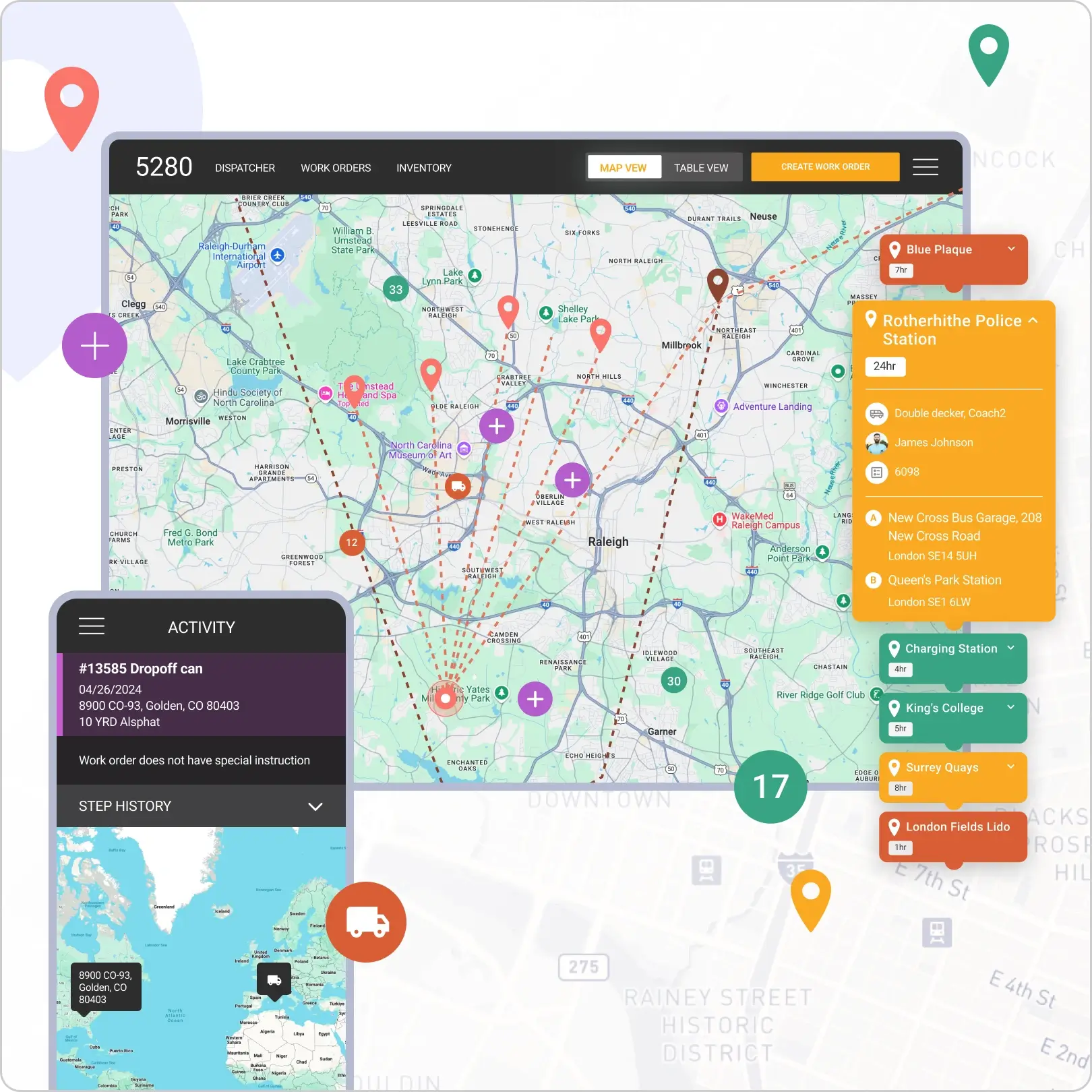
Track vehicles, assets, and field operations live with precise location data, status updates, and movement history in one place.
Plan, assign, and dynamically adjust routes based on live data, priorities, and constraints to keep operations efficient and on time.
Identify fuel waste, idling, route inefficiencies, and usage patterns to reduce costs and improve overall fleet performance.
Monitor driving behavior, detect risks early, and use alerts and telematics data to improve safety and support better driver decisions.
Set up location-based triggers to monitor zones, automate actions, and respond instantly to deviations, delays, or critical events.
Integrate telematics with TMS, ERP, WMS, and fuel systems to unify data flows and remove friction across daily operations.
We’ve built 10+ location-based platforms and 20+ products with map integrations, covering real-time tracking, routing, geofencing, and complex GIS-driven use cases across different industries.
We’ve integrated APIs for 100+ businesses and handled third-party systems in 90% of projects, ensuring stable data flow between telematics platforms, ERPs, CRMs, and mapping services.
Our engineering is built on strict coding standards, mature CI/CD pipeline practices, and QA approach with 95–100% test coverage, resulting in software that stays stable under real-world load.
With 200+ delivered products, we’ve dealt with diverse edge cases, unstable integrations, and scaling issues, so we know how to anticipate risks early and keep delivery predictable.









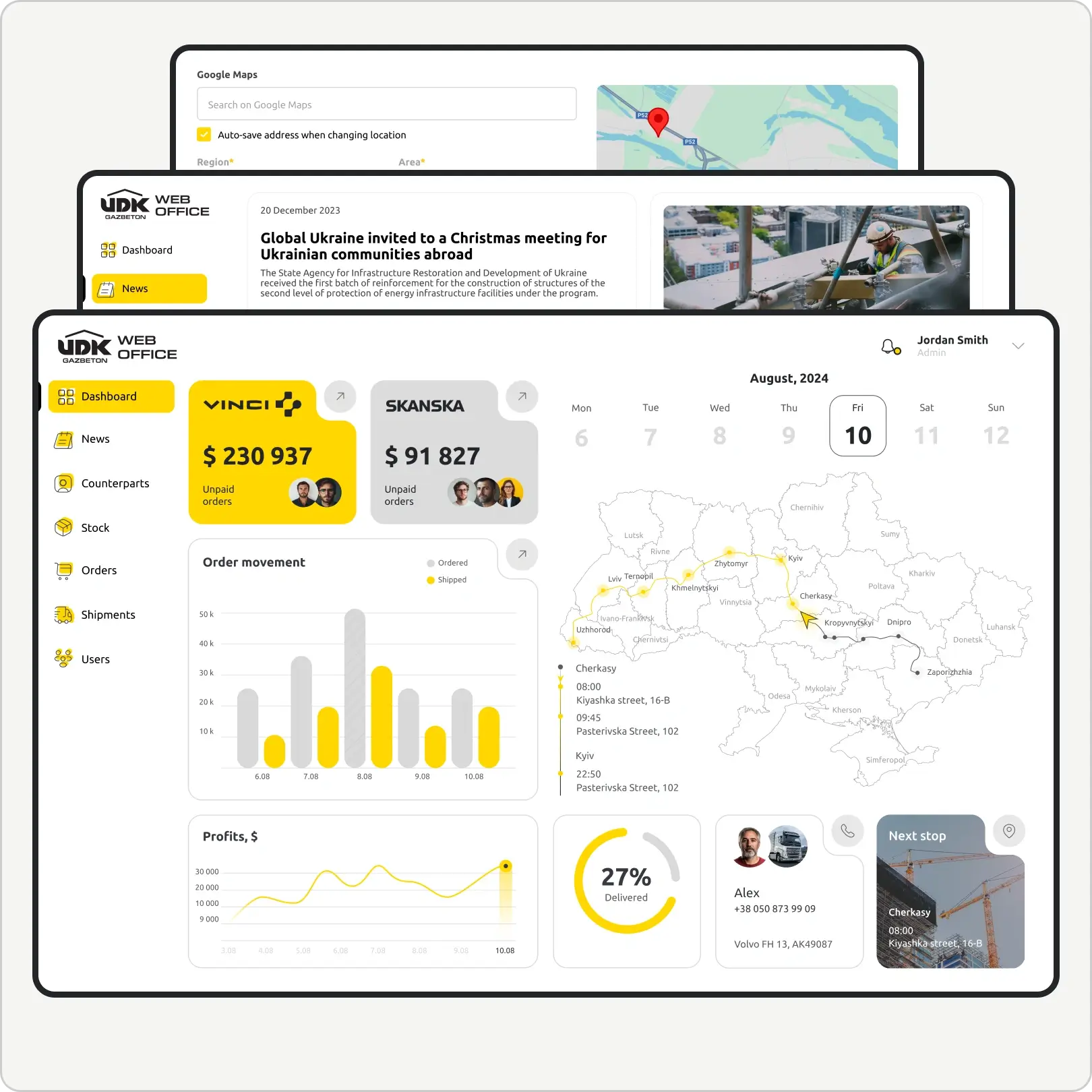
We reduced errors by 75% and daily calls by 83% for a client by replacing spreadsheets, calls, and disconnected tools with automated order handling and planning logic. With clearer data and fewer handoffs, the client doubled truckload capacity and saved over $80K annually.
Our telematics software development company delivered a fleet management system with 1,200+ automated tests and ~99% coverage, resulting in just one support request in the first 6 months.
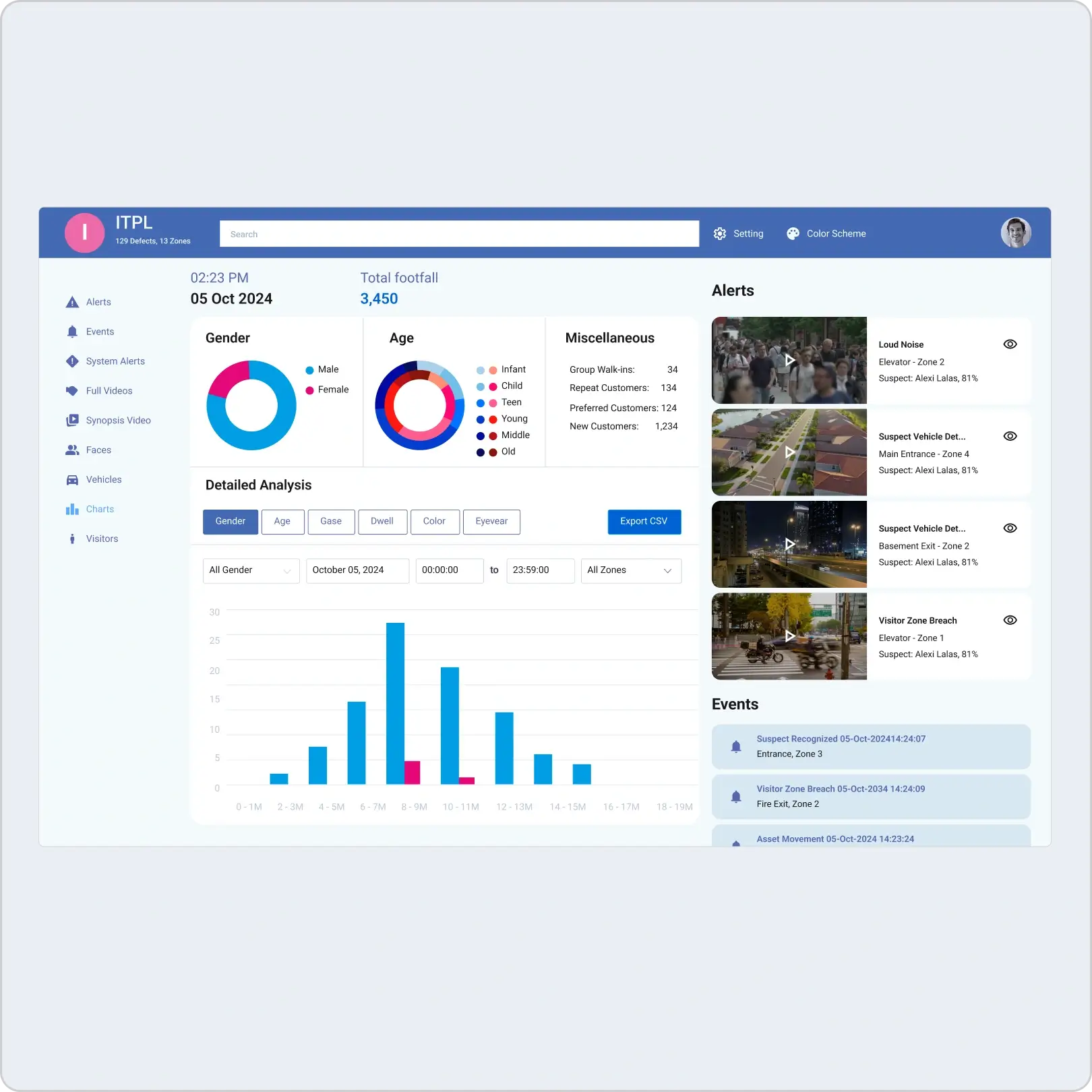
Our team built a tracking system used by UPS facilities that replaced manual asset tracking with real-time data. This reduced coordination effort and cut labor costs by up to 80%, while giving operators a clear view of asset location and movement.
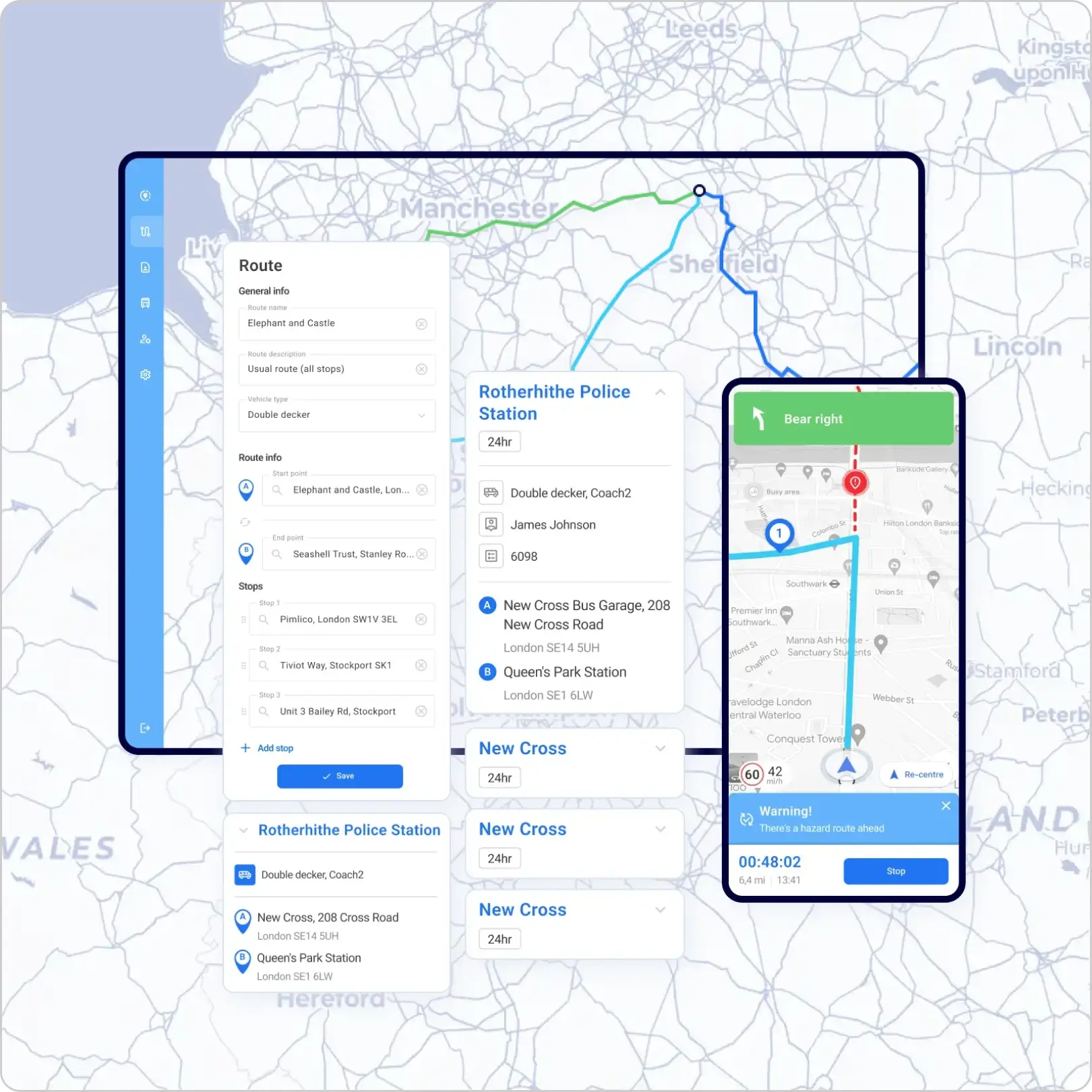
We helped prevent route risks for London’s #1 bus operator by creating a route-planning system that detects low bridges and restricted roads before routes are assigned. This gives dispatchers safer route options in dense urban traffic and reduces reliance on driver experience alone.
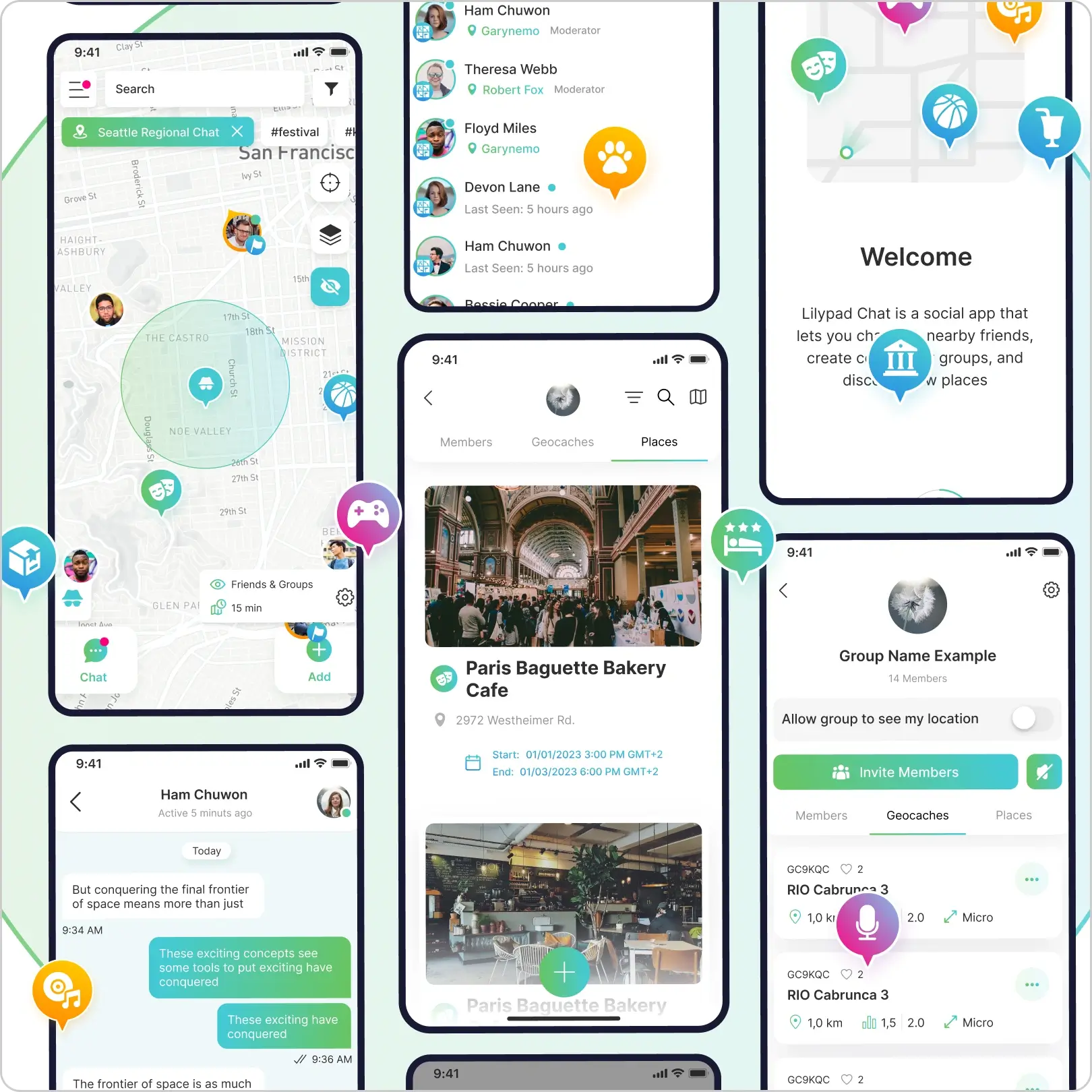
We helped a geolocation-based chat app attract its first users in the US and Canada by building iOS and Android products focused on simple onboarding and immediate value. The app reached 1,300+ downloads in the first five months without heavy promotion.










Solution architect

With 10+ years in integrations and 200+ delivered products, we build systems that stay reliable under real operational load.
Detect issues before breakdowns using ML models trained on repair logs and live sensor data like temperature, voltage, and vibration. Identify patterns early, reduce downtime, and plan maintenance based on actual equipment condition instead of fixed sch

Analyze driving behavior in context, including traffic, weather, and road conditions, to assign risk scores to each driver. Help managers spot risky patterns early, deliver targeted coaching, and reduce accident rates without relying on manual review.

Process traffic, weather, vehicle constraints, and delivery windows in real time to build efficient routes. Automatically adjust plans when conditions change, helping reduce delays, fuel usage, and missed time slots.

Ask questions in plain language and get instant answers from your telematics data. Skip dashboards and manual reports, access insights faster, and let teams focus on decisions instead of data preparation.

Detect risky behavior like microsleeps, phone use, or tailgating directly from video streams. Trigger alerts in real time and help prevent incidents before they happen, instead of reacting after the fact.
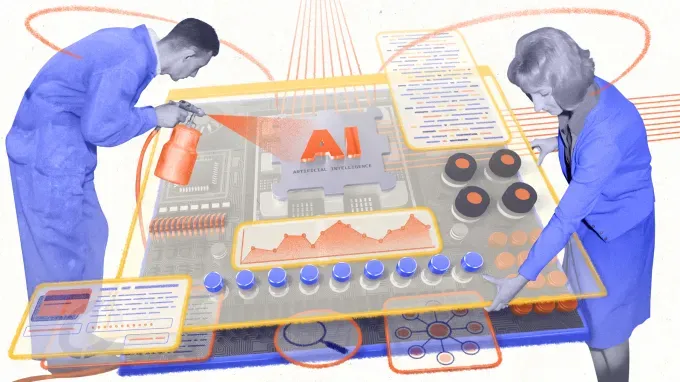
Telematics changes how operations are managed on a daily basis. Instead of reacting to issues after they happen, teams can see what’s going on in real time and act earlier. Dispatchers don’t need to call drivers to understand delays. Managers don’t rely on reports from yesterday. Routes can be adjusted as conditions change, and issues like idle time, missed stops, or inefficient usage become visible immediately.
Over time, this reduces manual coordination, improves planning accuracy, and aligns teams around the same data. The result is not just visibility, but faster decisions, fewer operational gaps, and more predictable execution across the entire fleet.
Yes. Telematics software can integrate with your existing TMS, ERP, WMS, CRM, fuel systems, mapping services, and internal tools. In practice, telematics only delivers full value when it is connected to the systems your team already uses. On its own, it becomes just another dashboard. The real impact comes when location data, vehicle status, and events flow into daily operational workflows.
This requires more than basic API connections. Data formats differ, APIs have limits, and external systems can behave unpredictably. We map how data moves between systems, set validation and sync rules, handle API errors, and add fallback logic for missing or delayed updates.
We design for imperfect data from the start. GPS signals drop, devices fail, and data can be delayed or incomplete. We handle this with fallback logic, data smoothing, and validation rules, so the system remains usable instead of breaking. For example, when location updates are missing, the platform can estimate position or flag uncertainty clearly, allowing teams to keep working without losing visibility.
The telematics software development services timeline depends less on coding and more on clarity of requirements and integrations. A focused MVP with tracking, routing, and core integrations typically takes 3–5 months. More complex systems with multiple data sources, custom logic, or AI features can take 6+ months.
Most delays come from unclear data flows, changing requirements, or unexpected integration constraints. That’s why discovery and technical validation are critical early on. When data sources, APIs, and system boundaries are defined upfront, delivery becomes much more predictable and timelines hold more reliably.
Not always. Many use cases can be covered with existing GPS trackers, mobile apps, or third-party devices. If you need deeper data, such as engine diagnostics or sensor-level insights, we can integrate with IoT devices or custom hardware. We usually start to develop telematics software by evaluating what data is already available and only suggest custom hardware if it’s required for your use case.
We design for real usage instead of ideal scenarios. That includes handling frequent location updates, large fleets, and continuous data streams without performance issues. We define data flow boundaries, optimize critical paths, and test under realistic load conditions. Stability comes from architecture decisions made early, not just testing at the end.
The biggest risks are not in development itself, but in how the system is defined. Unclear data flows, underestimated integration complexity, and trying to solve everything at once can quickly lead to delays and rework.
Telematics systems rely on multiple external sources such as GPS providers, devices, and third-party APIs, which often behave inconsistently. If these constraints are not addressed early, they surface later as bugs or unstable behavior.
We reduce these risks through structured discovery, early validation of integrations, and controlled iterations, so issues are identified before they affect the entire system.
Yes, if scaling is considered from the start. We use modular architecture and separate components like tracking, routing, and analytics so they can scale independently. As fleet size and data volume increase, the system can handle higher load without a full rewrite, while new features can be added without disrupting existing functionality.
Yes. With telematics software development services we deliver systems to be understandable and maintainable, with clear architecture, documented data flows, and visible logic. Your team has full access to the codebase and infrastructure, so they can support, extend, or take over development. The goal is to leave you with a system you control, not one that depends on us.
AI is useful when manual decisions become too complex or time-consuming. This includes route optimization with many variables, driver risk scoring, predictive maintenance, or anomaly detection. If current rules are still manageable, AI may not be needed yet. When we work with a telematics solution provider, we usually start with a clear use case and validate its impact before expanding further.
Choosing a vendor for telematics is less about tech stack and more about experience with real-world constraints. These systems deal with live data, unstable signals, and multiple integrations, which require a different approach than standard web or SaaS products.
A strong vendor who knows how to develop telematics software will ask detailed questions about your workflows, data sources, and edge cases early on. They will highlight risks, explain trade-offs, and give realistic estimates based on similar projects.
If a team focuses only on features and timelines without addressing integration and data challenges, it usually leads to problems later in delivery.
In-house telematics software development gives you full control but requires time to hire and manage a team with niche experience. Outsourcing lets you start faster with engineers who have already built similar systems. Many companies combine both approaches, using external teams for delivery while keeping product strategy and ownership internally.
Predictability comes from structure and visibility. We break the project into clear stages with defined scope, priorities, and checkpoints. Progress is tracked continuously, so any deviation in timeline or budget becomes visible early.
You have access to tasks, code, and updates while we are developing telematics software. We also validate technical assumptions and integrations upfront, since most unpredictability in telematics comes from external systems.
This approach keeps delivery aligned with expectations and reduces the risk of unexpected delays or scope drift.
Control is maintained through visibility and ownership, with no need for micromanagement. You have full access to the codebase, task tracking, and documentation from the start. Every change is traceable and tied to a specific goal or decision.
You don’t need to manage day-to-day execution, but you can review progress, adjust priorities, and step into key decisions at any point. This keeps strategic control on your side while reducing operational overhead.
Changes are expected, especially in complex systems. We handle them through controlled adjustments. Each change is evaluated for its impact on scope, timeline, and integrations before implementation. This prevents small updates from creating delays or breaking other parts of the system.
You fully own the codebase, infrastructure, integrations, and documentation. This is defined from the beginning of the project.
We also make sure that custom telematics software is understandable and maintainable, with clear architecture and documented decisions. This allows your team to continue development, make changes, or transfer the project to another vendor without dependency.
Track vehicles in real time, plan and adjust routes based on live data, and automate dispatching. Reduce delays, fuel costs, and manual coordination while keeping deliveries and fleet performance predictable.
Track asset location across sites, monitor engine hours and usage, and plan maintenance before breakdowns. Reduce equipment loss, avoid downtime, and keep operations running without manual tracking.
Dispatch the closest available technicians based on location and workload, provide accurate ETAs, and optimize routes between jobs. Reduce travel time, improve service speed, and lower vehicle wear.