







AI solutions
What we do
Services
Experts in
How we work

Optimize routes, vehicle utilization, and load distribution to reduce fuel use, mileage, idle time, and other operational expenses.
Plan routes around delivery windows, vehicle capacity, driver availability, and priority stops to complete more deliveries on time.
Adjust routes during execution based on traffic, delays, cancellations, urgent orders, or operational disruptions.
Distribute workloads more efficiently, avoiding underused capacity, overloaded routes, and unnecessary fleet expansion.
We’ve built 10+ logistics and transportation systems covering routing, dispatching, fleet management, tracking, and operational dashboards. This experience helps us identify and manage technical risks early, from map service limitations and real-time data accuracy to complex load calculation logic, vehicle restrictions, and route recalculation under changing conditions.
We manage the full product lifecycle, from discovery and route logic design to architecture, development, testing, deployment, and growth. One team keeps business context, technical decisions, and delivery responsibility in one place, so your route planning system stays aligned with your operations and goals.
We integrate GPS, telematics, traffic APIs, and internal tools to process high-frequency data streams with sub-second latency and 99.9%+ data synchronization accuracy to keep routes, ETAs, and dispatch decisions based on current conditions, not outdated plans. This helps teams react faster when delays, cancellations, or route disruptions appear.
Our route planning and optimization software comes with clean architecture, CI/CD pipelines, and QA with 95–100% test coverage across route planning builds. The result is software your dispatchers, drivers, and managers can rely on during daily delivery operations.
Route planning systems involve a lot of moving parts: routing logic, GPS integrations, telematics, traffic APIs, dispatch rules. We keep route optimization software development services scope clear, validate logic early, and run regular build reviews so issues surface before they compound.
We apply AI across code generation, testing, and documentation to ship 4–8x faster and cut development costs by up to 65%. Senior engineers own every architecture call, validate every AI output, and keep the codebase clean. You get faster delivery without losing control over what gets built.

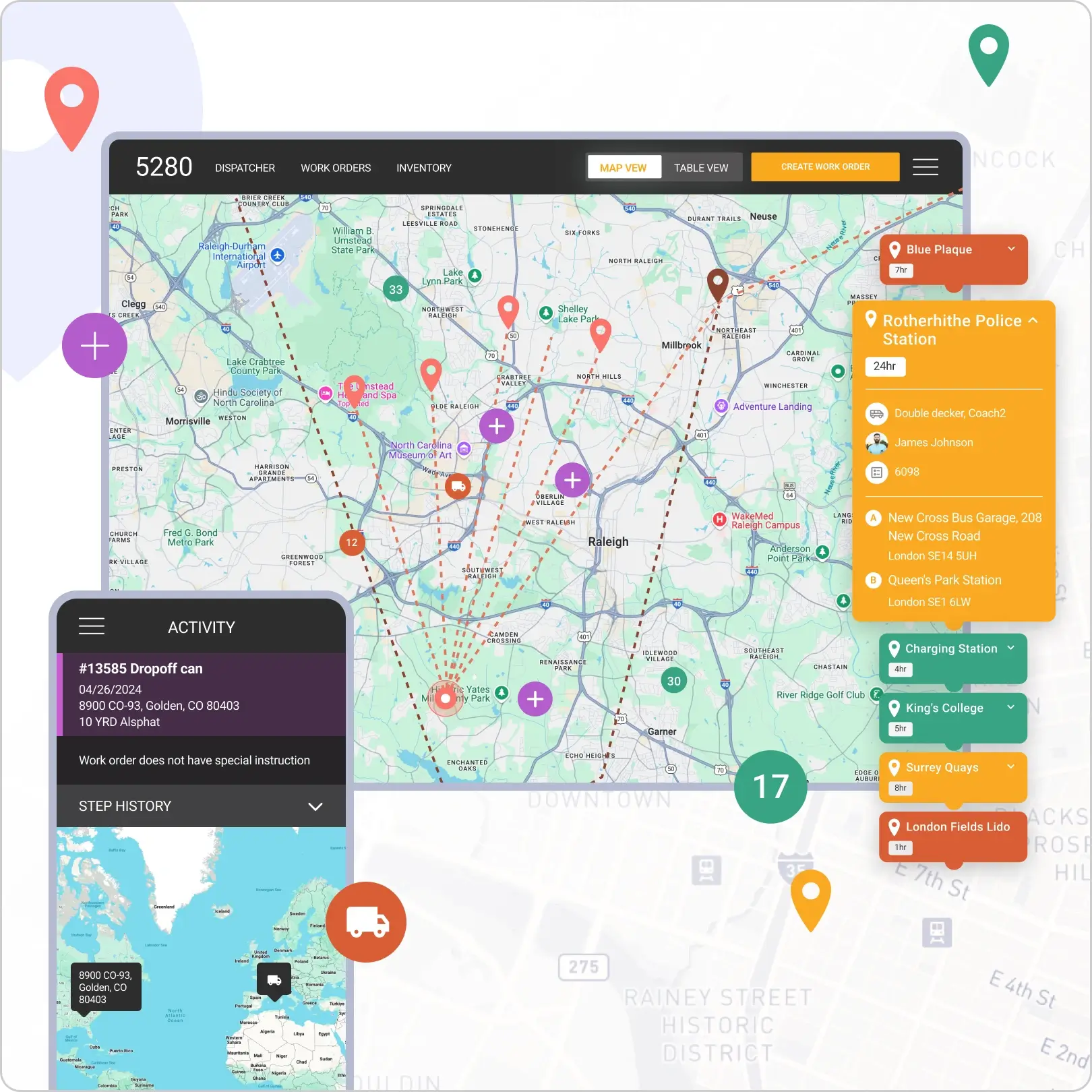
We build scalable route planning platforms for enterprise fleets, including a system used by London’s #1 bus operator. The platform supports live vehicle telemetry through Azure Maps, real-time fleet tracking, dynamic route adjustments, and instant hazard alerts. This lets dispatch teams coordinate vehicles at scale and reduce manual control over daily routing decisions.
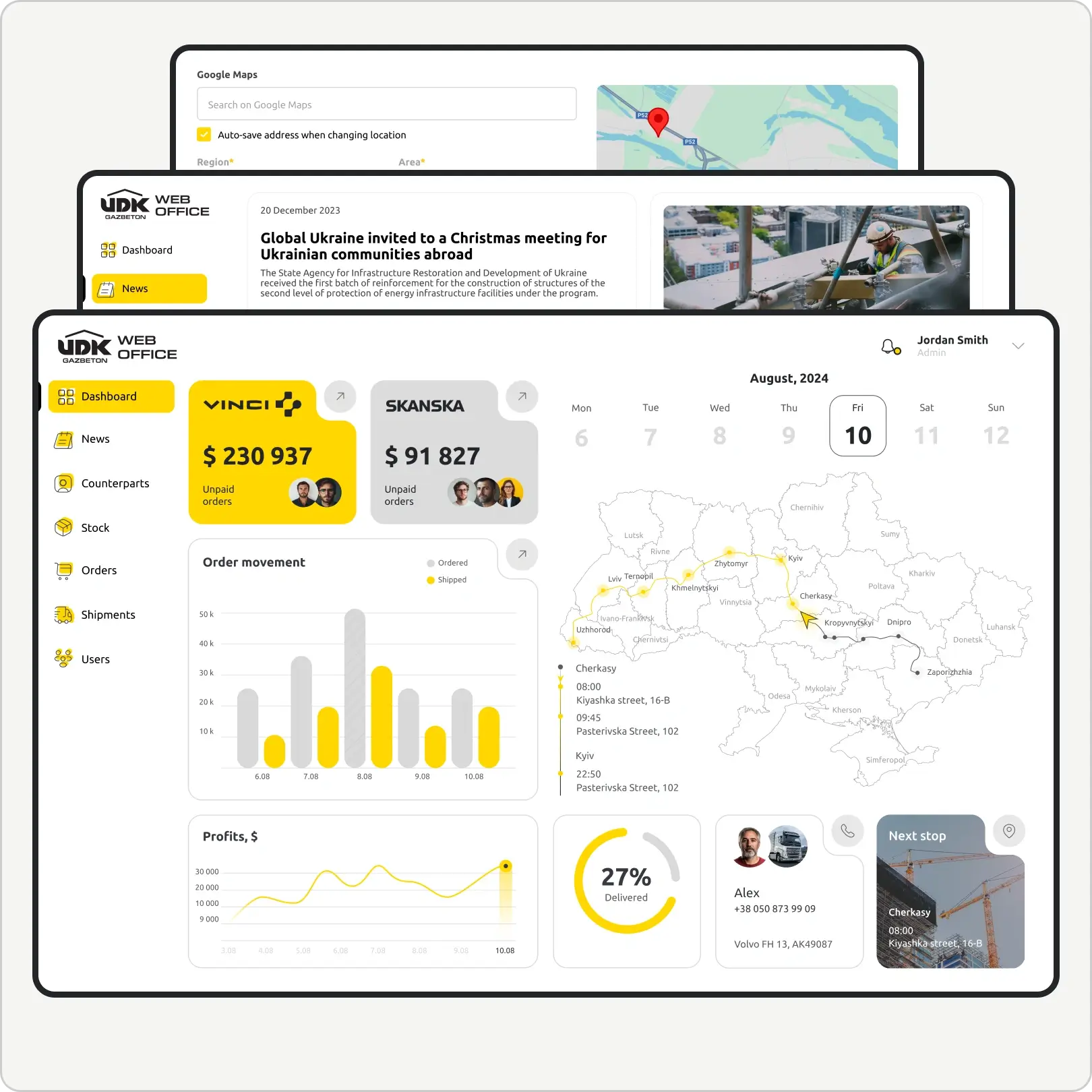
Our company integrated route planning and fleet optimization functionality that tracks shipments, vehicle locations, and delivery performance in real time. The system helped reduce delivery errors by 75%, cut dispatch coordination effort by 80%, double fleet utilization efficiency, and generate over $80,000 in annual operational savings.
We optimized a logistics platform to render thousands of active route and container markers faster, cutting map load time from 5 seconds to 1.5 seconds. We also improved system stability with comprehensive optimization and 99–100% test coverage, which helped keep the platform running with only one support request over six months.
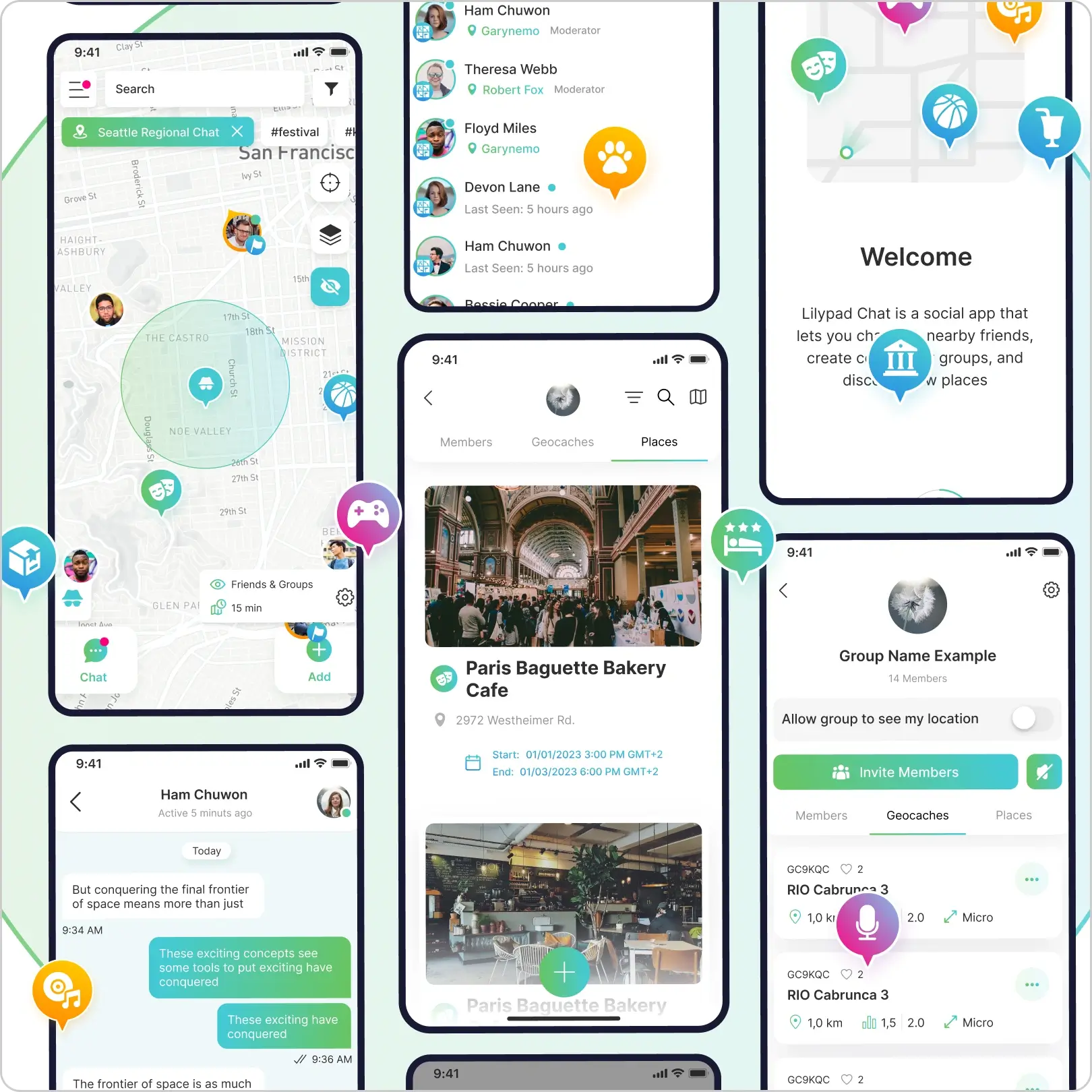
Dynamic route optimization depends on reliable visibility into moving assets. We build high-performance tracking architectures using technologies like WebSockets to continuously sync GPS data without lag. This keeps dispatch systems updated with real-time location data, even when driver apps are inactive or running in the background, while meeting Google Play and App Store privacy requirements.
Solution architect

We’ll help you connect GPS, telematics, traffic APIs, dispatch tools, and routing logic, so routes, ETAs, and vehicle locations stay synced all day.
Calculate efficient multi-stop routes factoring in traffic, vehicle weight capacities, and load distribution across the full fleet. Reduce fuel consumption, cut driver overtime, and keep deliveries inside contracted time windows.
Group geographically clustered orders, give customers accurate real-time ETAs, and adjust routes on the fly for same-day or priority shipments. Reduce last-mile costs, cut "where is my order?" support volume, and handle higher delivery volume without adding vehicles.
Dispatch technicians based on live location, skill set, and available inventory while keeping travel time between jobs tight. More service calls completed per technician per day, faster response on urgent work orders.

Plan high-density neighborhood routes, handle thousands of container waypoints without system lag, and adjust on the go for missed pickups or urgent detours. Eliminate overlapping paths, reduce wear on specialized vehicles, and generate verifiable proof of service.
Automate repetitive routing tasks, dispatch decisions, route updates, and exception handling. AI route planning and optimization software can process delivery constraints, traffic changes, vehicle availability, and priority orders to reduce manual coordination and keep operations moving faster.

Use historical and live data to forecast delays, demand peaks, traffic risks, delivery volumes, and fleet workload. Predictive analytics helps logistics teams plan earlier, avoid bottlenecks, and make route decisions based on likely outcomes, not guesswork.

Turn logistics data into new value through AI-powered insights, reports, and customer-facing analytics. Route performance, delivery patterns, ETA accuracy, and fleet utilization data can become decision tools for your team or added value for your clients.

Stabilize route planning software affected by rushed development, weak architecture, or uncontrolled AI-generated code. We review the system, clean fragile logic, improve maintainability, and help your team continue development with less risk.

Route planning and optimization software helps logistics teams reduce mileage, fuel use, delivery delays, and manual dispatch effort. Unlike generic routing tools, a custom system reflects your real constraints: delivery windows, vehicle capacity, driver schedules, load limits, priority stops, and internal workflows. It can also connect with your ERP, TMS, WMS, telematics, and customer-facing systems, so routing decisions are based on live operational data. As your delivery volume grows, the platform can scale with your fleet, routes, and business rules without forcing your team into workarounds.
Ready-made routing tools work well for simple delivery operations with standard routes and limited constraints. Custom route optimization software development makes more sense when your routing logic depends on many variables, such as vehicle types, capacity limits, time windows, driver availability, warehouse locations, customer priorities, or live traffic conditions. It is also a better fit when routing needs to connect with internal systems or support specific workflows for dispatchers, drivers, managers, or customers. Custom development gives you control over logic, data, integrations, and future scaling.

Route planning and scheduling software can include multi-stop route optimization, live fleet tracking, dynamic route updates, ETA prediction, dispatch dashboards, driver mobile apps, proof of delivery, vehicle capacity planning, load distribution, geofencing, route history, and performance analytics. It can also support alerts for delays, route deviations, missed stops, or urgent changes. The exact feature set depends on your operations, fleet size, delivery model, and existing systems. During discovery, the team defines which functionality is essential for the first release and which can be added later.
Yes. Custom route planning software can integrate with ERP, TMS, WMS, CRM, telematics platforms, GPS providers, mapping services, traffic APIs, payment systems, and internal tools. These integrations allow routing decisions to use up-to-date data from orders, inventory, vehicles, drivers, delivery statuses, and customer systems. Before development starts, the team reviews your existing tech stack, available APIs, data formats, and sync requirements. This helps design stable integrations that keep operations connected without disrupting current workflows.
Yes. Real-time route optimization can adjust routes during execution based on traffic, delays, urgent orders, cancellations, vehicle location, driver availability, or operational disruptions. The system uses live data from GPS, telematics, traffic APIs, and internal tools to keep dispatchers and drivers aligned. Depending on your needs, route changes can be applied automatically or suggested for dispatcher approval. This helps teams react faster, avoid manual recalculation, and keep deliveries moving even when plans change during the day.
Route planning and optimization software reduces logistics costs by cutting unnecessary mileage, fuel use, idle time, driver overtime, and manual coordination. Better load distribution and vehicle utilization help teams complete more deliveries with the same fleet, delaying or avoiding unnecessary fleet expansion. Real-time adjustments also reduce failed deliveries, missed time windows, and inefficient rerouting. Over time, analytics can show where routes, schedules, or fleet usage create extra costs, helping managers improve planning based on operational data.
Yes. Route planning systems often include web dashboards for dispatchers and managers, plus mobile apps for drivers or field teams. Dispatchers can plan routes, track vehicles, manage changes, and monitor performance from a central interface. Drivers can receive route updates, navigation details, stop information, proof-of-delivery tasks, and alerts on mobile devices. The system can be built for iOS, Android, or both, depending on your team’s devices and operational needs. This keeps office and field teams working from the same live data.

Route optimization software development services timeline depends on the scope, routing complexity, integrations, and mobile requirements. A focused MVP with core route planning, dispatcher dashboard, basic tracking, and essential integrations can often be built in ~6 months. More advanced platforms with dynamic optimization, telematics, mobile apps, analytics, AI-powered ETA prediction, and multiple third-party integrations take longer, 8-12 months. A discovery phase helps define the first release, confirm technical constraints, and prepare realistic estimates before full development begins.
The main route planning software development services cost drivers are feature complexity, number of user roles, routing logic, integrations, supported platforms, data volume, security requirements, and scalability needs. A simple route planning tool with basic dispatch functionality costs less than a full logistics platform with real-time tracking, driver apps, AI-powered optimization, telematics, analytics, and customer notifications. Cost also depends on whether you need custom maps, offline functionality, proof of delivery, or complex integration with ERP, TMS, WMS, and other internal systems.
Yes. AI can improve route planning by predicting delays, estimating ETAs, detecting route anomalies, forecasting demand, and helping distribute workloads across vehicles and drivers. It can analyze historical delivery data, live traffic, weather, vehicle usage, and operational patterns to support better decisions. AI can also help with dynamic route re-planning when conditions change during execution. The strongest results usually come when AI is applied to specific operational problems rather than added as a generic feature.
Yes, if scalability is planned from the start of delivery route planning software development. A well-designed route planning platform uses modular architecture, stable data flows, and clear system boundaries, so it can support more vehicles, drivers, orders, regions, and integrations over time. New modules, AI features, analytics, or customer-facing functionality can be added without rebuilding the core system. This is especially important for logistics operations where route volume, data frequency, and operational complexity can grow quickly.
We prevent vendor lock-in by keeping the product, codebase, infrastructure, and documentation fully under your control. You get access to repositories, environments, architecture documentation, API specifications, deployment instructions, and project materials throughout route planning software development services. We use standard technologies, clean architecture, and documented integrations, so your internal team or another vendor can maintain, extend, or take over the route planning system later. We also provide knowledge transfer and keep route logic transparent, so critical business rules don’t stay hidden inside undocumented code.