
Any questions unanswered?
Let's discuss them


Since 2014, we’ve successfully delivered over 200 projects, and we have focused on end-to-end SaaS development services for the past 5 years.
But it is hard to ignore that outsourcing SaaS development in 2026 looks different from what it did just a few years ago.
The global SaaS market continues to grow rapidly, and so does the demand for experienced development teams. At the same time, the way software is built is evolving; a lot of companies are realizing that AI can speed things up. But speed doesn’t guarantee clean architecture, stability, or security. That’s why experienced engineers are still the ones who make sure everything actually works at scale.
SaaS outsourcing, meanwhile, is becoming a long-term strategy for many companies. According to Deloitte’s 2025 Global Business Services Survey, based on responses from more than 2,000 executives across 30 countries, many organizations are increasing their use of outsourcing as they invest in new capabilities and growth.
But the growing number of vendors and AI-assisted development tools has made the decision process more complicated. Founders and product leaders face new questions:
Should you rely on AI-generated code or experienced engineers?
How do you verify that an outsourcing partner can build scalable SaaS infrastructure?
What costs should you realistically expect in today’s market?
How do you avoid unreliable vendors or poorly structured development processes?
With a 99.89% acceptance rate, we know what works, what breaks, and how to steer clear of the usual outsourcing traps.
By the end of this guide, you’ll know how to build a scalable SaaS product with an outsourcing partner you can rely on. Get ready for practical tips from our experience.
Outsourcing SaaS development is not just about reducing costs. For many companies, it becomes a strategic way to access specialized expertise, accelerate development, and scale teams faster than traditional hiring allows.
But outsourcing is most effective in specific situations. If your internal team lacks SaaS-specific expertise or you need to move quickly without building a full engineering department from scratch, partnering with an experienced development vendor can significantly reduce time to market and operational complexity.
Companies typically consider outsourcing SaaS development when they face challenges such as:
Limited in-house experience with SaaS architecture or cloud infrastructure
The need to launch an MVP quickly to validate a product idea
Difficulty hiring specialized engineers locally
An AI SaaS project that requires expertise not available internally
The need to scale development capacity without long-term hiring commitments
When these challenges appear, outsourcing can provide access to experienced teams that already understand SaaS infrastructure, cloud platforms, integrations, and scalable system design.
Here are some of the strategic advantages companies gain when outsourcing SaaS development.
A solid SaaS product isn’t built with code alone. You also need people who understand SaaS architecture, cloud setups, APIs, security — the stuff that keeps your product scalable and reliable. Finding people with the right mix of skills for your specific product can be challenging.
With outsourcing, you get engineers who know SaaS product development inside out and are ready to jump in without slowing things down.
Take our client’s route planning software project. To bring their product to life, our client required:
The skill set they needed was highly specific, and hiring candidates who checked every box would have taken over 6 months. On top of that, local talent was limited, and relocation would have only added time and cost.
The easy solution was partnering with Clockwise and hiring a full-stack SaaS development team with one contract. By doing this, our client avoided a 6-month hiring process and had their functionality ready in less than 9 months. That’s how an expert SaaS outsourcing team can save you lots of time.
Another advantage of outsourcing SaaS development is access to teams that have worked with a wide range of technologies and architectures.
Internal teams often stick with the tools and frameworks already used in the company. Over time, those choices can start shaping how new products are built, even when a different stack might be a better fit.
Outsourcing teams usually bring experience from multiple SaaS projects, across different stacks and cloud platforms. Because of that, they can recommend technologies based on what works best for the product, not just what the team is already used to.
Another benefit is avoiding vendor lock-in. Experienced SaaS development partners tend to build systems using widely adopted technologies and modular architectures, which makes it easier to scale the platform, extend it with new features, or transition teams later if needed.
Hiring an in-house SaaS team comes with big costs: salaries, equipment, training, and long-term overhead. Outsourcing cuts or avoids those expenses, giving you access to experienced developers at a lower rate, especially in regions like Eastern Europe, where you’ll find top-tier talent without inflated prices. And yes, you’ll pay only for hours worked. Things like office logistics, vacation days, and paperwork will not be your headache.
With clear pricing, your budget stays predictable. And for startups with tight funds, this makes a difference. Instead of spending six figures to build an in-house team, you can channel more money into product growth, marketing, and customer acquisition while your outsourcing team handles the tech.
With SaaS outsourcing, you avoid the long hiring process and can move into development much faster than building an in-house team from scratch. Plus, the process stays more predictable, up to the plan: experienced teams come ready with proven workflows, avoid the usual missteps, and help you launch a SaaS product faster.
For example, Attention Nest needed an internal version of their software ASAP to gather user feedback and validate their idea. Here’s how we helped:
Attention Nest had a working internal version ready within a few months. That gave them the chance to gather early feedback and fine-tune their product before moving to the next stage.
Speed matters in SaaS, and some of the top SaaS startups have mastered the art of launching fast. A big part of that is having the right processes and development capacity in place. Outsourcing helps bring that structure and speed to the development process so your SaaS product can start delivering real value sooner.
SaaS development needs often change throughout the lifecycle of a product. During the early stages, a smaller team may be enough to build an MVP. Later, you may need additional engineers, QA specialists, or DevOps experts to scale the platform and support growing user demand.
SaaS outsourcing makes this process significantly easier. Instead of hiring and onboarding new employees internally, companies can scale development teams up or down depending on project needs. This flexibility allows businesses to accelerate development before major product releases, add specialized expertise for new features or integrations, and reduce team size once certain phases of development are complete.
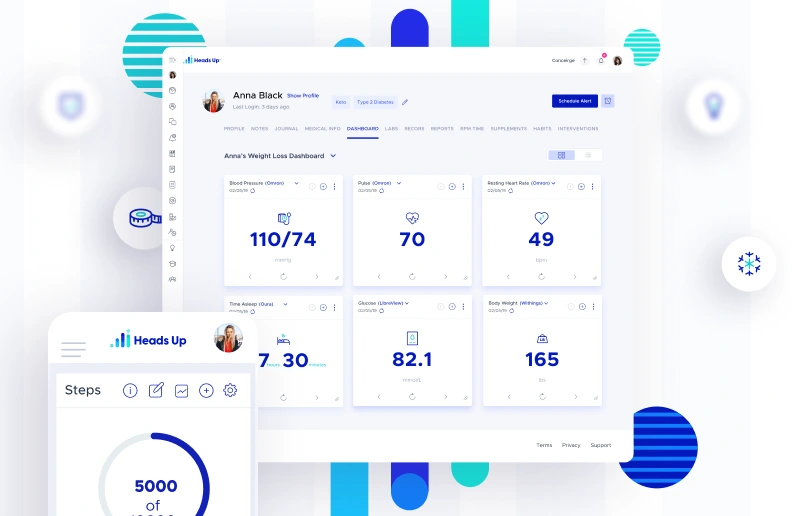
A good example is our collaboration with HeadsUp Health, a health data platform that aggregates and analyzes personal health metrics. The partnership started with just one dedicated developer supporting the client’s internal team. As the product grew and new features were introduced, we gradually expanded the team by adding additional engineers.
Later, when testing became a bottleneck, we helped the client build a dedicated QA team from scratch, establishing testing processes and workflows. Once the QA infrastructure and processes were fully set up, the client decided to bring QA operations in-house, while continuing to scale other parts of the development team as needed.
This kind of flexible collaboration allowed the client to grow their product without committing to a large in-house team from the start.
At Clockwise Software, we get that every cloud and SaaS project is different. Whether you’re pushing to meet a deadline or adding niche expertise for a new feature, outsourcing teams give you the agility to move as fast as your product demands.
Building a SaaS product can feel like navigating a maze with unexpected twists and turns. But outsourcing to an experienced team can keep you from running into dead ends.
Here’s how outsourcing reduces your risks:
At Clockwise Software, we take managing risks seriously. For each project, we maintain a detailed risk register that helps us monitor potential issues, assess their likelihood, and plan effective responses early. Through regular check-ins, we make sure any risks are addressed before they escalate, keeping everyone aligned and the process transparent from start to finish.
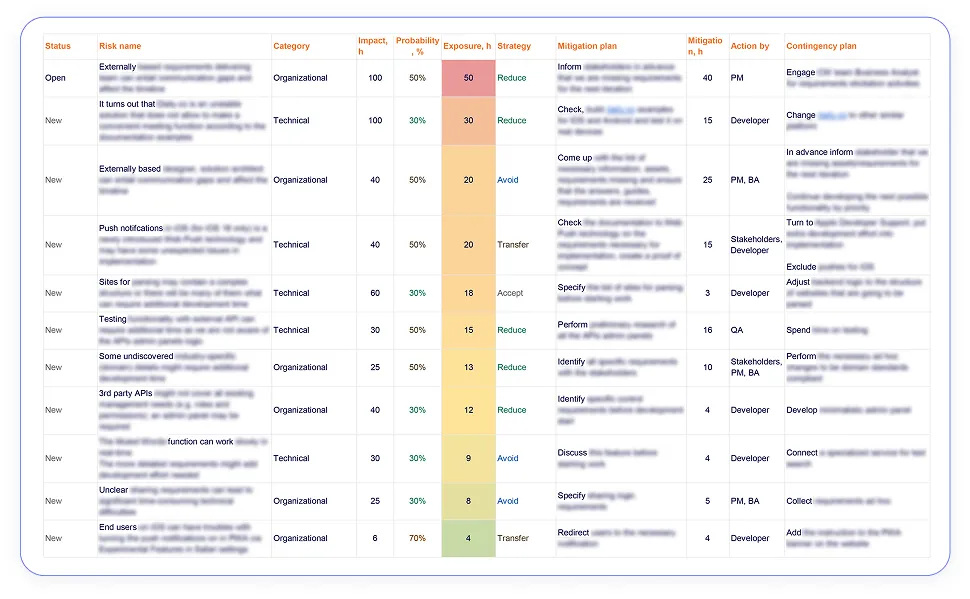
To find out more about our process, read our article on risk mitigation. With risks under control, you can return your attention to growth, where it belongs.
Building SaaS in-house requires a high level of internal involvement, and that comes at a cost. Time spent managing development, reviewing technical decisions, or shifting engineers onto a new product is time that could otherwise go toward growth, marketing, or strengthening relationships with your customers. Outsourcing helps you to:
While your SaaS outsourcing partner manages the technical details, you can focus on what you do best — growing your business and serving your customers.
As you can see, there are a lot of benefits of outsourcing SaaS development. Of course, the whole process only works if you partner with the right team. Let’s talk about how to choose one.
SaaS software development outsourcing is not a single approach. Companies typically choose between several engagement models depending on their budget, timeline, and internal expertise.
When outsourcing SaaS development, companies usually choose between 3 main approaches.
Hiring freelancers can work well for small tasks or early experiments. Platforms like Upwork or Toptal make it relatively easy to find individual developers who can help build specific features or prototypes. However, freelancers usually work independently, which means you may need to coordinate architecture decisions, development work, testing, and infrastructure yourself or bring in additional freelancers to cover those roles. For complex SaaS platforms that require multiple specialists, relying solely on freelancers can create challenges with consistency, long-term maintenance, and scalability.
A dedicated development team model provides a group of engineers who work exclusively on your product while remaining employed by the outsourcing company. This approach works well when you want an external team that behaves like an extension of your in-house department. With a dedicated team, you typically get a mix of roles such as developers, QA engineers, DevOps specialists, and project managers. The team integrates into your workflows and collaborates closely with your internal stakeholders. This model is often used by startups and scale-ups that want to build and grow a SaaS product long-term without hiring a full internal engineering department.
In the full-cycle outsourcing model, the vendor manages the entire development lifecycle and provides a complete team to support each stage, from discovery and architecture planning to development, testing, deployment, and ongoing maintenance. This approach works best when you don’t have an internal technical team or prefer to focus on product strategy, marketing, and business growth while the vendor handles the technical execution.
Once you understand the outsourcing model that fits your needs, the next step is choosing the right partner. Let’s talk about key qualities to look for.
Technical skills matter, but real SaaS experience matters just as much. Look for a partner who has already built SaaS products similar in complexity, business model, or domain to yours. One that understands architectural designs for different needs, cloud setup, integrations, security, key SaaS development trends, and how all of it plays together in the real world. Here’s what to look for when comparing vendors:
A good SaaS outsourcing partner does more than ship features. Signs of a great partner is when they truly understand what you’re building, point out potential issues early, and suggest improvements that make the product better.
You need a team that understands the bigger picture: how to architect a system that grows with your business. That’s why deep expertise in modern SaaS technologies is essential. What to look for:
We’ve built over 50 high-load cloud products, all designed to handle serious traffic and scale smoothly. With experience across AWS, Azure, and modern architectures, we focus on building systems that stay reliable, grow with your business, and don’t fall apart under pressure.
When you outsource SaaS development, you want smooth and effective communication. Here’s how to achieve it:
At Clockwise Software, we make communication a top priority. With 98% of our clients in the US and UK, we know firsthand that our culture and communication style aligns well with clients in these markets. That means your in-house team and your outsourcing team will work well together, with fewer missteps, faster progress, and a lot less back-and-forth.
When it comes to SaaS development, security is essential. You’re likely dealing with sensitive user data, proprietary algorithms, and valuable intellectual property. That means your outsourcing partner needs to be on top of the SaaS security game. Here’s what to look for:
Data security is built into every stage of our development. We follow NDAs strictly and stay fully compliant with the GDPR and other legal and regulatory requirements to keep your users’ data protected. When you partner with a security-focused team, you cut down on risks and build trust, making your SaaS product reliable from the start.
After selecting the right team, it is time to build your SaaS product.
A clear process sets the stage for a successful SaaS outsourcing partnership. At Clockwise Software, we’ve designed a structured approach that ensures clarity, efficiency, and alignment at every step:

Efficient SaaS development outsourcing begins with a discovery phase. It aligns your vision with the development team’s execution so that the end product will exactly match your needs and expectations. Main activities in the discovery phase include:
By investing in a thorough discovery phase, you minimize risks, reduce uncertainties, and set the stage for a smooth and efficient development process.
Building a Minimum Viable Product (MVP) is a smart strategy in SaaS outsourcing. It lets you validate your idea with moderate investments, reduce risks, and launch faster with a lean, functional version of your product.
We start SaaS MVP development by identifying the core features, those that directly solve your users’ most important problems. From there, we move to rapid development cycles using Agile methods, releasing early and often to gather real-world feedback.
Once users get their hands on the product, we use that feedback to spot what’s working, what’s not, and where the opportunities are. Each release is a chance to improve, refining features, fixing pain points, and expanding functionality based on real data.
It’s not enough for your SaaS product to work at launch. It needs to scale, stay secure, and run without a hitch over time. That’s why ongoing support focuses on long-term performance, not just short-term wins.
After the MVP goes live, we don’t step away. We stay involved to keep things running at their best. That means rolling out regular updates to fix bugs, improve features, and stay current with evolving technologies.
We also closely monitor performance, resolving bottlenecks before they affect your users. And through continuous maintenance (including security patches and optimizations) we make sure your SaaS product stays fast, secure, and reliable as it grows.
With a clear process for testing, deployment, and maintenance, your product launches strong and stays that way as it grows with your business.
The next thing most founders want to understand is the cost of building a SaaS product with an outsourcing team.
From our experience, building an MVP for a SaaS project usually starts at around $50,000, while more complex products can require significantly larger investments as the platform grows.
A budget in this range usually covers the work needed to turn an early product idea into a clear delivery plan. Before writing code, you and your outsourcing partner work through the main product requirements, explore possible technical approaches, and make sure the core assumptions behind the product make sense. During discovery, the team usually prepares:
Clear project requirements
Clickable prototype or wireframes
Proof of concept (PoC)
Feature list and development roadmap
Accurate development time and cost estimates
A good discovery phase makes the rest of the SaaS development outsource project much more predictable and helps avoid expensive changes later.
Now, the product starts taking real shape. The team builds a working version with just the core functionality, focusing on the features that solve the main user problem and make it possible to start testing the product with real users. A typical MVP usually includes:
Template-based or simplified UI design
Core functionality for a fast go-to-market
Basic third-party integrations
Essential security features
Limited user scenarios or workflows
This approach helps get the product into users’ hands early, gather feedback, and understand what needs to improve before investing in more advanced functionality.
At this budget level, companies usually build a more complete SaaS platform with broader functionality, stronger UX, and support for real customer operations. Typical additions include:
Custom UI/UX design
Advanced functionality and workflows
Complex integrations with third-party services
Cross-platform support
Enhanced security and compliance features
Along with new functionality, the focus also shifts to scalability, performance, and overall product quality as the user base grows.
Products at this level usually involve more complex functionality, infrastructure, and long-term development work. These platforms are designed to support a large user base and more advanced product capabilities. Typical characteristics:
Highly customized product design and branding
Complex product logic and automation
Modular architecture for scalability
High-load infrastructure to support rapid growth
Advanced security, monitoring, and performance optimization
Projects like these typically involve deeper work on architecture, infrastructure, and long-term product development.
Several factors affect the final cost of outsourcing SaaS development.
| Factor | How it affects cost |
| Project complexity and features | The more features and business logic a product includes, such as billing systems, analytics, or multi-tenant architecture, the higher the development effort and investment. |
| Scalability requirements | Planning for high traffic or future growth requires more advanced cloud infrastructure, monitoring tools, and performance optimization. |
| Team expertise | SaaS products often require engineers experienced in cloud platforms (AWS, Azure), API integrations, microservices, and security, which can increase development costs. |
| Third-party integrations | Payment gateways, CRMs, analytics platforms, and communication APIs add development time and increase overall project complexity. |
| Vendor location | Development rates vary across regions. Teams in Eastern Europe, for example, often offer highly skilled engineering talent at lower rates than teams in the US or the UK. |
| Ongoing maintenance and operations | SaaS products require regular updates, performance monitoring, security improvements, and infrastructure scaling as the user base grows. |
A clear discovery phase and transparent vendor communication help identify these costs early and prevent unexpected budget overruns later in the project.
Even when you figure out costs, SaaS outsourcing can still raise concerns. Let’s break down the most common fears and how to address them.
Clients have valid concerns about outsourcing SaaS development, related to everything from quality and communication to staying in control. Thankfully, each one can be mitigated with the right process. Here’s how.
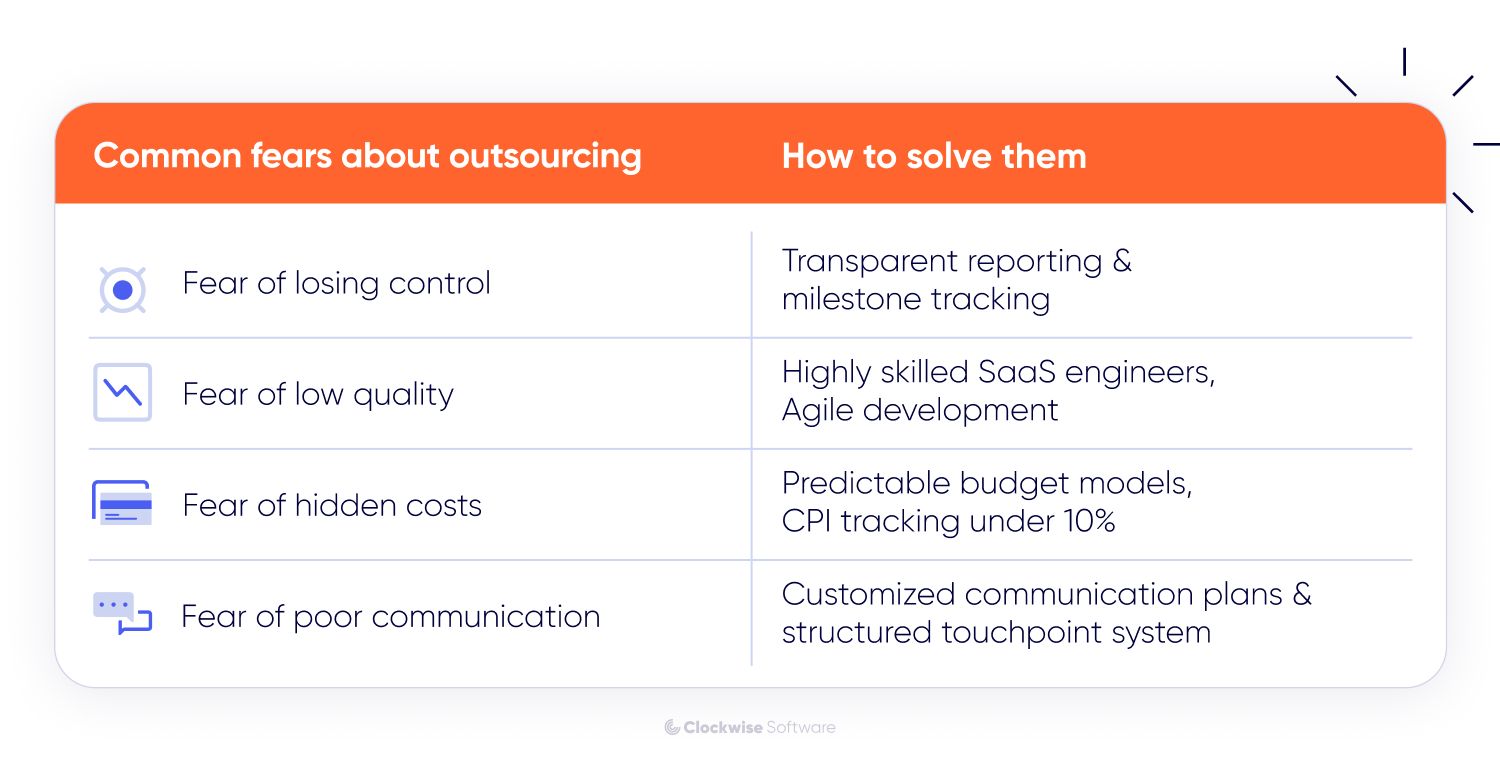
Worried about quality? Here’s how we ensure your project meets (and exceeds) expectations.
Highly skilled Ukrainian engineers. Our developers from Ukraine bring serious technical skills, a strong work ethic, and a sharp eye for detail. We carefully vet every candidate — hiring only the top 1% for most roles — so you’re working with people who know their stuff and care about doing things right.
Quality above in-house teams. Many clients have told us that we outperform their internal teams, and that’s not by accident. It comes from deep experience with SaaS architecture, scalable cloud solutions, and development practices that have been shaped and sharpened across dozens of projects.
Matthew Hecker, Founder at Smartskip LLC:
Clockwise has been amazing to work with. The biggest wins were how closely the product matched our vision in feature demos and the strong communication and fast iteration throughout the process.
When you outsource SaaS development to us, you’re teaming up with people who care about getting things right and have the track record to prove it.
Tailored quality focus. Every SaaS product has unique needs, and we ensure your priorities — whether security, performance, scalability, or user experience — are front and center.
We start by aligning with your specific goals so the product we build matches your vision, not just a spec sheet. And because we’ve seen what works (and what doesn’t) across dozens of SaaS projects, we’ll proactively suggest improvements to help you go further, not just hit the bare minimum.
By combining your vision with insights from real SaaS projects, we build products that are not only functional but truly effective.
Industry-standard practices. Consistency and reliability aren’t left to chance, as we rely on proven methodologies like PMI (Project Management Institute) standards to keep every phase of development on track.
Our approach includes:
These practices help us build SaaS products that are stable, scalable, and built to keep delivering long after launch.
When you decide to outsource SaaS development, it doesn’t automatically mean giving up control. Here’s how we keep you engaged and in charge throughout the development process.
Milestone-based approach. We break projects into clear, manageable milestones — each with specific deliverables, your approval at every step, and a direct connection to your goals. It’s a simple way to stay informed without getting bogged down in the details.
This structure gives you a clear view of progress, validates outcomes at every step, and ensures the project stays aligned with your vision.
Transparent reporting. We prioritize regular updates to keep you informed and confident during every step of the outsourcing process.
Our reports include:
These updates keep you in the loop at every step so you always know what’s happening and why.
Client involvement. Your input is essential every step of the way to build a strong SaaS product. From key discussions and design reviews to user acceptance testing before launch, your feedback helps shape the product and keep it aligned with your goals.
That way, what we build always reflects what matters most to you.
Change control processes. Scope changes are a natural part of any SaaS project, but they don’t have to derail progress or blow your budget. At Clockwise Software, we handle changes with a clear, structured process:
Our approach keeps your project on course, adapts as changes come up, and makes sure every update supports your vision.
Worrying about unpredictable costs or timelines? We get it. That’s why we prioritize clarity and accountability during custom SaaS development services outsourcing.
Reliable timelines and refined estimates. Already got a game plan? We back it up with clear, realistic timelines and detailed budgets built on years of SaaS experience. You stay informed with straightforward, regular updates while we handle all the planning details so you can focus on what matters most.
Our approach consistently beats in-house teams for on-time, on-budget delivery, ensuring your outsourced SaaS development project runs without surprises.
Risk management for unexpected challenges. Unforeseen challenges are part of any software project, whether it is a micro SaaS product or more complex solution like SaaS CRM. But they don’t have to disrupt progress. At Clockwise Software, we use proactive risk management to keep your project steady:
This structured approach keeps your SaaS outsourcing project on track and within budget, even when surprises pop up.
Transparent change management keeps your project focused and on track.
Proactive communication on estimate variances. Estimates can shift as projects progress, and that’s normal. With our Cost Performance Index (CPI) consistently under 10%, we guarantee you won’t face major surprises. Potential variances are flagged early, discussed transparently, and adjusted proactively so there are no unexpected overruns.
How we manage variances:
Our open approach cuts out surprises and keeps the whole team aligned, delivering steady, reliable results.
It’s completely valid to have concerns about communication. After all, it’s the core of any successful outsourcing partnership. Here’s how we maintain consistent, transparent, and effective communication at every stage of the SaaS lifecycle.
Customized communication plans. Clear communication starts with a solid plan. At Clockwise Software, we craft a communication plan tailored to your team’s preferences and project needs.
It includes:
Our structured process cuts out confusion, fixes issues fast, and keeps team members on the same page.
Touchpoint system. We keep SaaS outsourcing projects on track by building a structured touchpoint system for consistent monitoring and communication throughout your project.
Our touchpoint system keeps you fully in the loop. It provides clear updates on milestones, tasks, and deliverables, monitors timelines closely to catch delays early, and tracks the budget with complete transparency so that spending stays on target.
Fears are normal; having a plan to deal with them is what matters. Whether you have concerns about quality, communication, control, or cost, you’re not overthinking it. These are real risks. But with the right setup and a team that knows how to manage them, they don’t have to slow you down.
Outsourcing SaaS development helps you build a scalable, secure, and user-friendly product while keeping costs under control. At Clockwise Software, we focus on clear communication, transparent processes, and working closely with you to make your ideas a reality.
Here’s how we support your goals and simplify the journey:
With over 200 projects delivered, we’ve helped businesses like yours turn ideas into products and go through SaaS migration.
We’ve done this for startups, scale-ups, and enterprise teams, and we can do it for you too. Let’s talk about what you’re building.