AI solutions
What we do
Services
Experts in
How we work



Remove bottlenecks, repetitive handoffs, and manual busywork. We automate high-friction workflows across operations, support, finance, and back-office processes, so teams spend less time moving data and more time on work that drives growth.
Scale routine work without scaling headcount at the same pace. AI business process automation handles repetitive tasks, workload spikes, and large data volumes with lower operational overhead, helping you control costs while maintaining service quality.
Use AI assistants to handle routine requests, route conversations, categorize tickets, and escalate edge cases to the right team. Faster response times and fewer support delays improve customer experience without putting extra pressure on staff.
Automate data extraction, cleanup, classification, and enrichment across your systems. AI turns scattered inputs into structured, usable data for reporting, operations, and decision-making, reducing manual effort and improving data reliability.
Move from manual analysis to faster, better-informed decisions. AI surfaces patterns, forecasts, and recommendations from historical and live data, helping teams act earlier, prioritize better, and make decisions with more confidence.
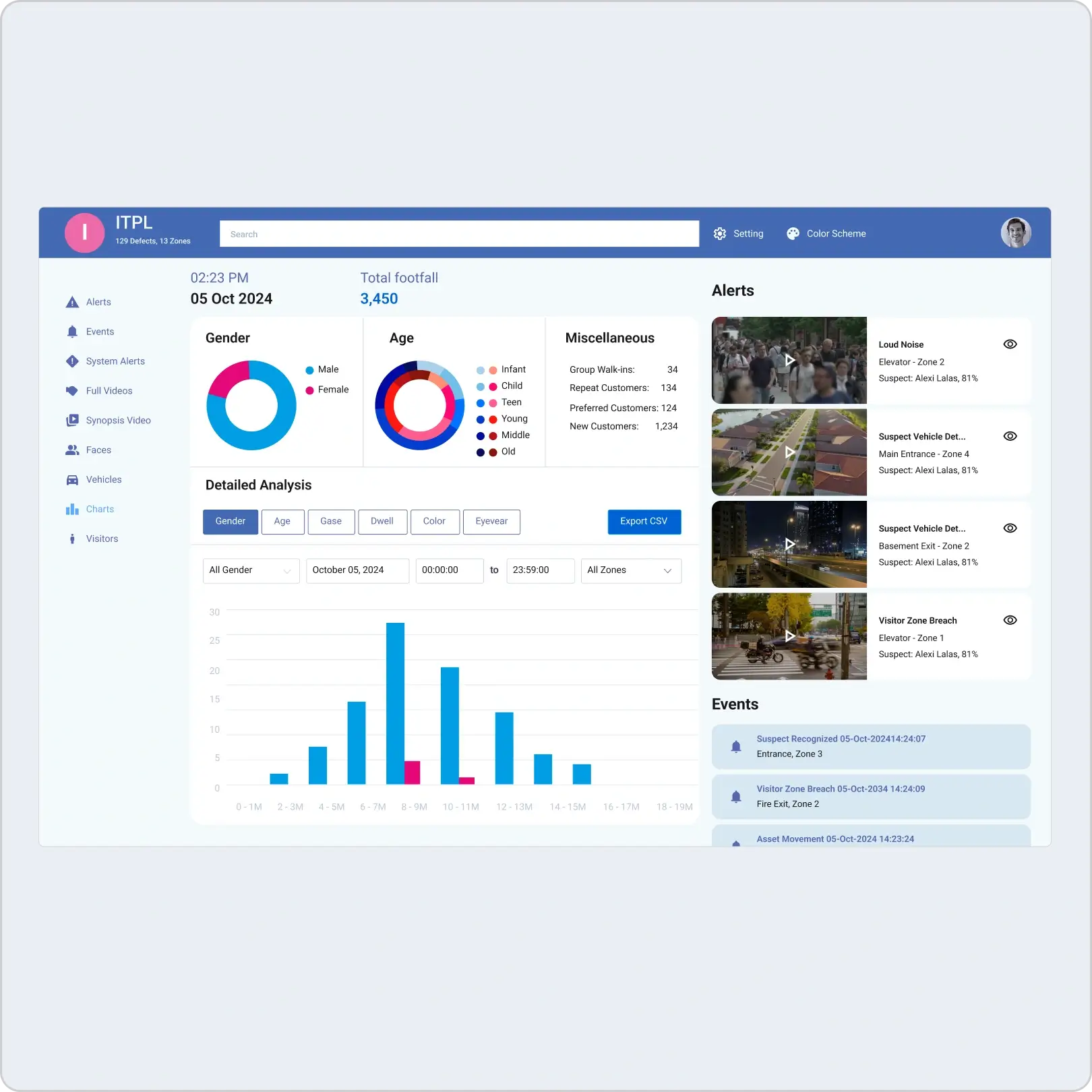
Monitor operations continuously and catch issues before they grow into delays, losses, or service failures. AI detects anomalies, flags risk patterns, and triggers alerts or follow-up actions while your team stays focused on core work.


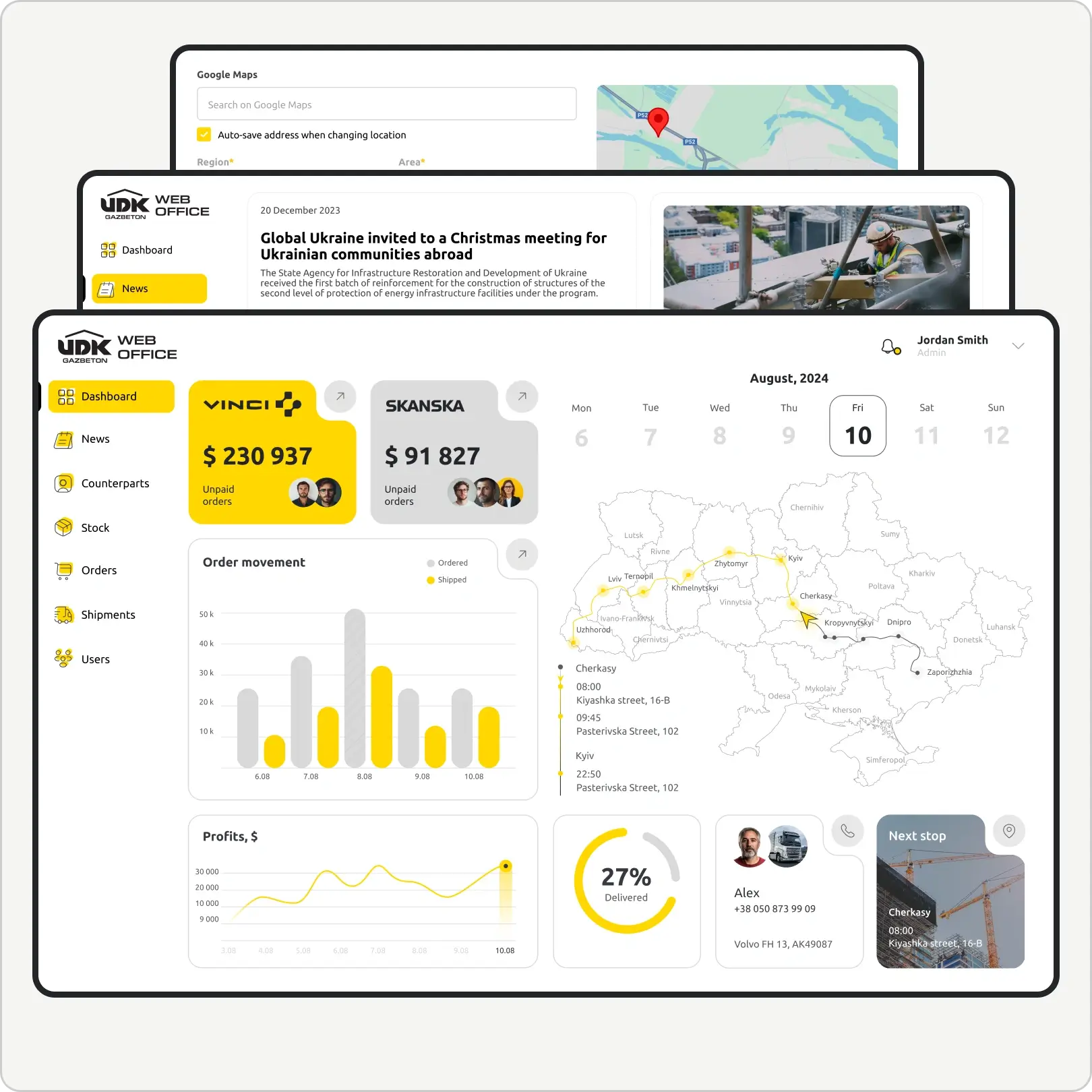
Added AI-powered feature that turned slow, multi-step user onboarding into an automated flow, resulting in enhanced UX and strengthened retention.
3
weeks delivery
67%
faster onboarding
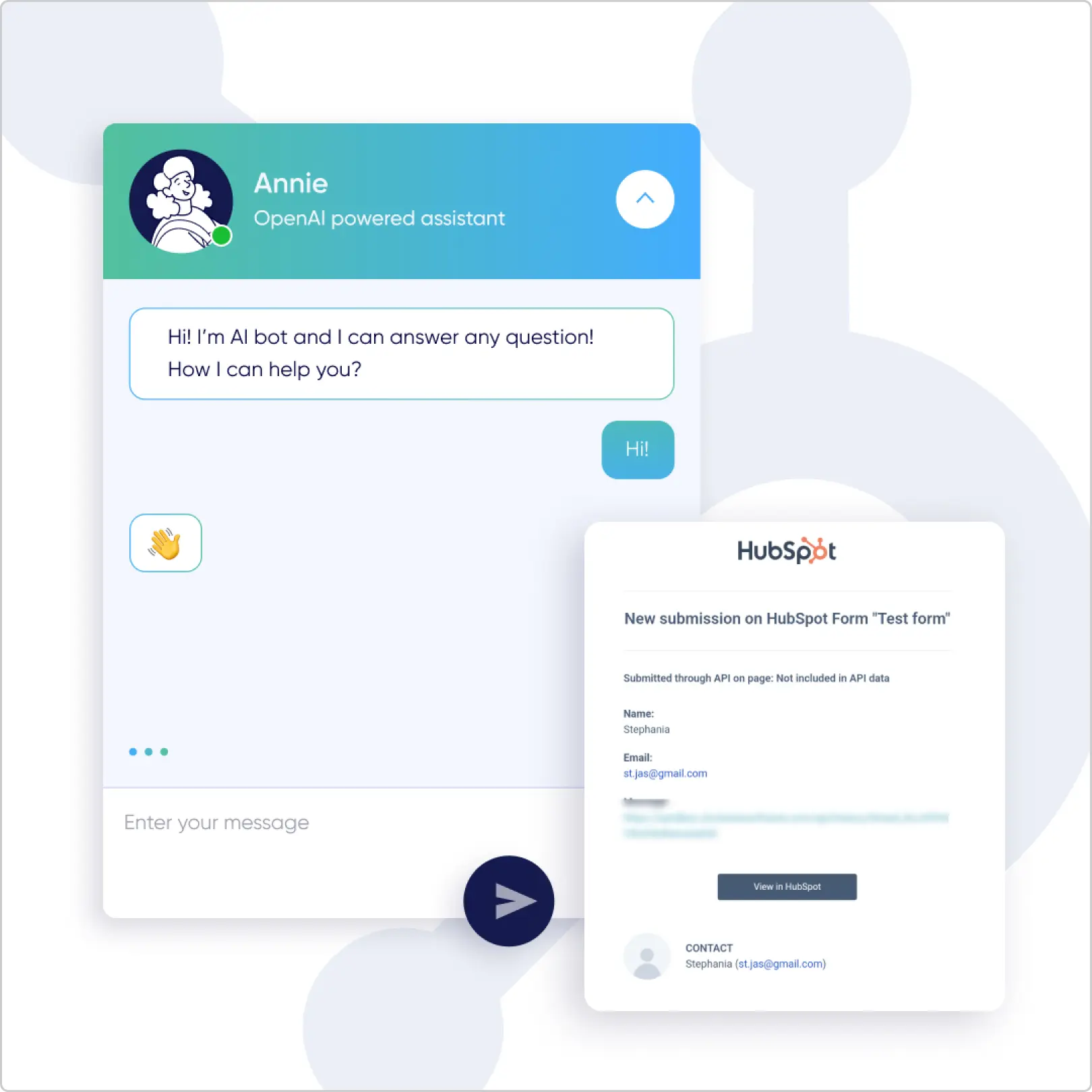
Added a GPT-4–powered assistant to the client's website to improve CRO and capture leads — fully integrated with HubSpot to streamline lead management.
1.5
months delivery
95%+
answer accuracy
500+
leads captured in 1 month
Over the last year, we delivered 5 AI automation solutions for crucial business workflows, including customer support, reporting, onboarding, and data processing. Each solution was built for production use, with clear logic, stable integrations, and has shown practical value in day-to-day work.
Around 20% of our engineers have hands-on experience building AI automation with LLMs and embeddings, continuously evolving their skills alongside the technology. This expertise helps us build AI automation that works reliably in real workflows, beyond isolated demos.
AI process automation brings value only when it fits into your existing systems. With 10+ years of integration experience, we connect AI functionality to CRMs, internal platforms, support tools, analytics systems, and operational workflows, making automation stable and practical from day one.
With 200+ delivered products, we know how to keep implementation structured, maintainable, and predictable. That experience matters in AI automation, where business logic, edge cases, and long-term ownership are just as important as the AI model itself.
We build AI-powered systems that support real operational load and large data volumes. Similar solutions we worked on are used by teams such as Aston Martin, Dyson, Oracle, WHO, and Unilever, where stability, performance, and predictable behavior are critical.
We use proven models such as GPT, Claude, and Llama, selecting the right setup for each use case, data sensitivity, and reliability requirement. On top of the model, we build the control logic that makes AI process automation production-ready: validation, permissions, escalation paths, retrieval, and monitoring.









We developed an AI assistant for customer support automation using OpenAI’s GPT, configured around the client’s business data, tone of voice, and service priorities. Integrated with HubSpot CRM, the assistant answers routine queries, guides users to relevant services, and automatically captures qualified leads. The result is faster response handling, lower support load, and a smoother lead qualification flow.
We integrated AI into a hiring marketplace to assist with account creation by parsing uploaded resumes and extracting structured user data automatically. This reduced onboarding time from over 2 minutes to just 40 seconds and contributed to time-to-fill improvement by 40%. The solution streamlined profile setup, lowered manual input, and helped users reach value faster without adding friction to the onboarding flow.
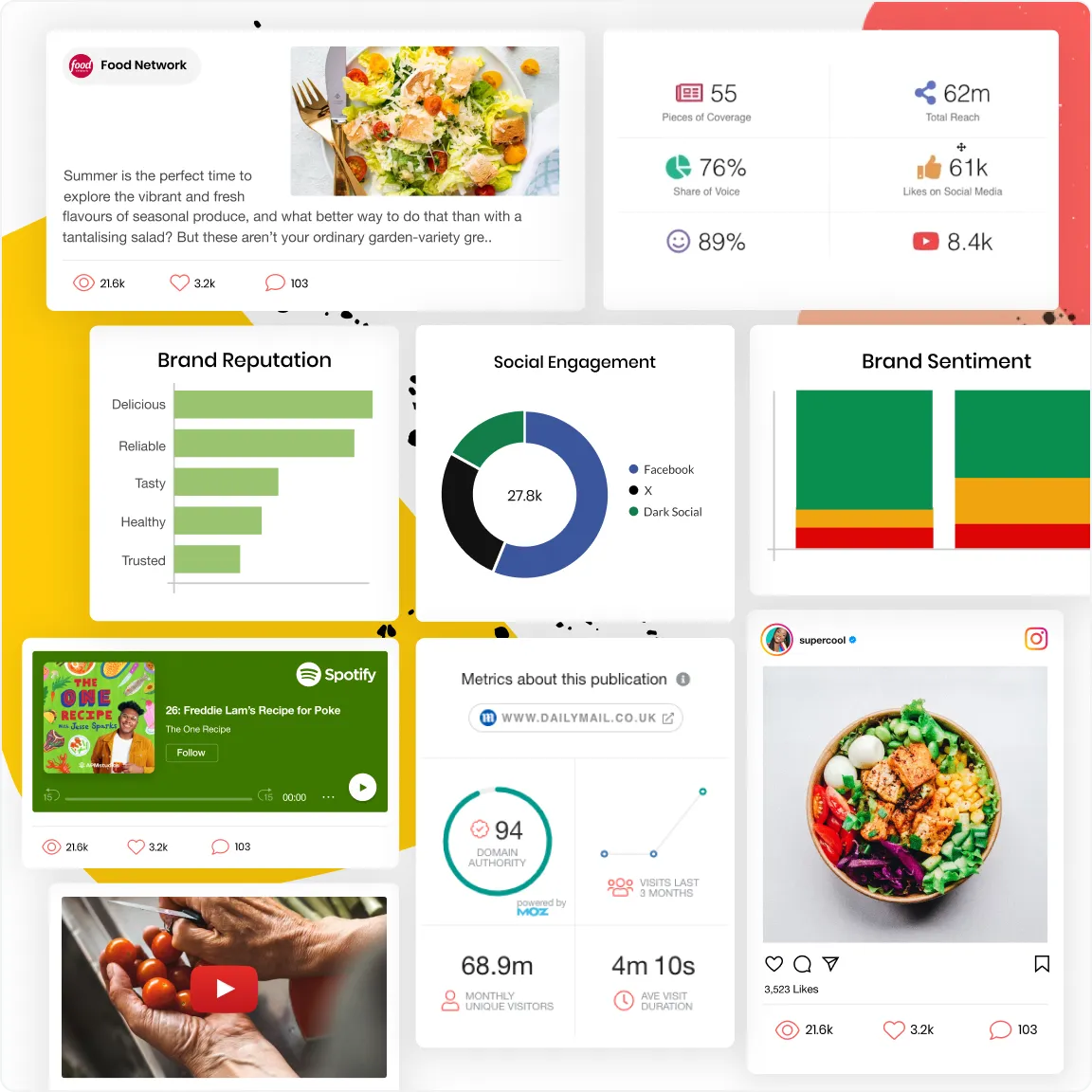
We implemented a dual-model AI setup using GPT and Gemini to automate large-scale media coverage analysis within a PR platform. The solution opened up access to an $11.6B market while improving profitability by 10% through more efficient data processing and insight generation. Today, the platform supports global brands, including Aston Martin, Renault, and Dyson, with AI-powered reporting at scale.
We built an AI assistant for an internal knowledge base to automate 100+ HR, management, and developer requests. The system provides instant access to role-specific data such as retention metrics, vacation balances, and internal policies, reducing reporting time from hours to seconds. This helped lower the manual workload and made internal information access faster and more consistent.






















Solution architect

We build with clear boundaries, permissions, fallback scenarios, and monitoring to ensure safe behavior in production.
Automate campaign operations, audience segmentation, and performance analysis. AI can process engagement signals, categorize leads, generate reports, and trigger actions based on behavioral patterns, helping teams launch campaigns faster, optimize targeting, and reduce manual work across day-to-day marketing operations.
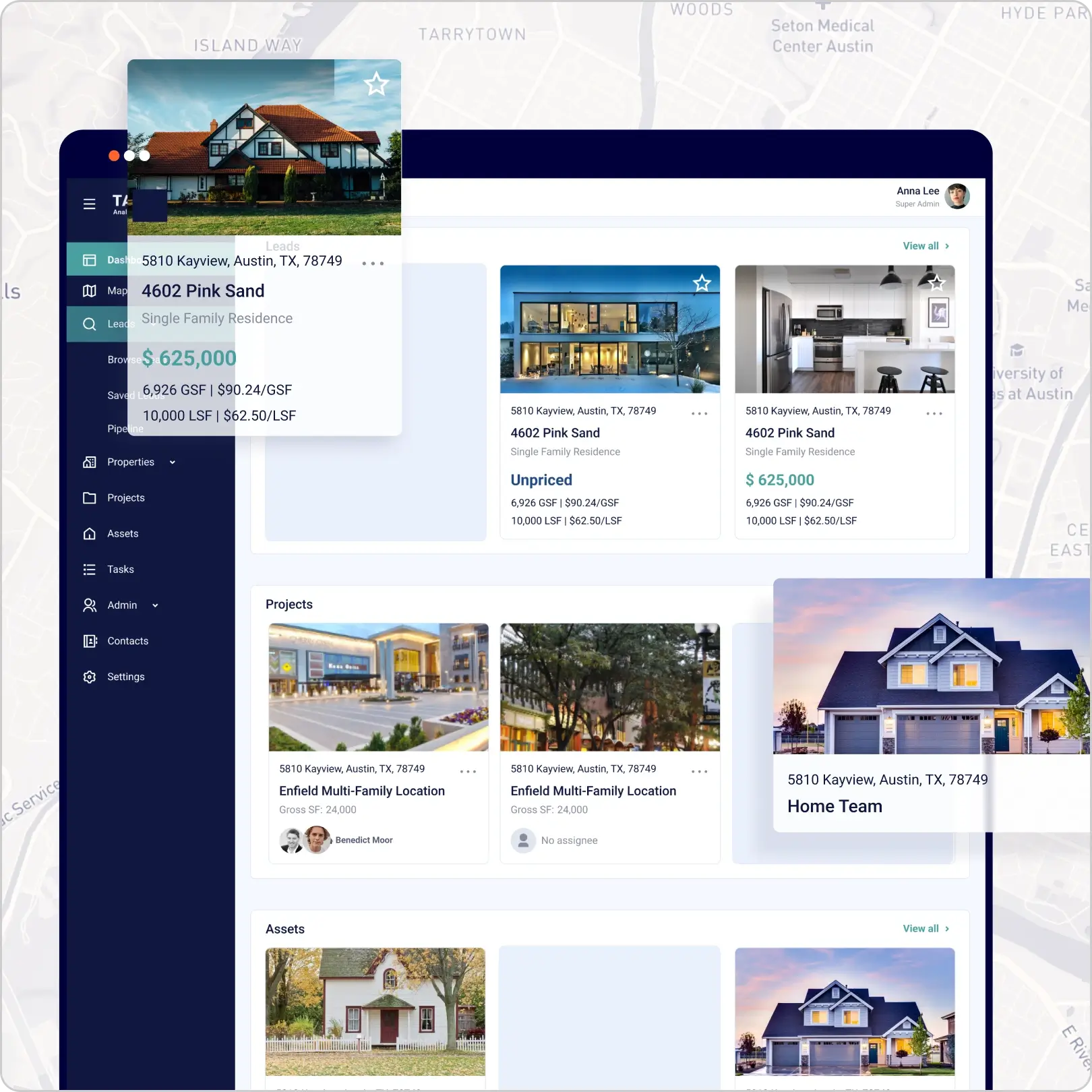
Use AI-driven business process automation to create listings in minutes, automatically match realtors with the right leads, handle documentation without the paperwork overhead, and replace manual updates with real-time data sync. Free up your team to focus on closing deals instead of administrative work.
Optimize routing in real time, track shipments without manual updates, coordinate dispatch automatically, and handle exceptions as they happen. Spot delays earlier, adjust plans on the fly, and reduce manual workload across your logistics operations.
Reduce administrative pressure with AI process automation for scheduling, patient intake, document handling, and data extraction from medical workflows. This helps providers spend less time on routine coordination, improves operational consistency, and supports faster handling of everyday healthcare processes.
Automate product data handling, order processing, customer communication, and demand-related workflows. Categorize listings, enrich product data, support fraud-related checks, and help teams process high transaction volumes more efficiently with AI features, improving operational speed without increasing manual effort.
Automate onboarding, internal support requests, employee data handling, and access to role-specific information. AI assistants can answer routine questions, surface policy details, and support HR workflows around reporting, documentation, and coordination, reducing administrative load and improving response speed.
We build predictive models that turn historical and live data into forecasts, risk signals, and recommendations. These insights are embedded into dashboards, products, and workflows, helping teams make earlier and better-informed decisions.
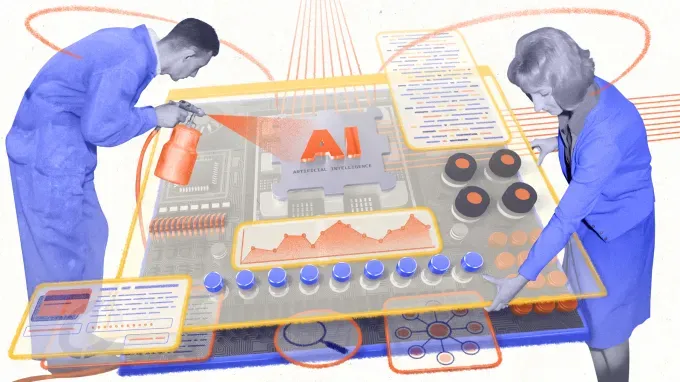
We build AI matching systems that connect the right users, products, or opportunities based on real data. From lead routing and candidate matching to marketplace ranking, our solutions improve decision quality, reduce manual work, and scale reliably with your product.

We help clients turn operational data into new value through AI-powered insights, reports, and product features. This can include internal analytics tools, partner-facing intelligence, or embedded capabilities that create new revenue opportunities.

We stabilize codebases affected by rushed development, weak architecture, or uncontrolled AI-generated code. By removing fragile logic and restoring maintainable structure, we help teams regain control and continue development with less risk.

Yes. In most cases, AI business process automation works best when integrated into the tools your team already uses, such as CRMs, ERPs, internal platforms, support systems, analytics tools, and document workflows. We connect AI logic to existing data sources, interfaces, and business rules, so automation becomes part of day-to-day operations instead of a separate product your team has to learn and manage.
This approach reduces rollout friction, shortens time to value, and helps teams adopt automation faster because the new functionality appears inside familiar workflows rather than outside them.
AI-powered business process automation creates the most value in workflows that are repetitive, time-consuming, operationally important, or difficult to scale with manual effort alone. Common examples: support request handling, onboarding, reporting, document processing, lead qualification, internal knowledge access, routing, approvals, and back-office coordination. It is especially useful when teams work with large volumes of text, requests, or semi-structured data that would otherwise require manual review. The strongest candidates are usually the processes where delays, inconsistency, or routine admin work already create visible cost, slow execution, or limit team capacity.
We prioritize AI for process automation based on business value, technical feasibility, and operational risk. Usually, the best starting point is a workflow with enough volume to matter, clear enough logic to automate safely, and a measurable impact on cost, speed, or service quality.
We also assess how much data is available, which systems need to be connected, where human review is still required, and how sensitive the process is to errors. This helps avoid low-impact business process automation with AI or overly complex first implementations.
Not by default. In most implementations, AI for business automation is used to reduce manual workload, speed up routine actions, and support better decisions, not remove human control entirely. We can build the system with approval steps, confidence thresholds, escalation rules, and clearly defined boundaries around what AI can do on its own. For example, AI can categorize requests, prepare drafts, extract information, or suggest actions, while final approval remains with your team where needed. This approach allows companies to gain efficiency without introducing unnecessary operational risk or giving up control over critical decisions.
Reliable AI process automation depends on the full system around the model, not just the model itself. We add validation rules, fallback behavior, permissions, monitoring, escalation paths, and clear workflow boundaries so the automation behaves predictably under real operating conditions.
We also test the solution against realistic inputs, exceptions, and edge cases, including situations where data is incomplete or user behavior is inconsistent.
Where accuracy is especially important, we can introduce human review points or business-rule validation before actions are completed. This makes automation practical for production use, not just technically impressive in a demo environment.
Yes. Imperfect data is common in real business environments and does not automatically block automation. Early in the project, we assess data quality and identify which signals are reliable enough to support the use case. Based on that, we can clean, normalize, enrich, classify, or restructure inputs before building automation logic around them.
In some cases, we also design the workflow so the system can operate safely even when certain fields are missing or confidence is lower. The goal is not to wait for perfect data, but to choose an automation scope and implementation approach that works well within the realities of your current systems.
We build security into the system from the start, with controlled access, secure integrations, role-based permissions, and clear rules around what data is shared with models.
We also align the implementation with your existing infrastructure, internal security standards, and compliance requirements where relevant. In practice, strong AI automation depends not only on useful outputs, but also on keeping data exposure limited, traceable, and appropriate to the workflow. That is why security boundaries are defined from the start and reviewed throughout implementation.
The timeline depends on the complexity of the workflow, the number of systems involved, the readiness of your data, and how much business logic needs to be built around the AI layer. Focused AI for process automation features can often be implemented in a few weeks when the use case is clear and integrations are limited.
Broader workflow automation, especially across several systems or departments, usually takes a few months. In most cases, the fastest path is to start with one high-impact process, prove the value in production, and then extend the automation to adjacent workflows. This reduces risk, speeds up adoption, and gives your team visible results earlier.
Success is measured against operational outcomes agreed on at the start of the project. Depending on the process, that may include reduced manual effort, faster handling time, lower support load, shorter response times, higher throughput, fewer errors, improved conversion, or better service consistency. We usually define both technical and business success criteria, because a working model alone is not enough if the workflow itself does not improve. The goal is to make the impact visible in real operations, so teams can clearly see whether the automation reduces cost, saves time, or improves process quality after release.
Yes. We build AI-driven business process automation to remain understandable and maintainable after launch, not dependent on us forever. That includes documented logic, structured integrations, clear process boundaries, visibility into prompts or orchestration rules, and knowledge transfer for your internal team. You keep access to the codebase, infrastructure, and supporting documentation, so your team can support, extend, or gradually take over the solution later. This is especially important in AI automation, where long-term value depends not just on the first release, but on the ability to adjust workflows, add new use cases, and keep the system aligned with changing business operations.
A standard AI business automation solution works best when rules are fixed, inputs are structured, and the process follows a stable path. AI automation becomes valuable when workflows involve text, ambiguity, changing patterns, or decisions that are difficult to capture with simple if-then logic alone. It can classify requests, extract information, generate responses, interpret context, and support more adaptive decision flows.
In practice, the best solutions often combine both approaches. Standard automation handles the stable logic, while AI is added where flexibility, interpretation, or pattern recognition is needed. This makes the workflow both efficient and realistic for real-world operations.
Yes. We design AI and process automation to support growing request volumes, broader process coverage, more users, and additional integrations over time. That means thinking not only about the first use case, but also about orchestration logic, system boundaries, monitoring, exception handling, and maintainability as the automation footprint expands.
A good implementation should let you extend automation into adjacent workflows without rebuilding the foundation each time. This is especially important when AI automation becomes part of customer operations, internal service delivery, or other business-critical processes where stability and scalability matter just as much as the initial productivity gain.