AI solutions
What we do
Services
Experts in
How we work





Fortune #40 Global Health Leader
1886-founded | 131K employees | $16B in R&D

NYSE: EB
850k creators | 300M tickets sold in 2023

8th GPS App in the US
3M+ in 2023 | 10M+ Google Play downloads

Cultural Exchange Led by 2K+ Team
Est. 1980 | 500K+ Alumni | 100+ Countries

$12M Revenue Tech Co.
MBE Certified by NMSDC

Trusted Logistics Co. Since 1979
ISO9001 Certified Systems Integrator

3rd in Retail Inc. 5000
$6M+ raised | #1 ranked company in CT

UCSF-Trusted Health App
with 50K+ users in 60+ countries

Google-Funded Green Tech
144K Ha Monitored | Featured by Reuters

Telecom Experts Est. 2005
Google, Proximus & Orange partners

NASA-Trusted Workflows Builder
Est. in 2007 | PCI, GDPR & HIPAA certified

Top Swiss Agency
Awarded #1 Swiss App in 2025

#2 SMM Agency in Australia
Serves 1k+ Australian B2B across 20+ domains

Google Cloud Partner
Trusted by Fortune 5 UHG

F&B Startup with 25K+ Guests/Y
4.5 on TripAdvisor | 600+ Dining Partners
Fortune #40 Global Health Leader
1886-founded | 131K employees | $16B in R&D
NYSE: EB
850k creators | 300M tickets sold in 2023
8th GPS App in the US
3M+ in 2023 | 10M+ Google Play downloads
Cultural Exchange Led by 2K+ Team
Est. 1980 | 500K+ Alumni | 100+ Countries
$12M Revenue Tech Co.
MBE Certified by NMSDC
Trusted Logistics Co. Since 1979
ISO9001 Certified Systems Integrator
F&B Startup with 25K+ Guests/Y
4.5 on TripAdvisor | 600+ Dining Partners
Google Cloud Partner
Trusted by Fortune 5 UHG
#2 SMM Agency in Australia
Serves 1k+ Australian B2B across 20+ domains
Top Swiss Agency
Awarded #1 Swiss App in 2025
NASA-Trusted Workflows Builder
Est. in 2007 | PCI, GDPR & HIPAA certified
Telecom Experts Est. 2005
Google, Proximus & Orange partners
Google-Funded Green Tech
144K Ha Monitored | Featured by Reuters
UCSF-Trusted Health App
with 50K+ users in 60+ countries
3rd in Retail Inc. 5000
$6M+ raised | #1 ranked company in CT
Trusted Logistics Co. Since 1979
ISO9001 Certified Systems Integrator
$12M Revenue Tech Co.
MBE Certified by NMSDC
Cultural Exchange Led by 2K+ Team
Est. 1980 | 500K+ Alumni | 100+ Countries
8th GPS App in the US
3M+ in 2023 | 10M+ Google Play downloads
NYSE: EB
850k creators | 300M tickets sold in 2023
Fortune #40 Global Health Leader
1886-founded | 131K employees | $16B in R&D
F&B Startup with 25K+ Guests/Y
4.5 on TripAdvisor | 600+ Dining Partners
Google Cloud Partner
Trusted by Fortune 5 UHG
#2 SMM Agency in Australia
Serves 1k+ Australian B2B across 20+ domains
Top Swiss Agency
Awarded #1 Swiss App in 2025
NASA-Trusted Workflows Builder
Est. in 2007 | PCI, GDPR & HIPAA certified
Telecom Experts Est. 2005
Google, Proximus & Orange partners
Seamlessly connect with third-party platforms, CRMs, and marketing tools to expand functionality and improve efficiency.
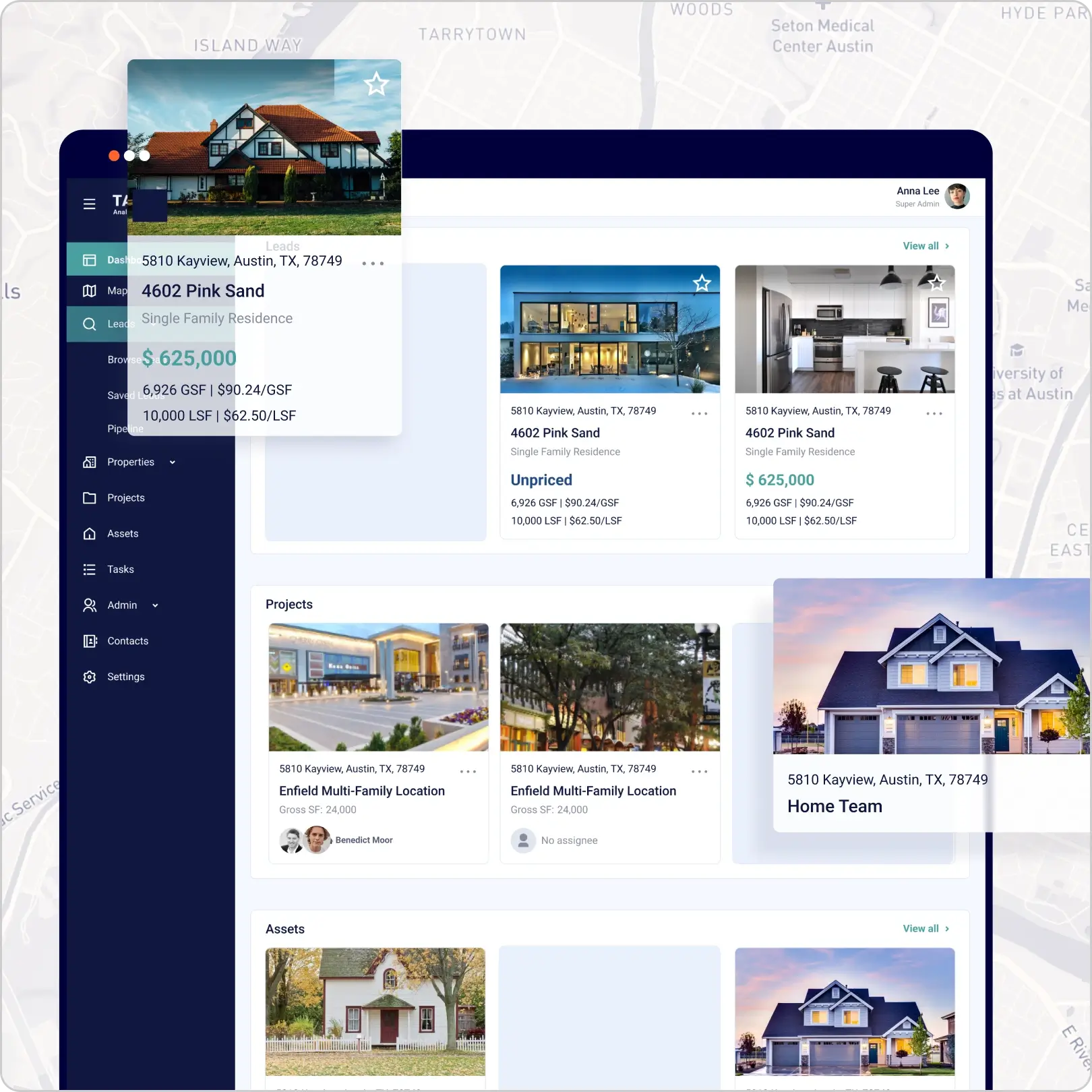
Advanced search tools, filters, and AI-powered suggestions help agents find the best properties faster.
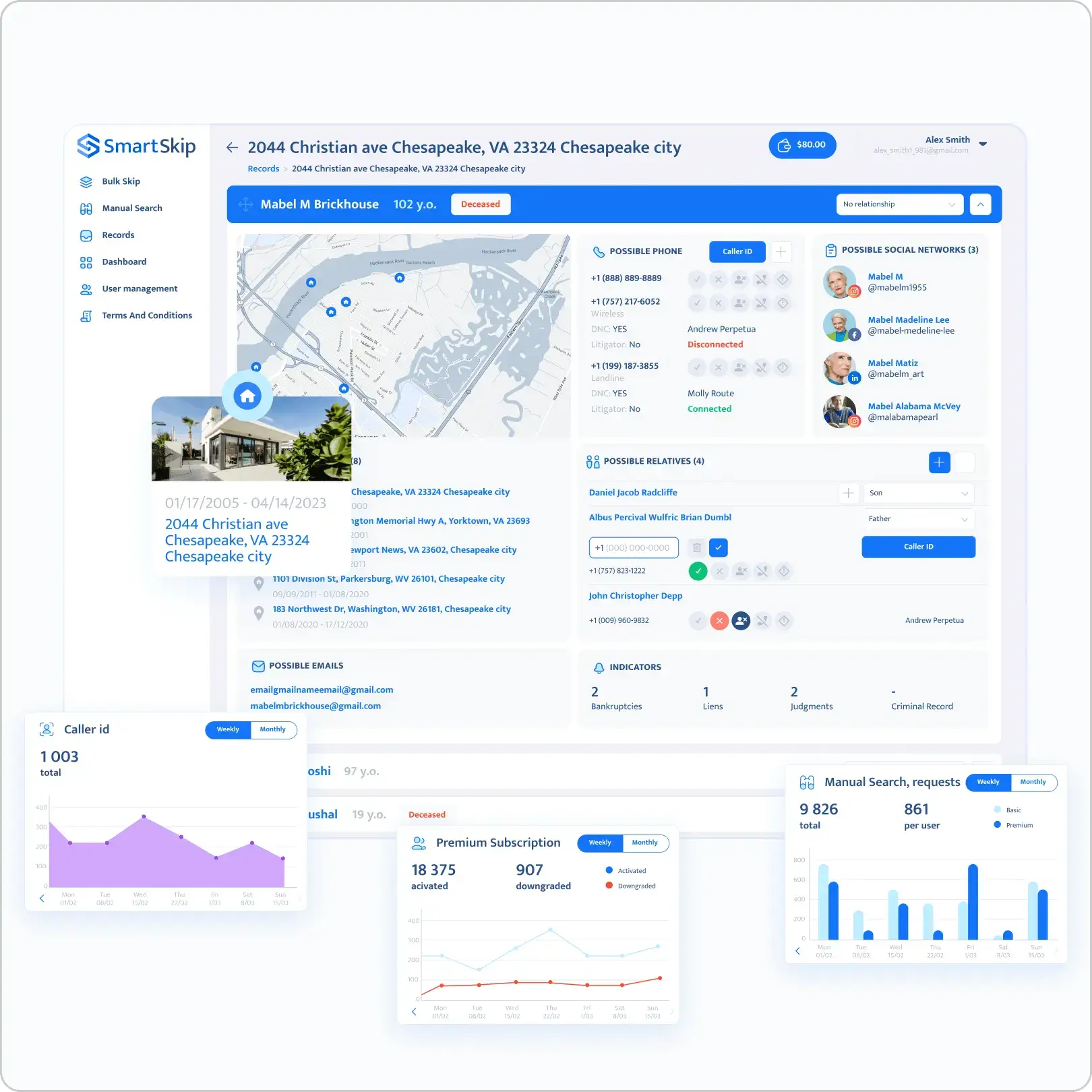
Access only fresh, accurate data — no duplicates, no delays. We ensure smoother workflows and better decision-making.
Easily add, update, and sync real estate listings across multiple platforms, ensuring accuracy and saving time.
Get real-time updates on property values, real estate market trends, and neighborhood stats to make informed decisions.
Keep brokers and real estate agents connected in one system, ensuring smooth communication and faster deal closures.
Keep listings legally compliant while safeguarding sensitive customer and property data with robust security measures.
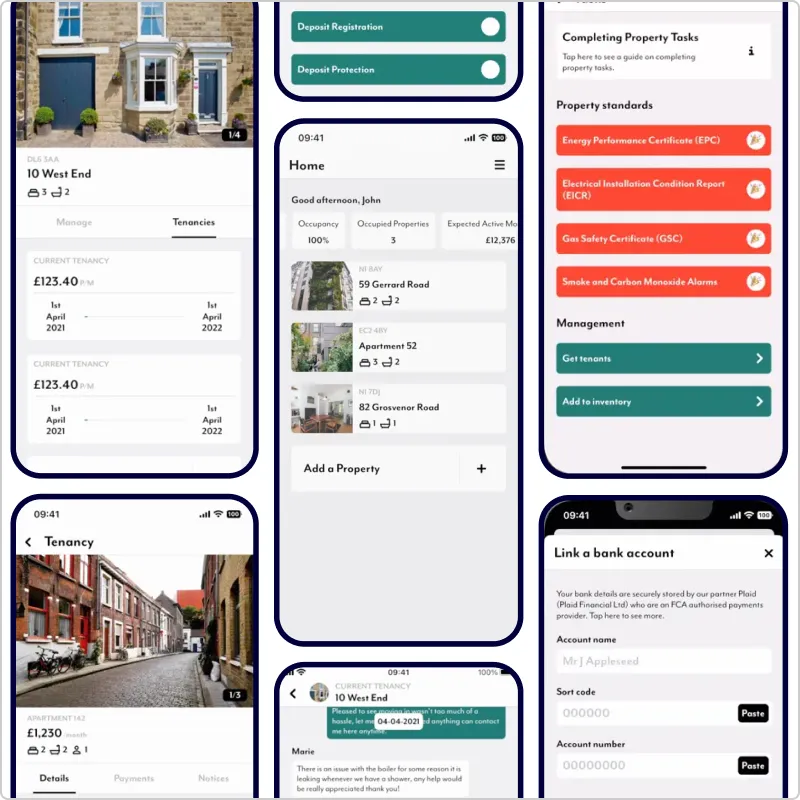
Effortless property discovery, easy comparisons, and seamless transactions create a smoother, more satisfying journey.
We dive into your business needs, MLS requirements, and market specifics to shape the right solution. By gathering insights from your team, we pinpoint essential features, data integrations, and compliance factors. We also evaluate third-party APIs and scalability to ensure smooth MLS operations. A well-structured discovery phase prevents costly adjustments down the road and sets the stage for a reliable, high-performing platform.
Learn about our discovery
We design an MLS platform that’s easy to navigate and optimized for efficiency. Wireframes and UI/UX prototypes help create a smooth experience for brokers, agents, and buyers, ensuring quick property searches and seamless listing management. Every detail is tailored for both desktop and mobile users, making interactions intuitive and transactions effortless.
We know how to build fast, secure, and scalable MLS platforms that work seamlessly. Our MLS software development services cover everything from integrating property databases and third-party APIs to automating data syncing for real-time accuracy. We focus on performance, security, and compliance while maintaining a solid SPI/CPI metric to keep development on track. With smooth search filters, easy agent collaboration, and a system built to handle high traffic, your MLS is ready to perform at its best.
We run rigorous automated and manual testing as a part of the real estate MLS software development process. We check everything — property listings, search accuracy, data syncing, and security compliance — while stress-testing the system under high traffic. Our thorough approach results in a 99.89% acceptance rate, ensuring your MLS runs reliably and meets your expectations exactly.
We handle the entire deployment process, ensuring your MLS platform goes live without a hitch. With automated CI/CD pipelines, we streamline updates, reduce downtime, and keep everything running smoothly. Our development team sets up hosting, configures databases, and fine-tunes performance for seamless operation. We also monitor the rollout closely, addressing any issues in real time to guarantee stability.
Launching your MLS real estate software is just the beginning. We can provide ongoing development, adding new features, optimizing performance, and scaling to meet growing demands. With continuous monitoring and user feedback, we fine-tune property search accuracy, enhance security, and integrate emerging technologies like AI-powered recommendations. Whether it’s expanding functionality or improving efficiency, we ensure your multiple listing service stays competitive and evolves with the market.
Solution architect

Your MLS needs to handle thousands of listings reliably, but it should also feel intuitive for brokers and clients. We make sure you get both.
Timely delivery is our priority. With a structured workflow, clear roadmaps, and proactive risk management, we keep your MLS project on schedule. Our SPI stays under 10%, ensuring accurate planning and efficient execution. Regular progress updates keep you informed, and if challenges arise, we address them early —so your multiple listing software launches on time.

Our rigorous discovery process allows us to provide a reliable cost estimate and stick to it with less than 10% variance. We track the Cost Performance Index (CPI) to ensure spending stays on track and under control. If scope changes arise, we discuss the impact with you upfront so you’re never caught off guard.

Transparency is at the core of our MLS software development services. You get real-time access to project progress, Kanban boards, code repositories, and technical documentation—everything you need to stay informed. We maintain open communication through regular reports, scheduled calls, and clear documentation, ensuring you're always up to date. You get full visibility of your MLS development.

We manage risks proactively, starting with a detailed risk register that identifies potential challenges. With our experience across diverse MLS projects, we know where risks can arise and plan accordingly. Each risk is assessed, a mitigation strategy is defined, and contingencies are factored into our estimate. This ensures we’re always prepared to act, protecting your interests.










10+
real estate products
99.89%
acceptance rate
3.8 years
average tenure
2014
build products since
<10%
SPI/CPI variance
A custom MLS platform lets you decide how property data is organized, accessed, and used. Your team no longer has to work around third-party restrictions. The system is designed to fit your sourcing, enrichment, and decision-making processes.
You get flexible data models, search logic, filters, and permissions built for your asset types, markets, and strategy. Proprietary data sources, analytics, and valuation logic can be integrated directly into the platform.
Custom MLS solutions are easier to scale as your needs grow. You won’t face licensing limits, and you can improve performance as your data increases. You also can add automation or AI features when you’re ready. When you own the platform and data, you depend less on outside vendors and turn your MLS into a long-term asset.
Before you start custom MLS software development, get clear on your business goals and use cases. Decide who will use the platform, how listings will be sourced, improved, and reviewed, and what decisions your MLS should support.
It’s important to know your data needs. Make sure you understand your data sources, MLS integrations, data models, rules for standardizing data, and how often updates will happen. This helps prevent problems later.
Workflows and permissions should also be defined early. This covers user roles, access levels, approval flows, and collaboration logic. Finally, non-functional requirements like performance, scalability, security, and compliance must be agreed on upfront to ensure predictable delivery and long-term stability.
Start by bringing in and standardizing data from different sources. This keeps listings accurate, consistent, and current. Flexible data models help the platform handle various property types, markets, and business rules.
Advanced search, filters, and matching features help users quickly find the right listings by location, price, features, or other criteria. Role-based access and permissions decide who can view, edit, approve, or publish data.
Operational features typically include listing lifecycle management, audit logs, reporting, and integrations with CRMs, analytics tools, and valuation systems. Many MLS platforms also include automation and AI-driven features such as data cleanup, listing summaries, and market insights to improve speed and decision quality.
MLS software development timelines depend on scope, data complexity, and the number of integrations. A focused MVP that covers core listing management, search, and one or two data sources can usually be built in about 3 to 5 months.
More advanced MLS platforms, with multiple integrations, complex data normalization, permissions, analytics, and automation, typically take 6 to 9 months or even longer. Starting with clear goals, checking data flows early, and setting priorities helps keep the timeline on track as the system grows.
The biggest cost driver of MLS software development services is data complexity. The number of MLS sources, data formats, normalization rules, and update frequency directly affects development effort and testing.
The range of features also matters. Advanced search, custom data models, permissions, analytics, automation, and AI all add complexity compared to a simple listing system.
Integrations are another key factor. Connecting CRMs, valuation tools, mapping services, or proprietary data sources requires additional architecture and ongoing maintenance planning.
Finally, non-functional requirements are very important. Performance, scalability, security, and compliance expectations influence infrastructure, development time, and long-term cost, especially for platforms designed to grow.
For long-term MLS software development services, a flexible pricing model is usually the most effective. Fixed-price works well for early phases like discovery or a clearly scoped MVP, where requirements and outcomes are stable.
Once the MLS platform starts evolving, a dedicated team model is better suited. It lets you adjust scope, add integrations, refine data logic, and introduce new features without renegotiating contracts.
This approach supports ongoing delivery, steady progress, and clear costs. That’s important for MLS platforms that become more complex and valuable as they grow.
AI makes MLS search better by looking beyond exact filters and keywords. It can analyze user behavior, past searches, and deal results to show listings that better match what users want, even if their criteria are incomplete or unclear.
AI also improves recommendations by learning from how users interact with the platform. It can rank properties based on relevance, investment strategy, or past performance, instead of just using basic sorting rules.
In addition, AI helps clean and normalize listing data, detect anomalies, and generate concise property summaries. This leads to faster discovery, more accurate results, and recommendations that improve as the platform is used.
Begin by evaluating relevant experience. The company should understand MLS data structures, integrations, normalization challenges, and how real estate teams actually use listing data in daily workflows.
Next, assess their discovery and delivery approach. A reliable partner should clearly explain how requirements are defined, how data complexity is handled, and how timelines and costs are kept predictable as scope evolves.
Finally, confirm ownership and transparency. You should retain full rights to the code and data, have ongoing access to repositories and documentation, and understand post-launch support. The right partner helps you build a platform you can scale and evolve independently.
Start by checking their experience with MLS-specific challenges. Look for examples of work with multiple data sources, data normalization, syncing rules, and handling incomplete or inconsistent listing data.
Ask how they design the system’s architecture. Good teams usually can explain how they handle scalability, performance during heavy searches, role-based access, and secure integrations with third-party services.
You should also look at their engineering practices. Clear documentation, good testing strategies, high code quality, and transparent delivery are signs of a mature team. Finally, the vendor should be able to explain trade-offs clearly and justify technical decisions in business terms, not just technical ones.
The process usually starts with discovery. Business goals, user roles, data sources, MLS integrations, and core workflows are defined to align the platform with real operational needs.
Next comes design and architecture. Data models, search logic, permissions, and system structure are planned to support performance, scalability, and reliable data handling. UX and UI are designed around how users search, review, and manage listings.
MLS software development follows an iterative approach. Core features are built first, then integrations, automation, and advanced logic are added in stages. Testing runs in parallel to validate data accuracy and performance.
After launch, the process continues with monitoring, optimization, and feature expansion as usage and requirements evolve.
Yes. Custom MLS systems are typically designed to integrate with CRM systems, IDX feeds, and external property portals as a core part of the architecture, not as an afterthought.
Before development begins, APIs, data formats, sync rules, and access limits are reviewed to ensure stable and consistent data exchange. This allows listings, contacts, activity history, and status updates to stay aligned across systems.
With a well-planned integration approach, the MLS becomes a central data hub. It keeps information accurate across platforms, supports real-time or scheduled syncing, and can easily connect to new tools or portals as your ecosystem grows.
Support and maintenance are typically part of ongoing real estate MLS software development services after launch. This includes monitoring system performance, fixing issues, updating integrations, and ensuring data pipelines continue to run reliably as external services change.
Maintenance also includes security updates, infrastructure changes, and performance tuning as usage and data grow. As your business needs change, post-launch support can add new features, improve search, refine workflows, or add automation and AI.
The level of support can be adjusted over time, from basic maintenance to continuous development focused on scaling and long-term improvement.
$15,000 to $50,000
A validated MLS concept with wireframes, prototypes, and a clear roadmap for development
$50,000 to $100,000
A functional MLS with core features, ready for early adopters and iterative improvements
$100,000 to $500,000
A fully operational MLS with monetization tools, integrations, and a scalable foundation.
$500,000+
A top-tier MLS with AI, automation, and high-load capabilities to outperform competitors.