AI solutions
What we do
Services
Experts in
How we work




















Our delivery flow is designed to minimize client-side overhead and operational effort. You stay focused on the strategic direction, while we structure and handle the delivery process on our side, with complete visibility for you.

When you've built healthtech solutions enough times, you can estimate them honestly. So when we provide cost or timeline estimates, we’re not guessing. That’s why our numbers hold, and CPI/SPI variance on projects usually stays under 10%.
The number one thing clients ask for is clarity. So we give them full visibility: timelines, risks, progress, budget reports, documentation, all of it. When everything is transparent, delivery becomes much easier to trust.

We want clients to feel confident about their products’ security. So we make sure the product is built with healthcare regulations in mind. Permissions, logs, data flows, encryption, caching rules — we set up everything your product needs to align with regulations.

Our experience lets us identify the right balance between required performance, budget constraints, and growth needs from the start. So, in practice, the systems we deliver run with about 99.99% uptime and hold up during growth.

Over multiple healthtech products, we’ve seen every integration scenario: well-documented APIs, legacy systems, custom internal tools. This experience let us confidently guide clients on the best integration path. Plus, we always assess possibilities upfront and show what’s achievable with different APIs.
Feature shaping, architecture, development, testing, launch, and upgrades — we handle the full process end to end. To keep delivery efficient, we use AI for routine tasks such as API research, documentation, test preparation, and edge-case brainstorming. Engineers remain responsible for architecture, security, product logic, and final decisions. Your project stays in the hands of a team with healthtech experience, while you stay focused on growth, partnerships, and the bigger business picture.
Our delivery flow is designed to minimize client-side overhead and operational effort. You stay focused on the strategic direction, while we structure and handle the delivery process on our side, with complete visibility for you.
The estimates we provide are tied to the real scope and our experience. We look at your project requirements, compare them with similar functionality we’ve developed on past projects, and give you realistic numbers.
When you've built healthtech solutions enough times, you can estimate them honestly. So when we provide cost or timeline estimates, we’re not guessing. That’s why our numbers hold, and CPI/SPI variance on projects usually stays under 10%.
Our delivery approach is built around transparency. You get access to codebase and project boards, a tailored communication plan, consistent progress updates, and early discussions on potential risks.
The number one thing clients ask for is clarity. So we give them full visibility: timelines, risks, progress, budget reports, documentation, all of it. When everything is transparent, delivery becomes much easier to trust.
Your product will be ready for the realities of healthcare. From architecture to workflows, we make sure your system supports secure data handling and meets healthcare requirements.
We want clients to feel confident about their products’ security. So we make sure the product is built with healthcare regulations in mind. Permissions, logs, data flows, encryption, caching rules — we set up everything your product needs to align with regulations.
We build healthtech products with modular architecture and clean code. The foundation of your product will support rapid feature expansion, mobile add-ons, and higher data volumes as your user base grows.
Our experience lets us identify the right balance between required performance, budget constraints, and growth needs from the start. So, in practice, the systems we deliver run with about 99.99% uptime and hold up during growth.
We build products that fit naturally into your ecosystem. Whether you need to connect to EHR/EMR systems, labs, devices, or third-party APIs, we design with interoperability in mind.
Over multiple healthtech products, we’ve seen every integration scenario: well-documented APIs, legacy systems, custom internal tools. This experience let us confidently guide clients on the best integration path. Plus, we always assess possibilities upfront and show what’s achievable with different APIs.
We integrated with Garmin, Withings, Oura, CardioMood, and more, with automated data collection and secure authentication.
Mobile apps we’ve built ranked among the top 5 in the Health category on the App Store
Delivered white-label apps now powering THB Global, Gladd MD, Ben Greenfield Fitness, and more.
Our upgrades helped companies boost performance, improve satisfaction rate across 50K+ users, and support Series A funding.
We plan for secure data handling from the start and carry it through every stage of custom healthtech software development. Our team sets up encrypted storage and transfer, role-based access, audit logs, secure APIs, and clear rules for working with sensitive information.
After delivering 10+ healthtech apps, we know where security risks usually appear across workflows, integrations, and infrastructure. We address them early and run regular security checks throughout development, so your product stays reliable as it grows.
Yes. We connect healthtech products with EHR and EMR systems, patient portals, lab software, wearable devices, and third-party healthcare platforms.
Our team has worked with different integration scenarios, including legacy systems, custom internal tools, and wearable data sources. Before development starts, we review available APIs and data formats, map data flows, and identify technical limitations early. This helps keep integrations stable, secure, and easy to expand as your product grows.










Centralized patient profiles, appointment tracking, secure records, and streamlined communication with providers.
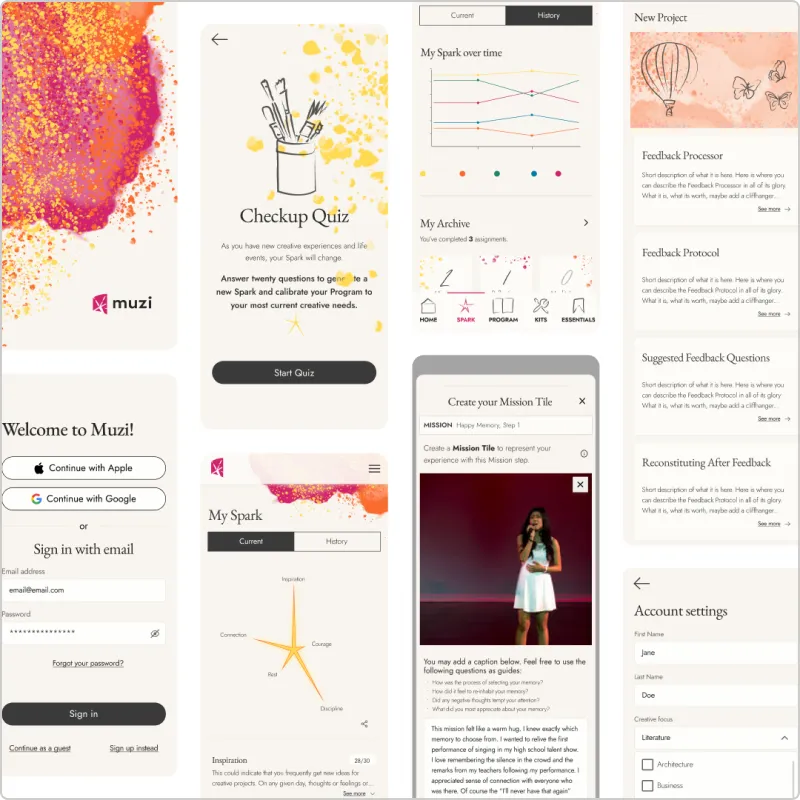
Activity tracking, nutrition guidance, habit monitoring, and personalized insights to boost healthy lifestyles.
Mood tracking, therapy exercises, stress management tools, and secure journaling for better emotional wellbeing.
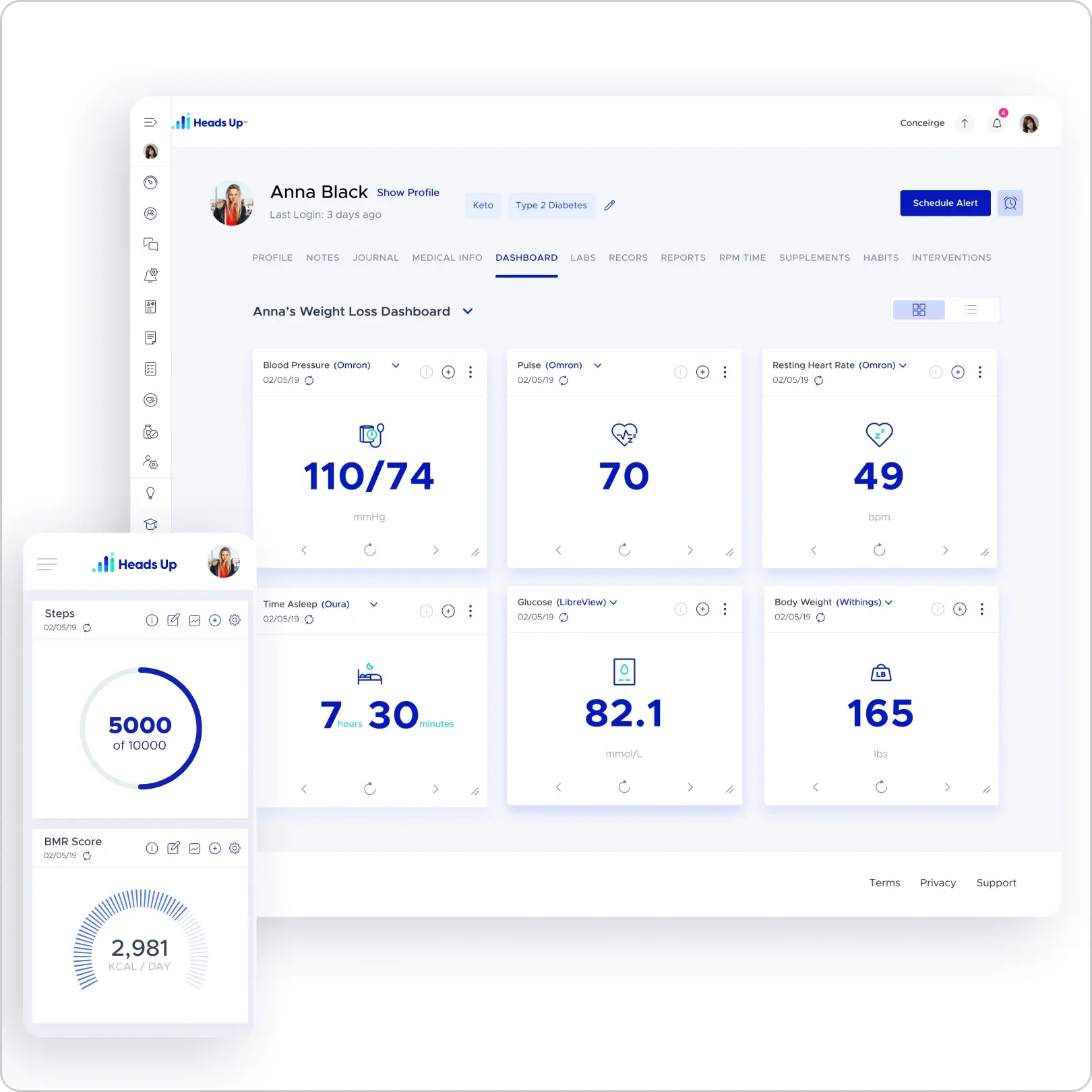
Dynamic dashboards for continuous vitals tracking, alerts for anomalies, and integrations with wearable devices.
Health data analysis, trend tracking, predictive insights, and actionable reports with convenient export options.
Secure foundation for video consultations, patient-provider messaging, and integration with health records.
We cover the full product lifecycle: discovery, architecture design, UX/UI design, infrastructure setup, development, testing, and deployment. If you need integrations with any third-party services (labs, wearables, etc.), our healthtech software development services cover them too. After release, we usually stay on the project and help with any issues that may come up in the first weeks. If you need long-term support, we are ready to continue our cooperation, taking over functionality scaling and ongoing updates.
A focused MVP (a few core features plus essential integrations) usually takes around 4–6 months. More advanced healthcare software with complex integrations, custom workflows, regulatory requirements, and scalability needs may take 6–9 months or longer.
Scope is the main factor. More features mean more to build, test, and secure. Complex integrations mean more time on data mapping, vendor access, and edge cases in someone else's system. Stricter security requirements mean more work on access control, encryption, and audit trails. Each of these adds time on its own, and they compound when a project has all three.
Yes, we handle both. We've taken over healthtech products that were already live and kept building on them — adding integrations, fixing what was slowing down, rewriting the parts that couldn't scale. We've also built products from scratch, starting at the planning stage.
Taking over someone else's codebase is normal work for us. We read through what's there, get it running, and pick up from where the previous team left off.
Yes, we've worked as an extension of in-house teams, and some of those engagements have been running for over five years now.
How we split the work depends on where your team is stretched. Sometimes we take over all platform improvements. Sometimes we add a few engineers to a team that needs more capacity. We agree on the split and the ownership boundaries upfront, so nobody ends up rewriting the same file twice.
Head of delivery

99.89% acceptance across 10+ healthtech apps shows we meet requirements, giving you confidence your project will land exactly where you need it to.
Differentiate your product by delivering tailored health recommendations based on user data and habits. Let AI functionality boost user engagement and retention and increase LTV.
Integrate AI analytics for wearable data to detect trends and early signals faster, enabling premium features for your users and supporting partnerships with device makers.
Add an AI-driven virtual assistant to handle FAQs and common user requests. Reduce support costs, speed up responses, and improve user satisfaction, letting your team focus on higher-value tasks while users get instant, reliable help.
Use AI to analyze user behavior and lifestyle data, uncover patterns, and deliver actionable insights. Drive engagement, enable personalized interventions, and make your product more valuable for users.
We handle the whole integration: mapping the data flow, connecting the API, testing that the connection holds. We've worked across labs, wearables, patient portals, and custom internal tools, so whatever you need to connect, we've probably done it before. Where standards exist, we use HL7 and FHIR. Everything else gets normalized into one internal format, so the next integration goes faster.
We set up private networks, isolated databases, encryption in transit and at rest, and IAM access rules, so sensitive data never sits next to anything public-facing. We also handle backups, logging, and monitoring sized to what your product actually needs. So when someone asks who touched a record last March, you have an answer.
We handle wearable data end-to-end: pulling it in, validating it, and processing it in the background so a slow Garmin sync never blocks someone from opening the app. We also implement duplicate handling, retry logic, and filtering rules, so your data stays under control as volumes grow. Garmin, Withings, Oura, CardioMood — we've integrated all of them, across activity, sleep, and heart rate.
When the product needs it, we make specific mobile workflows survive a dropped connection. A nurse in a basement keeps filling out the form; it syncs when they're back on signal. We work out what gets cached, what can be stored locally, and how it reconciles later. For sensitive on-device data, we add encrypted local storage and conflict rules, so two people editing offline doesn't end in a mess.
We map out access rules around how your team is set up. Patients, clinicians, coordinators, billing — same system, different views. For complex models we use ABAC, which can factor in role, active relationship, appointment status, and consent settings. Consent modules come with it, so patients grant, restrict, or revoke access to parts of their data themselves.
Compliance is part of the plan from the requirements stage. When we define functionality, we work through what HIPAA or GDPR asks of each feature — where data lives, who reaches it, what gets logged, how long it's retained — and we agree all of it with you before it goes into the scope.
On our side, that's the technical work: encryption, access control, audit trails, data handling in the architecture. On yours, it's the organizational side that no vendor can do for you — internal policies, staff training, BAAs with your other vendors, and the compliance officer who signs off. We'll tell you which is which as we go, so nothing sits in a gap between us.
You do. All code, documentation, infrastructure, and design files are yours, and IP transfer is written into the contract from the start.

Before choosing the architecture, we look at which operations need to happen instantly and which ones can run in the background. A user should be able to open the app without waiting for a wearable sync or a large report to finish. That separation keeps the main flows responsive as the product gets more data and more integrations.
Head of Client Relations

We already know the compliance playbook and optimal solutions for healthtech challenges. We won’t waste time learning the basics.
$15,000 to $50,000
Setting the stage for your healthtech solution
$50,000 to $100,000
Healthcare & wellness solution to cover basic needs
$100,000 to $500,000
Full-featured software
$500,000+
Healthtech solutions for large facilities
We help early-stage teams turn raw ideas into solid healthtech products. With 10+ healthcare products behind us, we bring tried-and-tested tech decisions to your product. Our team guides you through discovery, architecture, compliance, and integrations, reducing risks and speeding up time-to-market.
You get a clear roadmap, predictable delivery, and a product built to scale when traction comes.

We can help you strengthen your product with architecture upgrades, new modules, AI capabilities, and complex integrations. Our team worked with healthtech products serving 50,000+ users, helping them to boost performance and contributing to successful funding rounds.
You get a steady delivery partner who boosts release velocity and keeps quality high as the product expands.