
Any questions unanswered?
Let's discuss them


The AI world is growing fast, you’ve probably felt it yourself. Every week, there’s a new tool, a new model, or a new company promising to “redefine the future”. It’s exciting, but it’s also a lot. In 2025, more than 90,000 companies called themselves AI developers. That’s great for innovation. It also makes choosing the right AI software development services partner harder than ever.
Here’s the tricky part: many teams can plug in an API or spin up a quick demo. Few can take an AI idea and turn it into a production feature that performs well, scales with your product, and gives you real business value.
If you’ve ever tried to pick a vendor and felt like everyone sounds the same, you’re not wrong. A polished pitch doesn’t mean they can ship reliable AI.
That’s why we created this list. Each company here earns its place for a clear reason. That makes it easier for you to spot the right fit and move forward with confidence.
AI software development companies can look similar from the outside, so we used a clear set of criteria to spot the teams that consistently deliver strong, reliable work. These are the things that actually make a difference once you start building:
Proven experience building AI that runs in the real world. Naturally, the first thing we looked for was teams that have proof (case studies, testimonials, etc.) that they actually built and shipped AI systems. This includes machine learning, LLM-powered features, predictive analytics, or automation tools that people depend on every day, often supported by clear data visualization for faster decision-making
Ability to handle the full AI lifecycle. Strong partners don’t stop at model training. They help you from early project discovery through data prep, development, deployment, and ongoing tuning. In other words, they stay with you from the idea stage to real usage.
Deep understanding of AI tech. We considered how well each company understands the nuts and bolts of AI. Things like choosing the right model, explaining the generative AI meaning behind generated content and outputs, setting up a RAG pipeline, using embeddings, fine-tuning, or running good MLOps practices. You don’t need to know all the details, but you do want a team that does.
Ability to design systems that scale. Good AI is only useful if it runs well as you grow. We checked whether these teams can build systems that stay fast, reliable, and cost-efficient when traffic or data volume increases.
Clear communication about scope and cost. No one likes surprises. We favored vendors who explain timelines, budgets, constraints, and trade-offs clearly. Teams that communicate clearly earn trust. Overpromising usually leads to problems later.
Strong senior talent on the team. AI is still a senior-heavy field. We gave preference to companies with seasoned engineers and ML specialists who stay hands-on throughout the project.
A good fit for different stages and goals. Some teams shine at fast MVPs. Others excel at enterprise-scale systems. We matched companies to the kinds of problems they solve best, so you can find your ideal fit quickly.
Based on these criteria, we highlighted AI software development companies that show strong, repeatable results when delivering AI systems in practice.
Based on everything we covered above, these are the AI companies that consistently met our criteria.
Location: Ukraine
Founded: 2014
Hourly rate: $50+
Clutch rating: 4.9
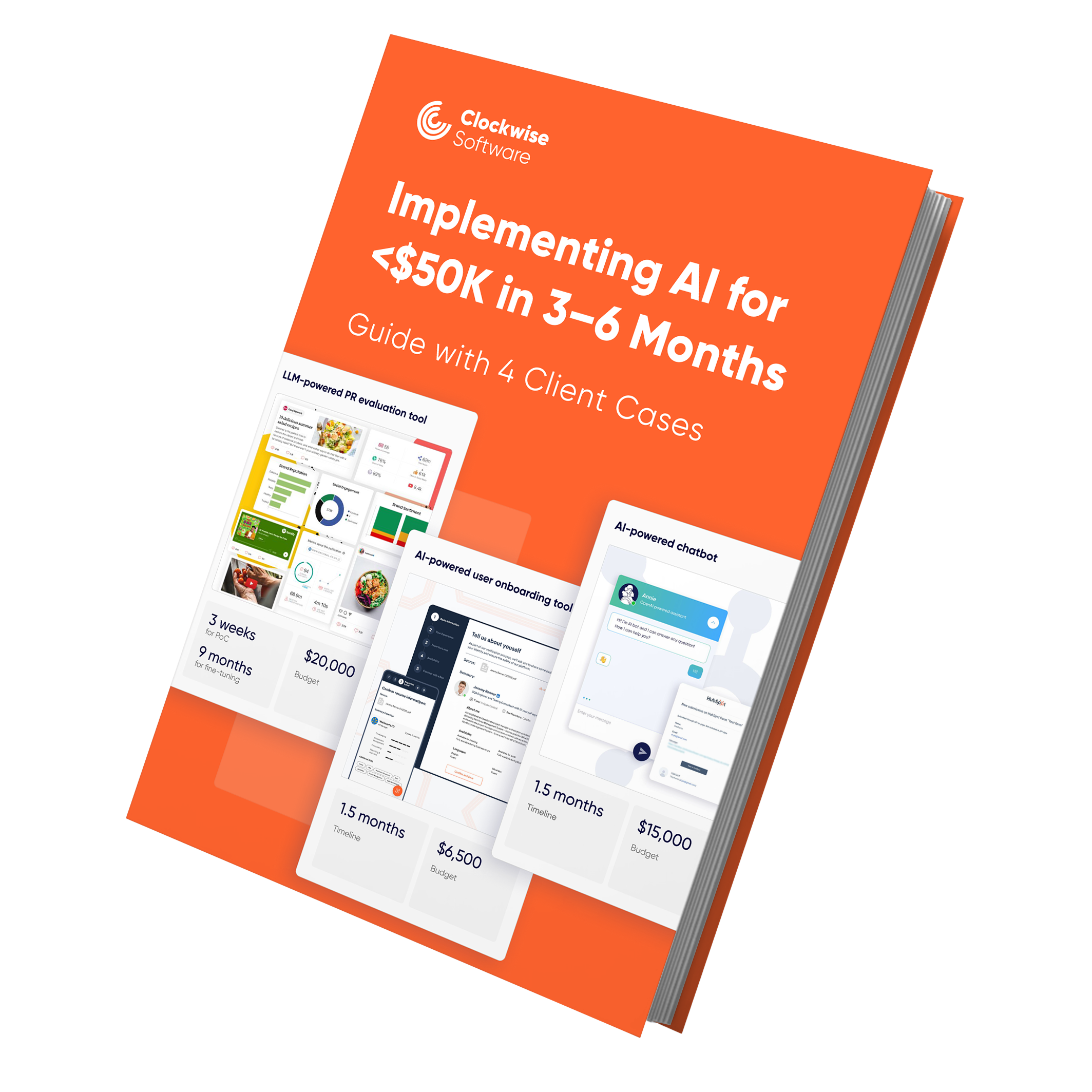
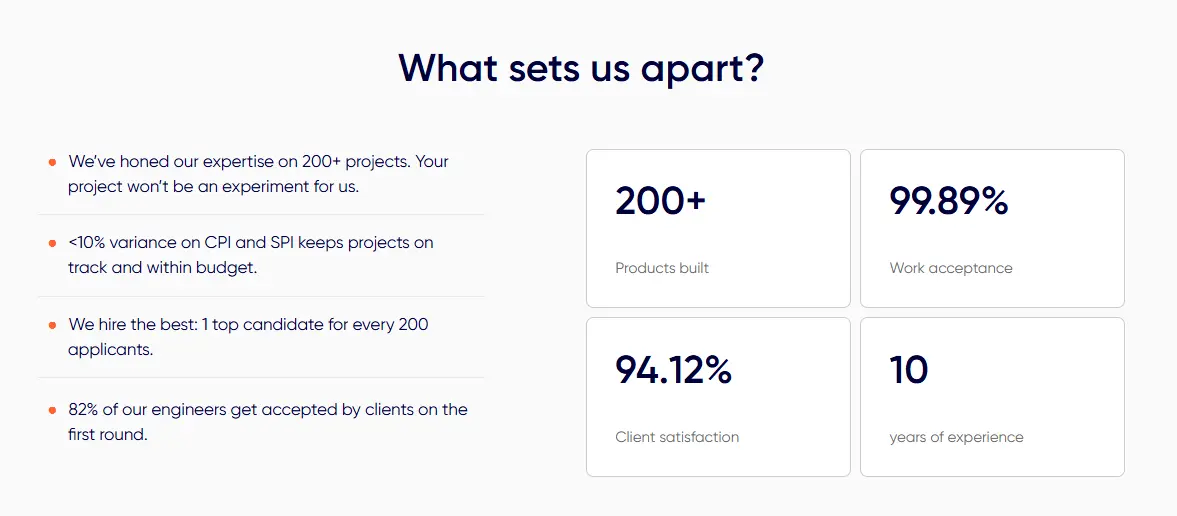
At Clockwise Software, we help teams bring AI into their products in a way that feels practical, predictable, and worth the investment. We have spent 10+ years building software and have delivered over 200 products, so the AI work we do today sits on top of a strong engineering foundation.
Our company helps teams make AI practical by turning abstract ideas into structured, product-ready implementations. We start with your goals, look at your data and tech setup, and match you with the simplest path that can deliver actual value. Sometimes that means integrating a pretrained model, sometimes it means RAG or fine-tuning. The point is to choose what fits your product instead of overbuilding.
This approach has worked well across different industries. For example, we:
Because delivery discipline matters as much as the tech, our AI software development company pays close attention to project predictability. Our projects stay within 10% variance on cost and timelines, backed by long-term team stability and consistently high client satisfaction.
If you want to add AI to an existing product, modernize your data workflows, or validate whether an AI feature is worth building, we are a good match.
Location: Poland
Founded: 2005
Hourly rate: $50+
Clutch rating: 4.7
STX Next is a large Python-focused engineering company with a long history in data-heavy projects. A lot of their AI work is built on strong data engineering skills. They often help teams clean up data flows, build modern pipelines with tools like Snowflake or Databricks, and prepare cloud setups before any AI features are added. For companies that see data readiness as their main bottleneck, this can be useful.
Their AI and machine learning services cover model development, workflow automation, and integrating AI into existing products. They also work with vision-based use cases, such as their Deepnext project, where they supported medical teams with image analysis. Their approach is structured and process-driven, which fits organizations that prefer a steady, predictable delivery model.
STX Next is generally a match for teams with data-intensive products or legacy systems that need modernization before AI can make a real impact. They focus on building the groundwork and helping companies move toward AI in a measured, incremental way rather than jumping straight into advanced features.
Location: United States
Founded: 2002
Hourly rate: $50+
Clutch rating: 4.9
Vention is a large, full-service engineering company where AI is part of a broader technology offering. With thousands of engineers across regions, they typically support long-running programs rather than narrowly scoped AI projects.
When it comes to AI software development, Vention works on assistants, automation, and data-driven features that plug into wider product ecosystems. Their work focuses on integrating pretrained models, building agents, and combining AI with existing cloud and backend architecture. For example, in their DealCloud project, they built a data processing engine that helps financial teams analyze market insights faster. This work shows AI being used alongside other engineering components.
Because their work spans many technologies, Vention is typically a fit for companies looking for a large, all-purpose digital product development partner rather than a narrowly focused AI team. They are usually involved in long-running programs, legacy modernization, and projects where AI is part of a bigger roadmap instead of the main driver.
Location: United States
Founded: 2009
Hourly rate: $100+
Clutch rating: 4.7
BlueLabel focuses on strategy, UX, and integrating generative AI into workflows rather than building heavy ML systems from scratch. They do a mix of AI consulting, generative AI setups, RAG implementations, conversational AI, and agent-like workflows. These capabilities are usually embedded within broader product development that includes mobile, design, and web work.
Their AI practice centers on designing AI features that fit naturally into the user flow. For example, they build chat-style assistants, AI-driven recommendations, and tools that use your own data through retrieval augmented generation. They also provide data and LLM engineering to clean and prepare content before feeding it to a model. Their experience usually appeals to brands that want AI to feel well-designed and on-brand, not just technically functional.
BlueLabel is generally a match for companies that see AI as part of a bigger product redesign or user experience improvement. They are less focused on deep data engineering or custom model training, and more on helping teams define use cases, plan workflows, and ship AI features that fit smoothly into an existing app.
Location: United States
Founded: 2005
Hourly rate: $100+
Clutch rating: 4.9
TELUS Digital is a large digital services company where AI is applied mainly within enterprise customer experience and operational systems. Their AI software development work is typically part of high-volume environments such as customer support, content workflows, data operations, and internal automation, rather than standalone AI features built into a single product.
A core part of their offering focuses on data for AI systems. This includes data preparation, labeling, validation, and human-in-the-loop processes used to support model training and evaluation.
TELUS Digital is best suited for large organizations that need AI to function reliably across multiple teams, regions, and workflows. They are a strong fit for enterprises where scale, data governance, and operational stability are higher priorities than flexible experimentation or early-stage product validation.
Location: United Arab Emirates
Founded: 2013
Hourly rate: $25+
Clutch rating: 4.9
Phaedra Solutions is a product engineering company that primarily supports startups and fast-moving teams looking to build and launch quickly.
Their AI offering focuses on rapid experimentation and early validation: MVPs, proofs of concept, generative AI integrations, LLM-based workflows, and basic automation embedded into applications.
Phaedra Solutions is best suited for teams that prioritize speed, flexibility, and cost efficiency over long-term optimization or tightly scoped delivery guarantees. They are a strong fit for early-stage products, internal tools, and exploratory AI use cases where fast iteration matters more than production maturity, scalability, or extended post-launch ownership.
Location: Czech Republic
Founded: 1998
Hourly rate: $50+
Clutch rating: 4.8
Profinit is a company with a long history of working on data platforms, analytics, and enterprise systems. Their work centers on helping banks, insurers, telecoms, and other regulated organizations modernize legacy systems and build stable data foundations. Because of that background, their AI practice leans heavily on governance, compliance, and predictable delivery rather than experimental features.
Their AI software development services span assistants, document analysis, custom ML solutions, and testing AI frameworks that help verify model performance. One example is their contract review assistant built for teams working under DORA regulation. It shows how they focus on AI that fits strict compliance rules and plugs into existing enterprise workflows. They also work on data warehouses, BI setups, and other platforms that companies often need before introducing more advanced AI capabilities.
Profinit is a match for organizations that already operate at enterprise scale and need AI to integrate cleanly with legacy systems, strict security standards, and complex data environments. This structured approach is a good fit for organizations that prioritize governance, risk management, and long-term stability.
Location: India
Founded: 2015
Hourly rate: $25+
Clutch rating: 4.9
fxis.ai is an AI-focused engineering company that positions itself around deep technical work rather than broad software development. Most of their projects involve generative AI solutions, agentic workflows, private LLMs, and automation systems. Their focus is hands-on AI engineering for teams that already know what they want to build.
The company has been working with artificial intelligence software development since 2015. They emphasize an engineering-first approach and focus on delivering systems that are ready for production, without unnecessary process overhead. fxis.ai also provides AI-assisted delivery, where engineers use AI to move faster while keeping full control over production quality, and staff augmentation for companies that want additional senior engineering capacity.
fxis.ai is generally a fit for teams looking for lower-cost but technically capable support on AI-specific features. Because their offering is tightly centered on engineering and custom LLM work, they make the most sense for companies that already know what they want to build and need a team to implement it, rather than shape the product direction.
Location: Singapore
Founded: 2013
Hourly rate: $25+
Clutch rating: 4.9
QDS Asia is a development firm that focuses mainly on web, mobile, and e-commerce products. Their core offering is affordable engineering support for tech startups and companies that want to move quickly with offshore teams. AI is not their core offering, but they integrate lightweight AI features when projects call for it, alongside full-cycle development and staff augmentation.
Rather than building complex or highly customized AI systems, QDS Asia applies existing models or simple automation to support common product needs. AI is used pragmatically, as an add-on to core functionality, not as the main driver of the product.
Because of this approach, QDS Asia is best suited for early-stage or cost-conscious teams that want to bring AI expertise by hiring dedicated developers and move faster, without committing to deeper investments until the product and business are ready for it.
Location: Canada
Founded: 2011
Hourly rate: $100+
Clutch rating: 4.9
Osedea is an engineering and innovation firm that blends AI software development with product design and custom software work. Their team in Montreal focuses on building solutions for industries like manufacturing, health, mining, and finance, often pairing AI features with robotics, UX design, or automation. They don’t treat AI as a separate offering, it’s usually built into larger engineering projects alongside other technologies.
Their AI capabilities cover computer vision, NLP, LLM-based features, generative AI, agentic workflows, predictive models, and MLOps support. They also highlight security and reliability with SOC 2 certification, which is useful for clients in regulated environments. A good example of their approach is the STM project, where they supported public transit operations with software that helps teams respond quickly to real-time station maintenance signals collected by an autonomous inspection robot.
Osedea is a match for enterprises that want a single partner to handle UX, engineering, and AI together. They are best suited for projects where AI is one piece of a broader digital transformation, and where design and user experience matter alongside the technical implementation.
Picking an AI software development partner is not just about who has the fanciest model or the flashiest case study. You want a team that understands your product, your data, and how AI fits into your real-world workflow. A few practical signals make it easier to assess whether a team is the right fit.
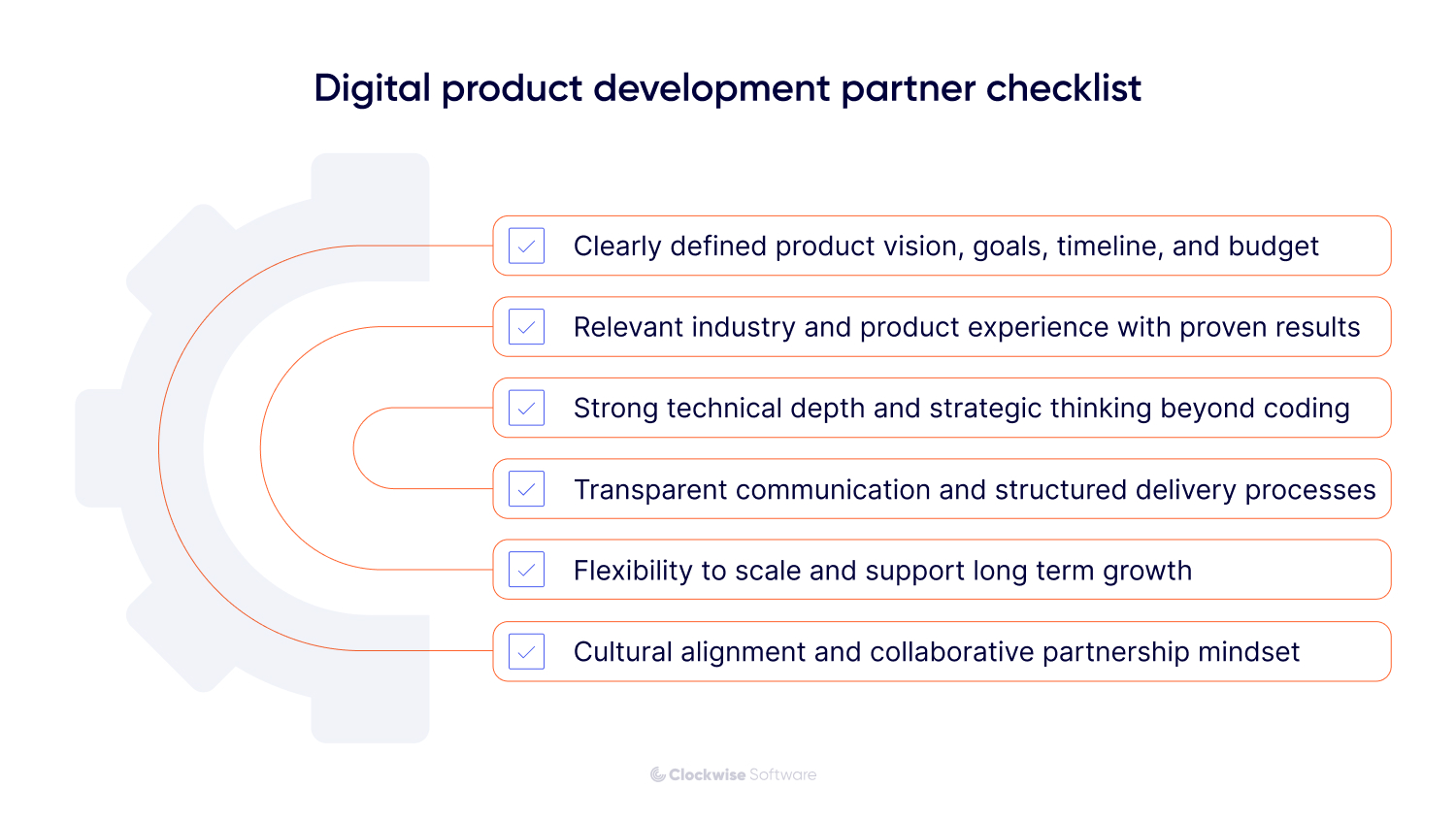
A good partner should “get” your world quickly. They should be able to talk about your users, your data, and your constraints in plain language. AI in real estate is different from AI in fintech. If vendors jump straight to model talk without asking about your business, that’s usually a sign to keep looking.
AI only works well when the whole system works well. That means data pipelines, architecture, integrations, monitoring, and a plan for updates. Ask AI software development companies how they handle these pieces. You want someone who treats AI as part of your product, not a cool experiment glued on top.
Before writing code, leading AI development companies help you check data readiness, define success, and run a simple proof of concept. This saves time and money. If a company wants to jump straight into full development without validation, you may end up paying for fixes later.
Building a prototype is easy, running it in production is not. Ask how an AI development agency handles versioning, model drift, uptime, and ongoing tuning. Teams with real production experience can explain these things clearly and calmly.
AI work does not end at launch. You want a partner who can support the next few versions of your product, not just deliver a one-off feature. Look for stability, clear communication, and a working style that matches how you like to build. For example, knowledge of the latest SaaS trends can be a useful signal here.
Choosing the right AI development company means finding a partner that balances technical depth with practical execution — one that can turn AI from an experiment into a dependable part of your product or operations.
Finding the right AI software development company can feel overwhelming, especially when every company uses the same language to describe very different strengths. The good news is that once you understand what really matters (clear goals, reliable engineering, and a practical path to production), the choice becomes much easier. Each company in this guide brings something unique, and depending on your stage and needs, any of them might be a fit.
If you are looking for a team that treats AI as part of your product and integrates it into existing workflows instead of rebuilding everything around a model, that is where we put most of our focus at Clockwise Software. We like to keep things grounded. helping you move from idea to working, measurable features without unnecessary complexity. For many teams, that balance of speed and stability is exactly what gets AI out of the “maybe later” bucket and into real use.
So take your time, compare approaches, and choose a partner that feels like an extension of your team. And if you want help shaping or implementing AI in a way that fits your product and budget, we are always happy to talk through options and share what has worked for others. With the right plan and the right support, AI becomes a lot less intimidating and a lot more useful.