AI solutions
What we do
Services
Experts in
How we work




Fortune #40 Global Health Leader
1886-founded | 131K employees | $16B in R&D

NYSE: EB
850k creators | 300M tickets sold in 2023

8th GPS App in the US
3M+ in 2023 | 10M+ Google Play downloads

Cultural Exchange Led by 2K+ Team
Est. 1980 | 500K+ Alumni | 100+ Countries

$12M Revenue Tech Co.
MBE Certified by NMSDC

Trusted Logistics Co. Since 1979
ISO9001 Certified Systems Integrator

3rd in Retail Inc. 5000
$6M+ raised | #1 ranked company in CT

UCSF-Trusted Health App
with 50K+ users in 60+ countries

Google-Funded Green Tech
144K Ha Monitored | Featured by Reuters

Telecom Experts Est. 2005
Google, Proximus & Orange partners

NASA-Trusted Workflows Builder
Est. in 2007 | PCI, GDPR & HIPAA certified

Top Swiss Agency
Awarded #1 Swiss App in 2025

#2 SMM Agency in Australia
Serves 1k+ Australian B2B across 20+ domains

Google Cloud Partner
Trusted by Fortune 5 UHG

F&B Startup with 25K+ Guests/Y
4.5 on TripAdvisor | 600+ Dining Partners
Fortune #40 Global Health Leader
1886-founded | 131K employees | $16B in R&D
NYSE: EB
850k creators | 300M tickets sold in 2023
8th GPS App in the US
3M+ in 2023 | 10M+ Google Play downloads
Cultural Exchange Led by 2K+ Team
Est. 1980 | 500K+ Alumni | 100+ Countries
$12M Revenue Tech Co.
MBE Certified by NMSDC
Trusted Logistics Co. Since 1979
ISO9001 Certified Systems Integrator
F&B Startup with 25K+ Guests/Y
4.5 on TripAdvisor | 600+ Dining Partners
Google Cloud Partner
Trusted by Fortune 5 UHG
#2 SMM Agency in Australia
Serves 1k+ Australian B2B across 20+ domains
Top Swiss Agency
Awarded #1 Swiss App in 2025
NASA-Trusted Workflows Builder
Est. in 2007 | PCI, GDPR & HIPAA certified
Telecom Experts Est. 2005
Google, Proximus & Orange partners
Google-Funded Green Tech
144K Ha Monitored | Featured by Reuters
UCSF-Trusted Health App
with 50K+ users in 60+ countries
3rd in Retail Inc. 5000
$6M+ raised | #1 ranked company in CT
Trusted Logistics Co. Since 1979
ISO9001 Certified Systems Integrator
$12M Revenue Tech Co.
MBE Certified by NMSDC
Cultural Exchange Led by 2K+ Team
Est. 1980 | 500K+ Alumni | 100+ Countries
8th GPS App in the US
3M+ in 2023 | 10M+ Google Play downloads
NYSE: EB
850k creators | 300M tickets sold in 2023
Fortune #40 Global Health Leader
1886-founded | 131K employees | $16B in R&D
F&B Startup with 25K+ Guests/Y
4.5 on TripAdvisor | 600+ Dining Partners
Google Cloud Partner
Trusted by Fortune 5 UHG
#2 SMM Agency in Australia
Serves 1k+ Australian B2B across 20+ domains
Top Swiss Agency
Awarded #1 Swiss App in 2025
NASA-Trusted Workflows Builder
Est. in 2007 | PCI, GDPR & HIPAA certified
Telecom Experts Est. 2005
Google, Proximus & Orange partners
Cut manual work, reduce routing errors, and keep labor hours in check. We build algorithms to automate paperwork and invoicing, routine tasks in dispatching, and rerouting based on traffic and delays. Your team gets less repetitive work and can focus more on high-impact tasks that require human judgment.
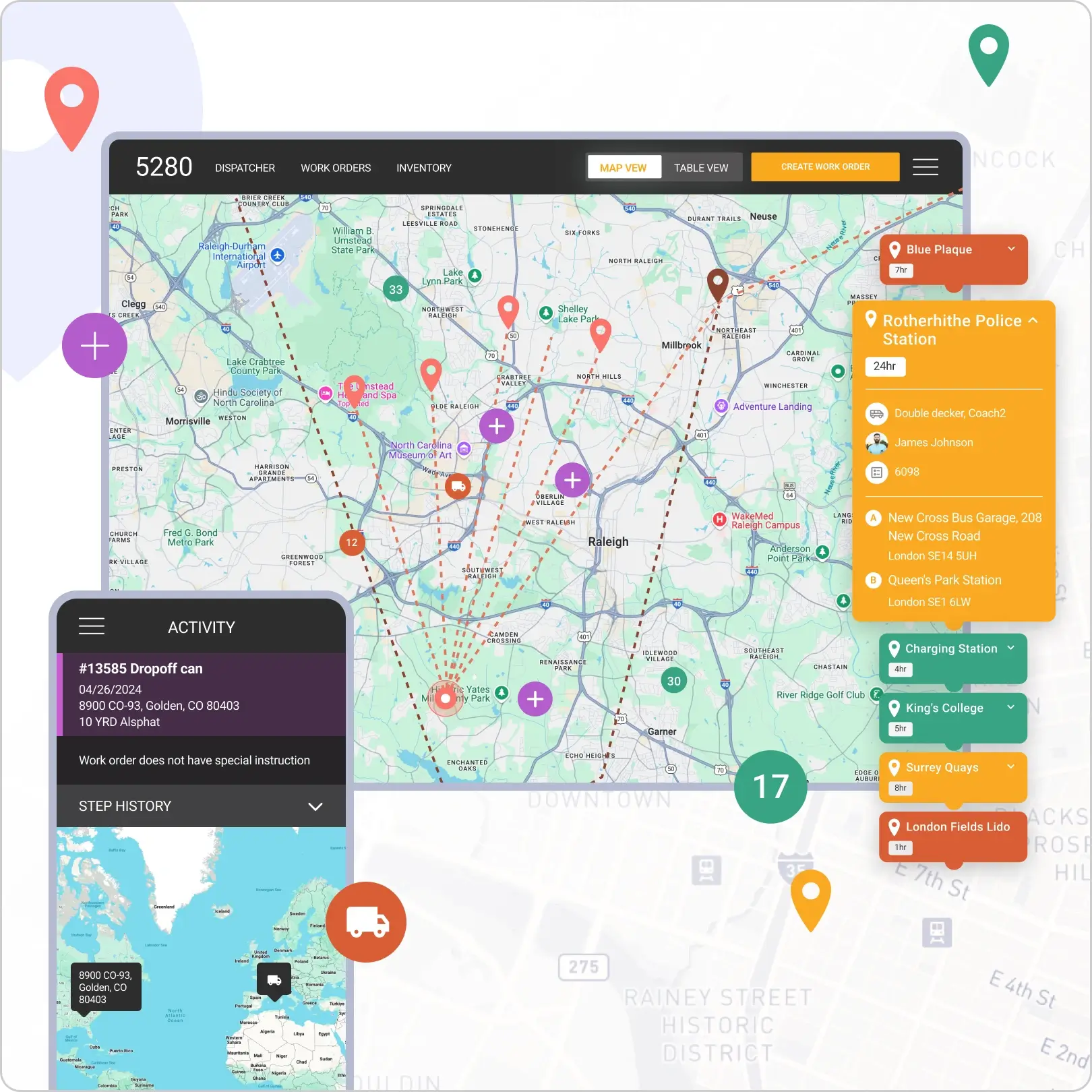
See what’s happening across your network the moment it happens. Delays, bottlenecks, ETA shifts —everything is visible in one place. Telematics data, GPS signals, and sensor inputs feed the system in real time, helping your team spot issues early and respond before they escalate.
Drivers, dispatchers, warehouse teams, managers — everyone gets tools built around their daily work. Intuitive mobile interfaces for drivers, unified functionality for dispatch, and structured dashboards for managers and leaders. Each role gets the tools it needs, tuned to simplify its workflows.
Make your data a driver of your decisions. Add functionality to analyze past delivery patterns, traffic, delivery loads, and drivers’ performance to spot risks and mitigate them faster, plan better, and optimize fleet usage.
We build your platform based on your workflows, roles, and logistics routines. Routing rules, task flows, feature placement on a screen, everything is made to fit how your team operates. Our business analyst will help translate your needs into clear system requirements, and we will anchor development to them.
Our coding standards, efficient CI/CD pipelines, and QA with 95-100% test coverage result in stable, reliable software.
From sprint one to release, you have full visibility into code and progress, with regular updates, budget reports, and demos.
Our projects run with <10% CPI/SPI variance, giving predictability to plan budgets, roadmap, and scaling around.
We connect to your ERPs, TMS, WMS, and telematics with a clean integration layer. Your operations won’t be disrupted.
Our clients seen $100K savings in the first year using a platform we delivered. Well-thought-out functionality, solid infrastructure, and great interoperability result in tangible gains.

We worked on integrations in 90% of our projects, connecting ERP, CRM, telematics, maps, and more. Whether it’s a well-documented Azure Maps API or a custom tool, we will assess them at the start and choose an optimal integration approach to match your needs.

Building 10+ platforms taught us to spot hidden gaps others miss. We close them with functionality that reduces handoffs by 80% and makes processes up to 3 times simpler.

From 50+ interfaces built for drivers, operators, and dispatchers, we bring proven patterns that drive 94.12% user satisfaction and minimize support needs: some clients reported they got just 1 support ticket in 6 months.

Want to offer your solution to multiple clients under their own branding? We design the architecture that will unlock this opportunity for you: multi-tenancy, subscription logic, rebranding capabilities, and customer management features.

Head of delivery

We’ve launched 10+ logistics apps with less than 10% CPI/SPI variance, from fleet tracking dashboards to full-scale warehouse platforms.











We kick things off by getting to know your business inside and out. What are your goals? What challenges keep you up at night? Together, we outline the scope, map key features, and set clear expectations for your supply chain or logistics software. More than planning, it’s building a solid foundation. That’s how we keep everyone on the same page, minimize surprises, and achieve our 99.89% work acceptance rate when we’re done.
Now, it’s time to sketch out the blueprint. Our logistics software development company
turns ideas into wireframes, flows, and designs that match your workflows and business goals. Every screen, button, and feature is carefully thought through. Why? Because looks matter, but good design is really about easing daily tasks. Whether it’s shipment tracking dashboards, warehouse stock interfaces, or route optimization tools, every detail is built to make logistics operations seamless and intuitive.
Here’s where the magic happens. We take those designs and turn them into reliable, scalable software that does exactly what your business needs. Every line of code follows best practices, every milestone keeps us on track, and every update keeps you in the loop. Our approach is built to minimize surprises, especially when it comes to time and budget. If something unexpected pops up, we let you know right away. We’ll discuss the impact, outline your options, and agree on the best way forward together. This level of transparency and control is how we consistently maintain <10% variance on CPI & SPI across all projects of our logistics software development company.
Before any transportation software solution goes live, we put it through rigorous testing. Think of it like a dress rehearsal before opening night. Our QA team checks functionality, performance, and security to ensure every feature works as expected under real-world conditions. We proactively identify and resolve issues, minimizing risks and ensuring reliability.
Launch day doesn’t have to be stressful. We prepare the cloud environment for your platform, fine-tune configurations, and monitor every detail as your software goes live. If something pops up, we’re on it right away. That’s what logistics software development services are about: keeping things smooth, avoiding downtime, and making sure your supply chain or transportation management system is ready to roll right from the start.
The launch is only the start of the journey. We stick around to keep your software running at its best and help it grow with your business. Whether it’s scaling warehouse management features, fine-tuning real-time delivery tracking dashboards, or adding new transportation optimization tools, our team’s got your back. With engineers staying on projects for an average of ~3.3 years, you can count on consistent expertise and an efficient delivery process that adapts to your growing logistics needs.
Track maintenance, fuel usage, and driver schedules. Keep your fleet operating without surprises.
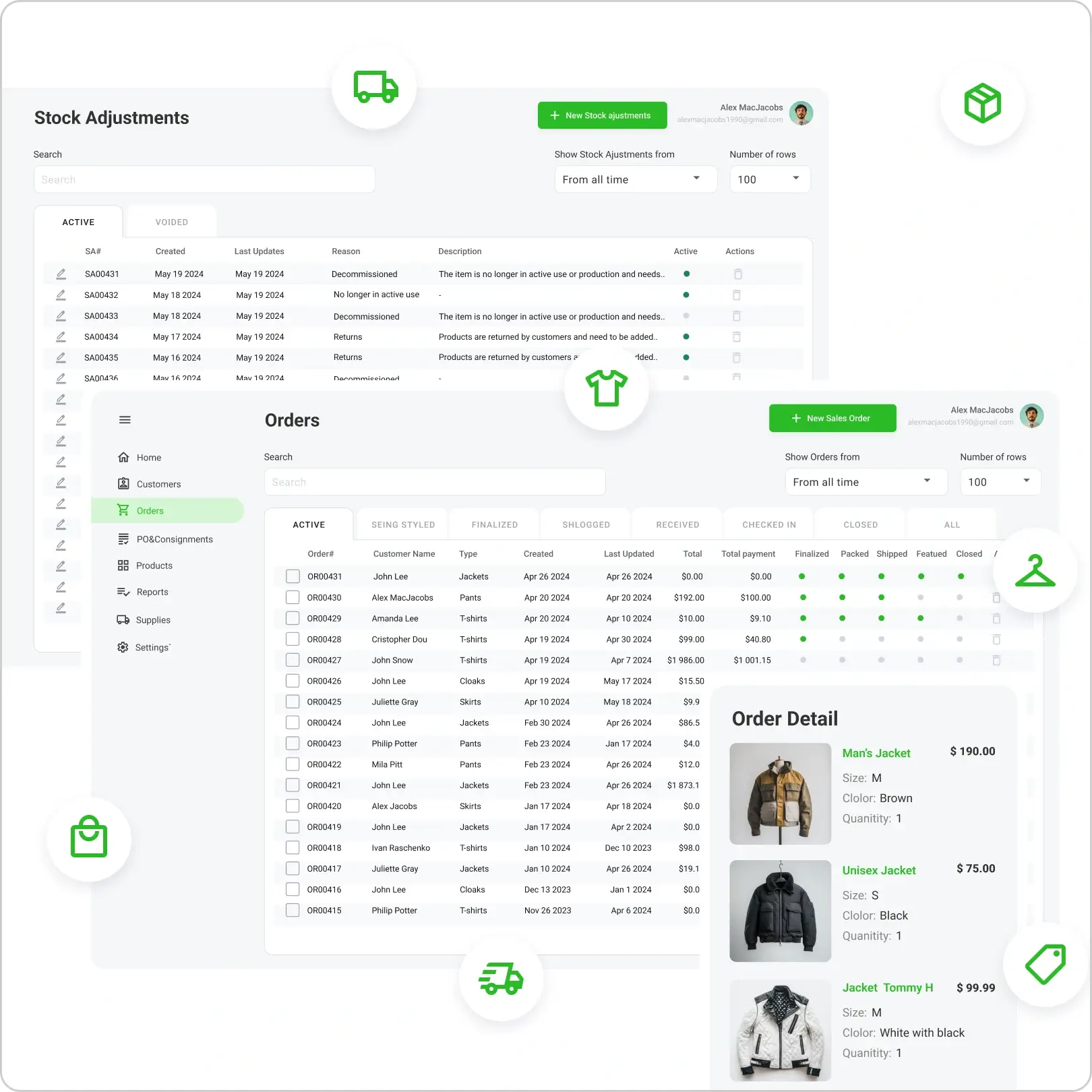
From order in to delivery confirmation, automate the workflow and cut out manual entry.
Track shipments, vehicles, and operations as they happen with telematics. Complete visibility across your supply chain.
Smart routing that factors in traffic, delivery windows, and vehicle constraints. Less fuel, faster deliveries.
Connect your ERP, WMS, TMS, and telematics to avoid data silos and gaps in your operations
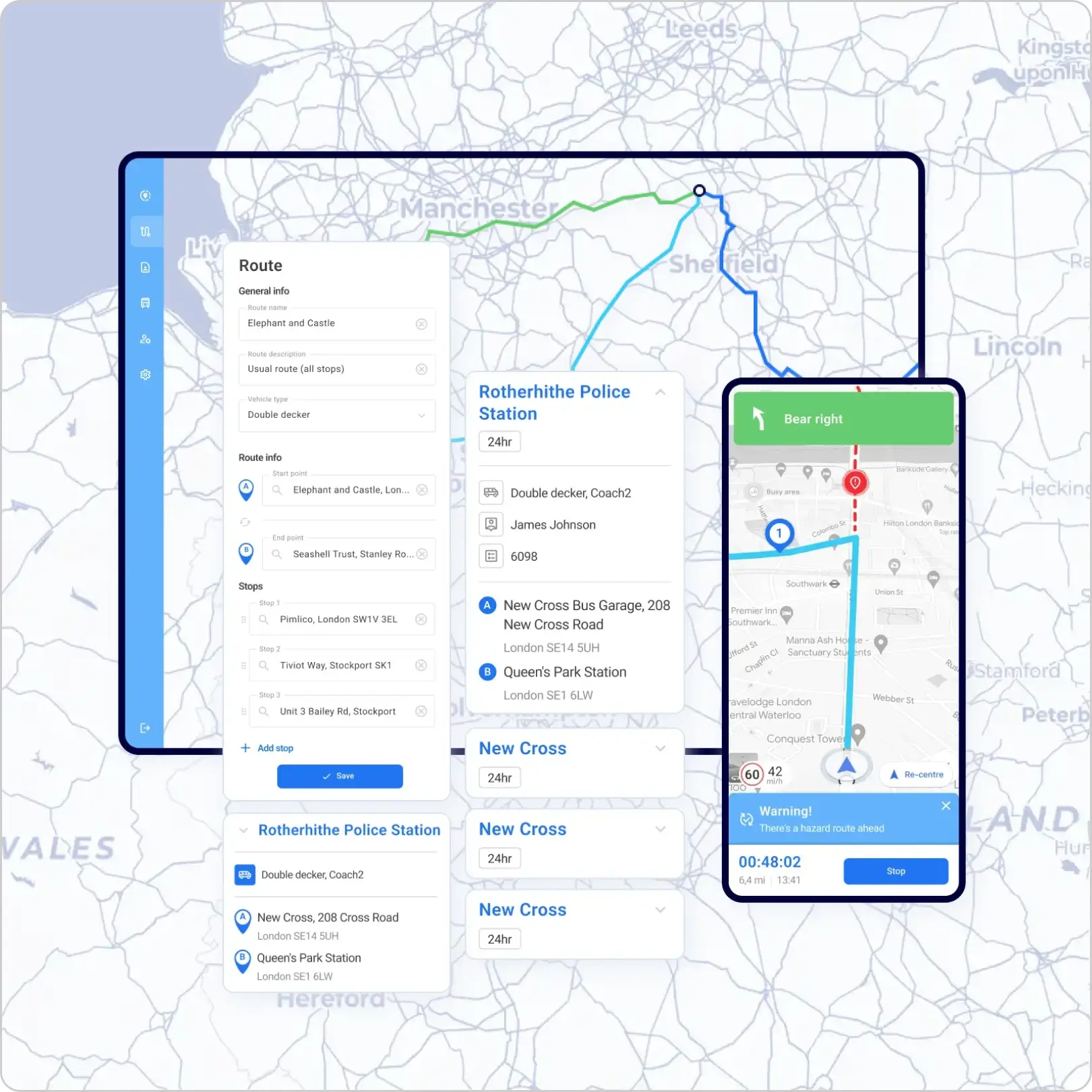
Customized maps and turn-by-turn navigation tuned to your fleet’s restrictions, load limits, and delivery windows.
Head of Client Relations

You won’t fight specs or send endless change requests. A 99.89% acceptance proves we deliver what was agreed.
Let AI models recalculate routes instantly when conditions change. Keep deliveries on track despite traffic or delays.
Predict traffic patterns with AI-powered analysis of your delivery routes. Avoid congestion before your drivers hit it.
Let AI flag operational issues early: detect fuel spikes, route deviations, and unusual patterns faster.
Automate invoice matching with AI trained on your data. Cut reconciliation time and reduce billing disputes.
$15,000 to $50,000
Minimize risks and build a small-scale prototype
$50,000 to $100,000
Launch your logistics software with minimal initial investments
$100,000 to $500,000
Launch a monetization-ready app for the transportation industry
$500,000+
Prepare to beat your transportation competitors right away
Custom logistics software solutions are built around how your operations actually work. Instead of forcing your team to adapt to generic tools, the system reflects your workflows, roles, and business rules, covering the exact features you need and avoiding unnecessary complexity.
This approach reduces manual work, improves visibility across routes, warehouses, and fleets, and supports automation where it has the biggest operational impact. Because the platform is designed specifically for your setup, it integrates cleanly with existing systems such as ERP, WMS, TMS, and telematics. As operations grow, the software scales with your processes, helping you maintain efficiency, accuracy, and control over the long term.
Logistics software development services usually cover the full delivery cycle, starting with discovery and preparation. During this stage, teams clarify business goals, workflows, data sources, and technical constraints to define a clear scope and avoid issues later in development.
The process then includes system architecture design, development, testing, and deployment. Most vendors also handle integrations with telematics platforms, ERP, WMS, TMS, and third-party APIs to ensure data flows smoothly across systems. After launch, logistics software development services often continue with post-release support, performance tuning, and updates, helping the platform remain stable, secure, and reliable as operational demands grow.
Yes. Custom logistics platforms are typically designed with integrations in mind from the start. Logistics software development services often include connecting the system to GPS tracking tools, telematics providers, ERP systems, WMS, TMS, payment services, and partner platforms that your operations already rely on.
These integrations use secure APIs and standardized data flows to keep information consistent and reliable across systems. This setup enables real-time visibility into routes, vehicles, orders, and inventory while reducing manual data entry and errors. When integrations are planned early, the platform remains stable as data volumes grow and new external systems are added to the logistics ecosystem.
Choose a partner with proven experience in your field and high-load systems. Logistics platforms often involve complex workflows, real-time data, and multiple integrations, so hands-on experience in similar environments makes a real difference.
Look for a logistics software development company with clear delivery processes, strong integration expertise, and a solid understanding of operational risks. A reliable partner explains technical trade-offs upfront, plans architecture with scalability in mind, and shows how they maintain data accuracy and system stability in live logistics environments. Evidence such as case studies, measurable results, and transparent communication practices helps confirm that the team can deliver predictably and at scale.
Yes. Logistics software is often designed to work across both Android and iOS devices using shared business logic or cross-platform approaches. This allows drivers, dispatchers, and managers to use the same system regardless of device, while keeping functionality consistent across the platform.
At the same time, logistics management software development allows for platform-specific features such as device hardware access or OS-level capabilities to still be supported where needed. By avoiding full code duplication, this approach simplifies maintenance, reduces development effort, and makes it easier to roll out updates across all devices as the logistics platform evolves.
Yes, as long as scalability is planned from the start. A well-designed logistics system relies on modular architecture, stable data flows, and clear boundaries between services, so growth does not introduce structural problems.
This approach allows the platform to handle more users, vehicles, orders, and data volume without reworking core logic. New features, integrations, or regions can be added incrementally while existing operations keep running. By designing for scale early, the system reduces the risk of downtime, performance issues, or costly architectural changes as logistics operations expand.
The two most common cooperation models are end-to-end custom logistics software development and dedicated teams. Each model supports different levels of involvement and long-term planning.
End-to-end development works best when you want a single partner to manage the full delivery process, from discovery and system design to development, testing, and launch. The vendor takes responsibility for coordination, timelines, and quality, giving you predictable progress and one point of ownership.
Dedicated teams fit companies that already have internal product or operational leadership and need ongoing engineering capacity. In this model, developers integrate into your workflows, follow your priorities, and scale up or down as needs change, while you retain control over direction and roadmap.
You can avoid vendor lock-in by establishing clear ownership and transparency from the start. This includes retaining full rights to the codebase, design assets, documentation, and infrastructure access, so the product never depends on a single vendor’s environment or tools.
Using standard, widely supported technologies also makes the system easier for another team to maintain or extend in the future. A reliable logistics software development company designs systems with clean architecture and clear documentation, and prepares a structured handover process. This ensures the platform can be transferred to another vendor or internal team without disrupting live logistics operations.
Software quality after launch depends on continuous monitoring, regular updates, and structured QA practices. Teams track system performance, data accuracy, and error rates to spot issues early, before they affect daily logistics operations.
Planned updates follow clear validation steps, including automated testing and pre-release checks, to ensure new changes do not introduce regressions. Staged deployments and defined rollback procedures provide additional safety, allowing teams to respond quickly if an issue appears in production. Together, these practices help keep the logistics platform stable, reliable, and ready to support ongoing operational growth.
Timelines of custom software development for logistics depend on the scope of the platform, required integrations, and overall operational complexity. A focused logistics system covering core workflows and basic integrations can often be built in around 6 months.
More advanced platforms that include route optimization, telematics, real-time tracking, analytics, and multiple third-party integrations usually take longer. A structured discovery phase at the start helps define priorities, confirm technical constraints, and set realistic timelines. This approach allows teams to deliver the most important functionality first while planning future phases without disrupting ongoing operations.
AI brings the most value to logistics software when it improves everyday operations rather than adding complexity. Common use cases include route optimization that accounts for traffic, delivery windows, and vehicle constraints, as well as demand forecasting that helps plan capacity and reduce last-minute changes.
AI can also support predictive maintenance, automated dispatching, and anomaly detection, such as identifying unusual fuel usage, route deviations, or delivery delays early. When applied to real operational data and existing workflows, these capabilities help reduce costs, improve reliability, and enable faster, data-driven decisions across logistics operations without disrupting established processes.
Yes. Custom logistics software is often designed to consolidate several disconnected tools into one unified platform. Instead of switching between separate systems for routing, tracking, invoicing, reporting, and communication, teams can manage daily operations from a single interface built around their workflows.
By centralizing data and automating handoffs between processes, custom software reduces duplicate data entry, inconsistencies, and manual coordination. This not only simplifies day-to-day work for drivers, dispatchers, and managers, but also improves visibility and control across the entire operation. Over time, replacing multiple tools with one tailored platform helps lower operational costs and makes scaling easier as logistics needs grow.
The main cost drivers in logistics software development services are scope, integrations, and operational complexity. Features such as real-time tracking, route optimization, telematics, analytics, and role-based access require more engineering effort than basic workflow automation.
Integrations also have a significant impact on cost. Connecting ERP, WMS, TMS, telematics providers, payment systems, or custom internal tools increases complexity, especially when data needs to stay synchronized in real time. Other factors include UI requirements for different roles, supported platforms and devices, security standards, and scalability needs.
We help small and mid-sized logistics businesses scale without adding headcount. Automate routing, invoicing, dispatching, and tracking, and get a platform that is ready to grow with you.
Handle complexity at the scale your operation demands. We architect platforms that manage multiple facilities, thousands of daily orders, diverse fleets, and integrate with your existing systems.