Post-launch development
Clockwise development team
UI/UX designer (on demand)
The majority of the tech team remained consistent through development and into the support phase. This continuity has meant that team members know the product inside out, can solve tasks quickly, and can proactively suggest solutions because they fully understand the product’s context.However, there was one major team change to navigate: Our project manager decided to continue her career elsewhere shortly after the first product release. With plenty of work still ahead, we couldn’t afford delays.

"Replacing a key team member mid-project is rare, but we know it can happen. That’s why we didn’t just cross our fingers and hope for the best — we prepared for all scenarios. It’s our job to handle such risks so the client never feels a drop in deliverable quality or communication.
I joined the SmartSkip project during the support phase, so naturally, I felt a bit short on context at first. But at Clockwise, we keep high standards for knowledge maintenance and transfer, which helped me get up to speed on the project in no time.How we prepare for knowledge transfer:- Well-documented project history in our task tracking system for quick access to past decisions and discussions
- Comprehensive project transfer checklist with credentials, stakeholder details, and communication channels
- Functional decomposition and user flow diagrams to understand how features work and connect
- Direct support from the existing tech team, who knew the product inside out
- Clear stakeholder register outlining roles, responsibilities, and preferred communication styles.”
Support and maintenance — what does it look like?
Since we launched with an MSP, the product was already fully functional, and the support phase does not require full-time involvement — there simply aren’t enough ongoing tasks. This gives our clients flexibility: most of the team works part-time, and the designer joins on demand when new features are being introduced.
Even in the support phase, we keep enhancing the product. We add new features, refine existing ones, and adjust functionality based on real user feedback and changing market needs, keeping SmartSkip relevant and valuable over time.
In the support phase, new functionality isn’t released nonstop — we work on it in batches. We develop and test a set of features, roll them out as an upgrade, and then scale back to support mode for a few weeks until the next round of development. This approach keeps the product evolving without unnecessary constant churn.
When something doesn’t work as the user expected, we step in to investigate. We analyze the user’s query, track down the root cause, and fix the issue to restore smooth operation.
When a user challenges a payment through their bank, Stripe asks us to prove the charge was valid. We review the user’s activity, prepare reports, and submit evidence to Stripe, protecting the client’s revenue from unfair chargebacks.
Recent SmartSkip improvements
💳 Updated pricing and trial conditions
We reviewed current plans, analyzed usage, and proposed new terms.
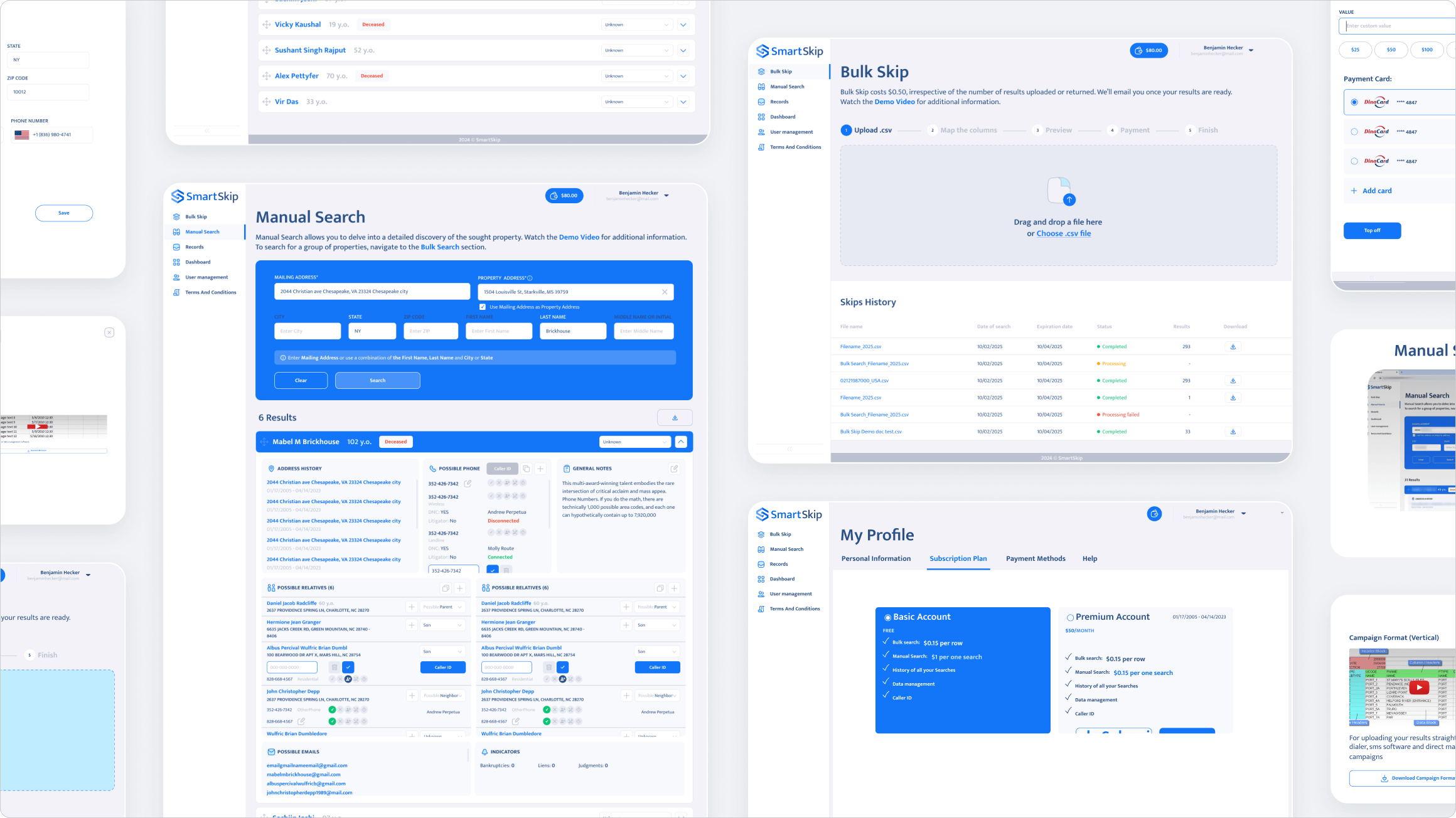
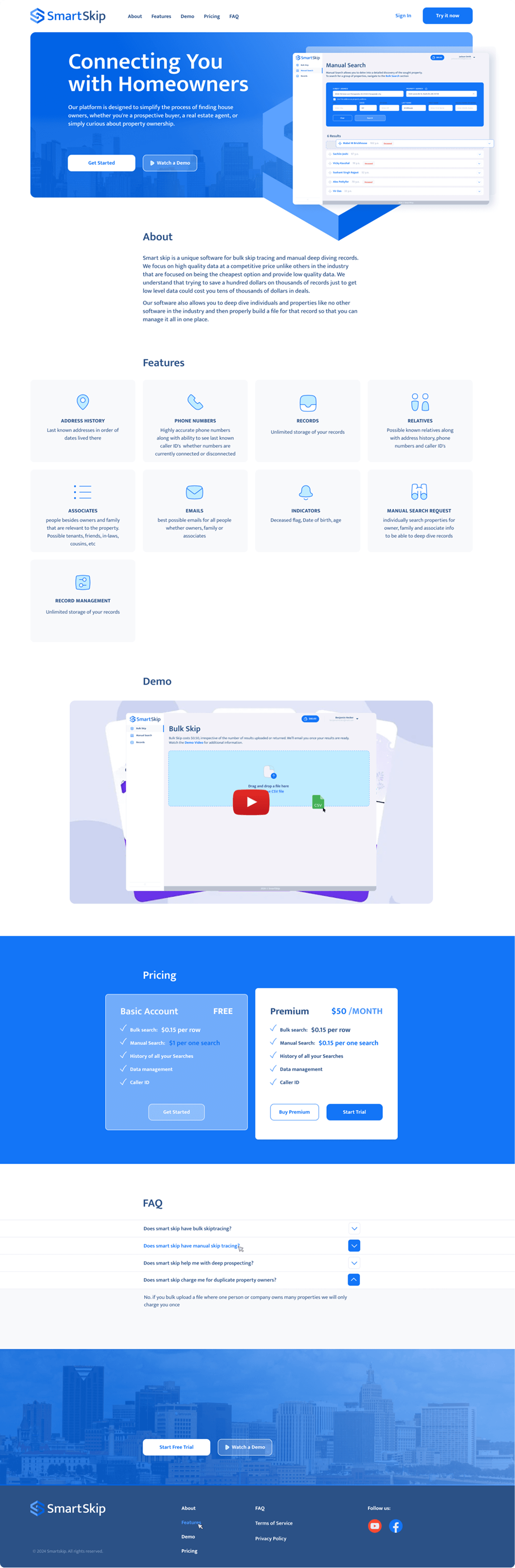
🔍️ Manual Search for all users
A former premium-only feature was opened to everyone, with updated logic across related functionality.
🗂️ Improved bulk search delivery
Instead of sending results by email, users now get a notification and can access files directly in the app.
✅ Vertical results format
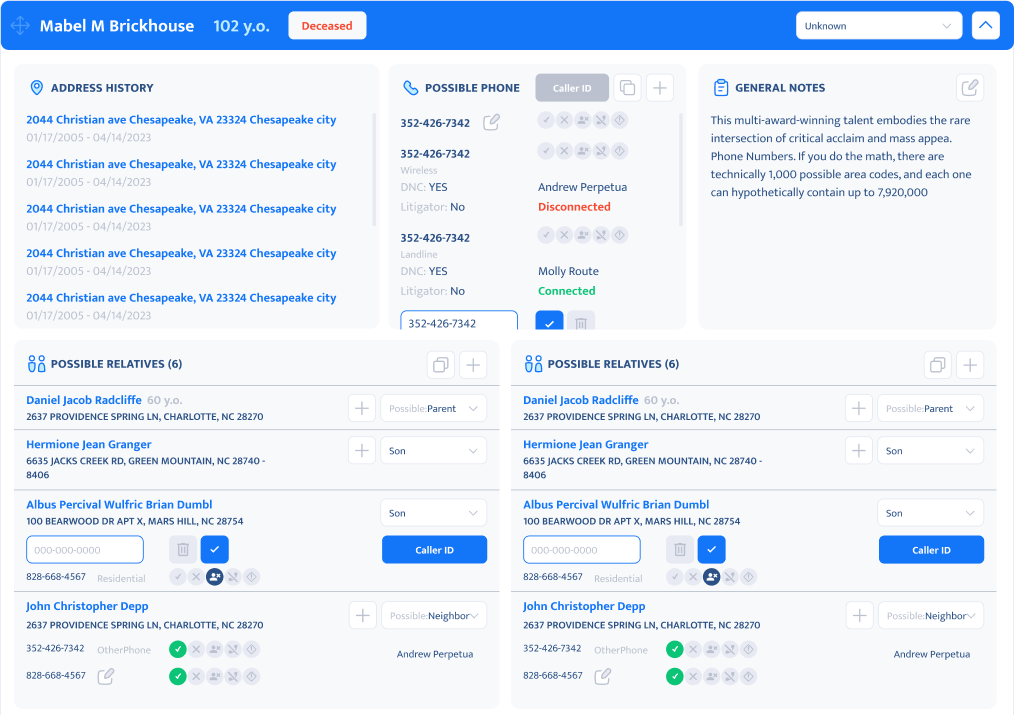
We introduced a new way to display and download search results, tailored for manual work with files rather than CRM uploads.
📈 Integration with Google Analytics
This allows us to track file downloads and monitor key marketing metrics.
💳 Updated pricing and trial conditions
We reviewed current plans, analyzed usage, and proposed new terms.
🔍️ Manual Search for all users
A former premium-only feature was opened to everyone, with updated logic across related functionality.
🗂️ Improved bulk search delivery
Instead of sending results by email, users now get a notification and can access files directly in the app.
✅ Vertical results format
We introduced a new way to display and download search results, tailored for manual work with files rather than CRM uploads.
📈 Integration with Google Analytics
This allows us to track file downloads and monitor key marketing metrics.