AI solutions
What we do
Services
Experts in
How we work




Handle high-volume matching and comparison automatically, reducing operational effort and removing repetitive manual decisions.
Consistently select better matches by learning from past results, real usage data, and historical outcomes.
Evaluate many factors at once and surface the most relevant options, without forcing users to analyze every variable.
Keep decisions consistent as real usage and transaction data grows, without constant rule updates or manual tuning.
Run matching directly inside your product, so workflows scale without manual reconfiguration, delays, or operational bottlenecks.
Provide clear rankings and explainable reasoning, helping users understand, trust, and act on recommendations.


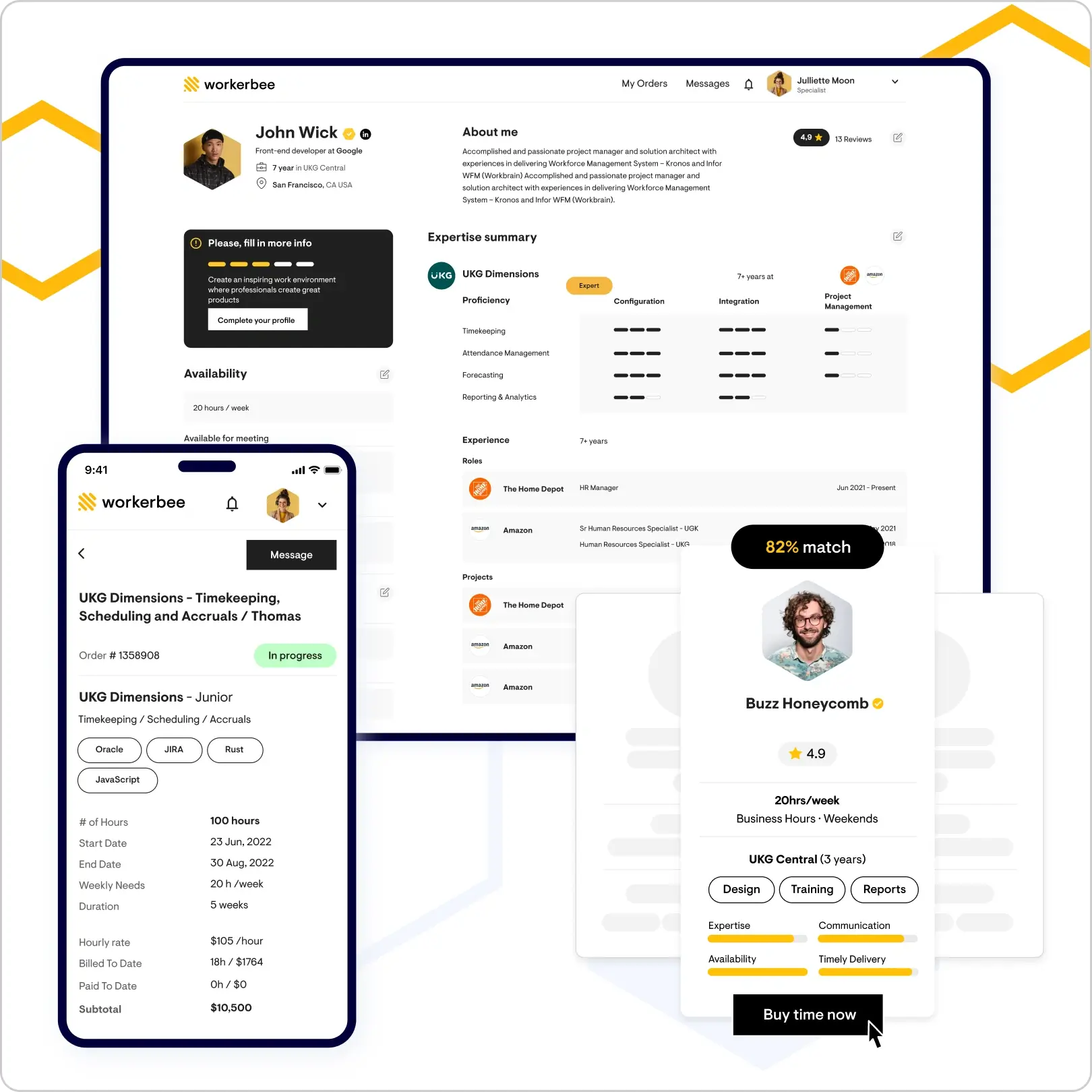
Added AI-powered feature that turned slow, multi-step user onboarding into an automated flow, resulting in enhanced UX and strengthened retention.
3
weeks delivery
67%
faster onboarding
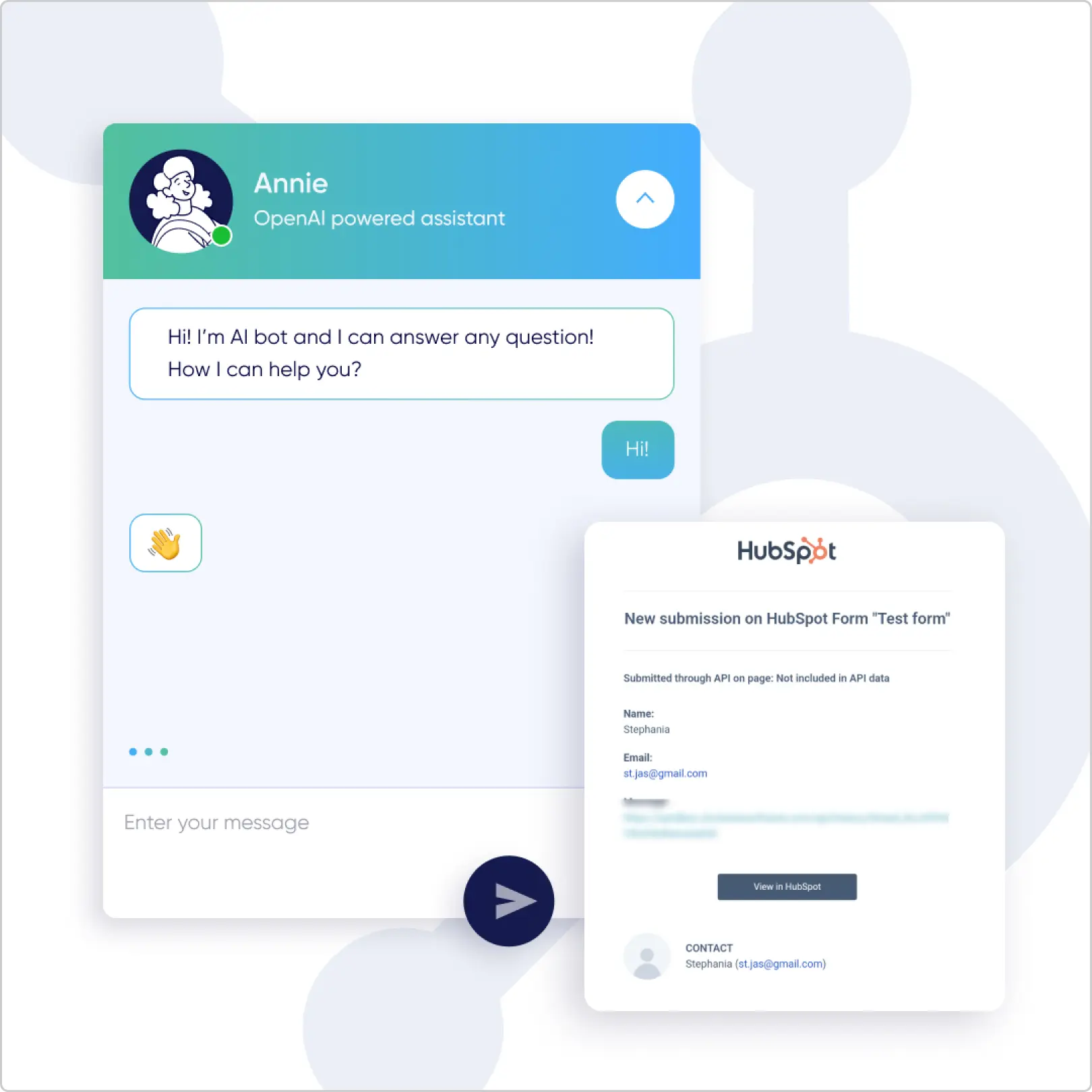
Added a GPT-4–powered assistant to the client's website to improve CRO and capture leads — fully integrated with HubSpot to streamline lead management.
1.5
months delivery
95%+
answer accuracy
500+
leads captured in 1 month
Over the last year, we delivered multiple AI matching engines that replaced manual rules, improved match relevance, and reduced manual lead routing, shortlisting, and qualification work.
20% of our engineers specialize in AI matching logic using embeddings, LLMs, and custom scoring. This allows us to build matching systems that stay accurate, explainable, and stable under real usage.
A decade of experience with complex integrations helps us keep data flows reliable and system behavior predictable. We integrate AI-enabled matching directly into existing products and workflows.
Since 2014, we’ve delivered 200+ projects, including SaaS, marketplaces, and ERP systems. That experience allows us to integrate AI matching into your product with predictable behavior, strong performance under load, and a user experience that feels natural and intuitive.
We build and operate AI matching systems for products where stability and accuracy directly impact revenue. Our matching logic runs in high-load environments where performance, reliability, and consistent results are critical to daily operations.
We use proven enterprise models such as GPT, Claude, Llama, alongside custom ML logic where needed. The result is predictable, explainable, and scalable matching behavior that holds up in production.

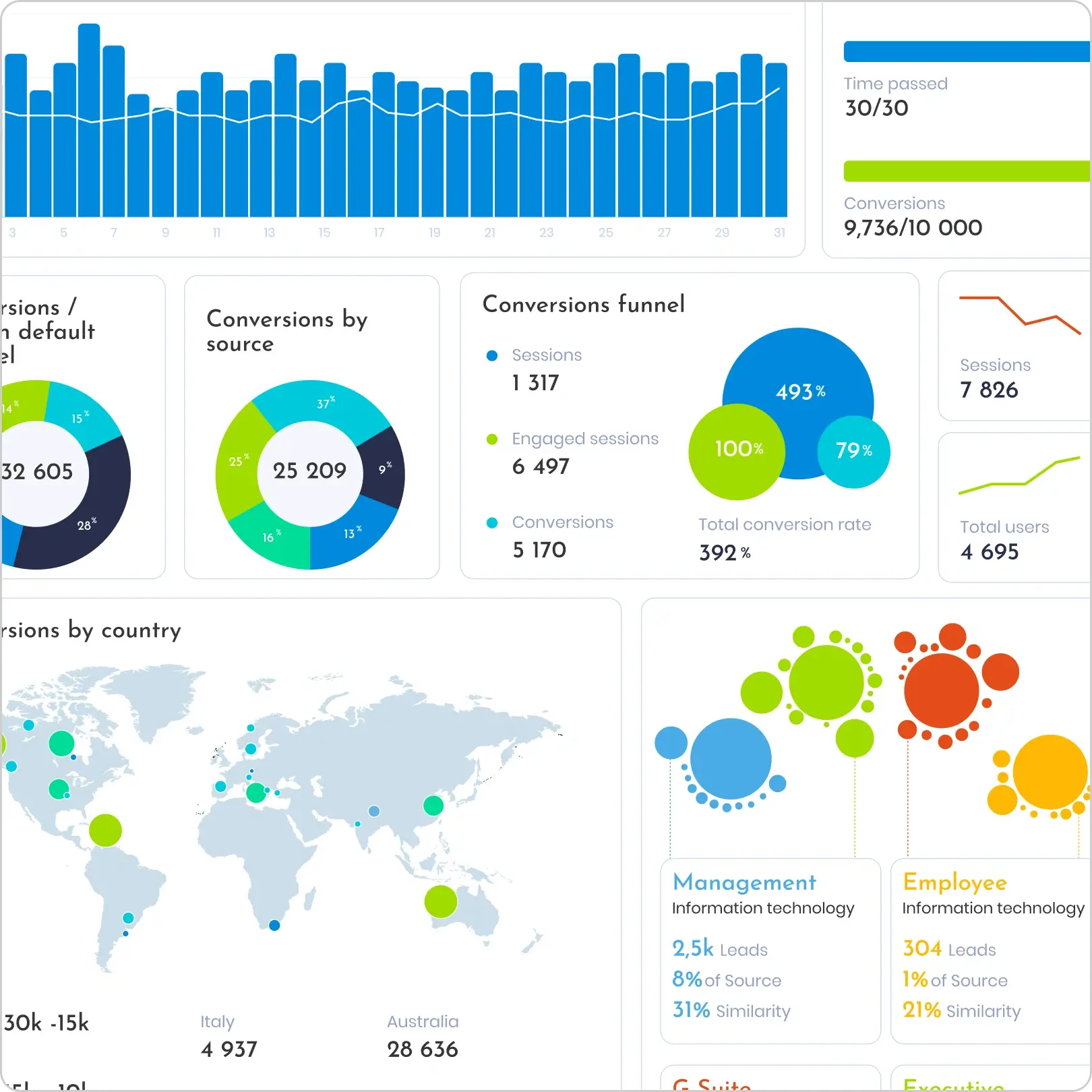
We replace manual comparison and improve match relevance with an AI matching engine, helping our clients increase the user loyalty index by 30% and prepare for Series A growth.
Connect buyers with providers and products based on multiple factors and historical data, without requiring extensive manual search or rule-heavy filtering.
We automate lead routing and prioritization with AI, helping clients reduce manual qualification work while improving how quickly high-intent prospects reach the right sales teams.
Analyze intent, behavioral signals, and contextual data to route leads automatically inside CRM systems like HubSpot without relying on complex manual rules.
We design AI matching systems that remain stable under heavy operational load, supporting products where performance and accuracy directly influence revenue.
Process large volumes of operational data while maintaining consistent ranking quality and predictable system behavior in real production environments.
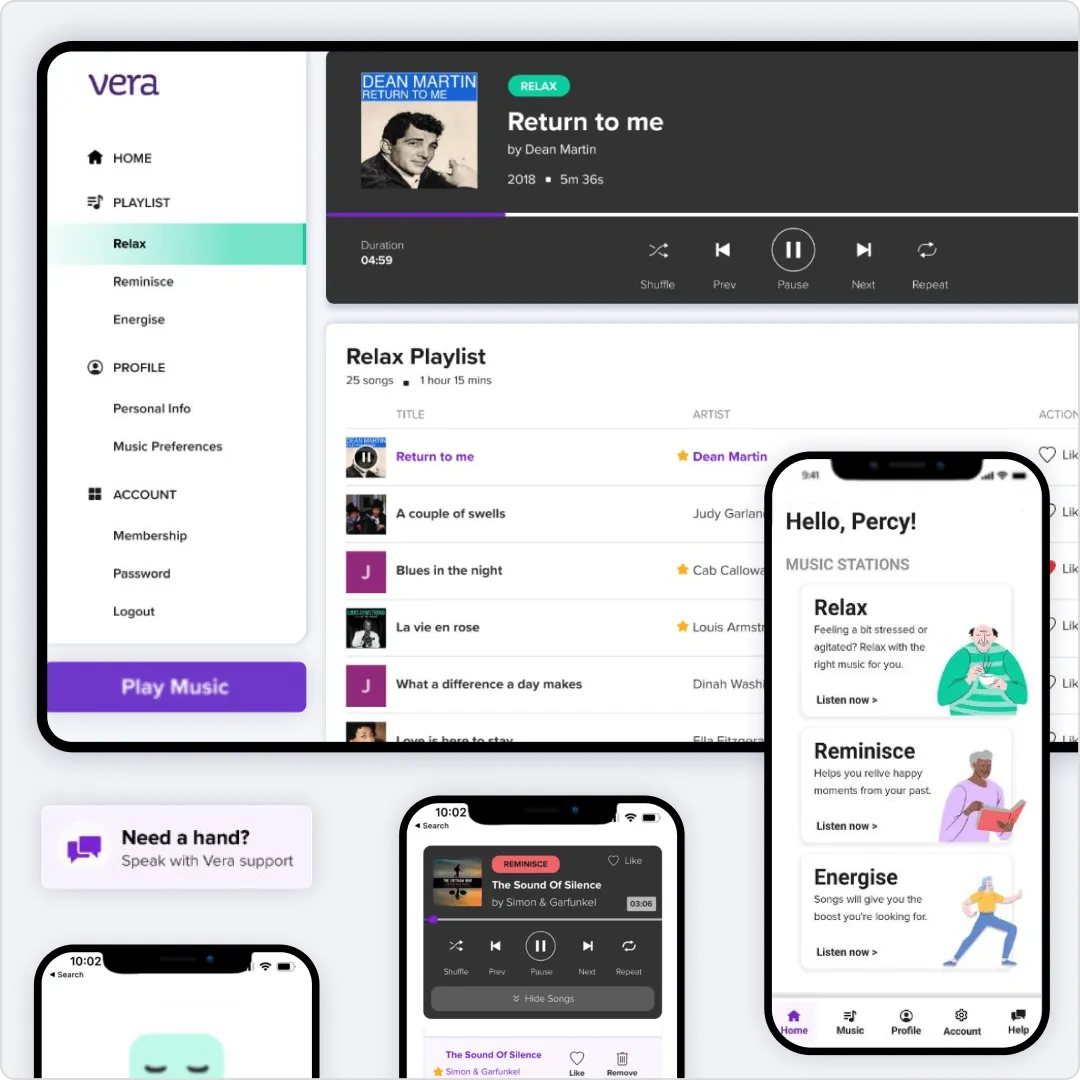
We embed AI matching directly into product workflows with explainable rankings, helping teams increase the share of returning customers by 30%.
Turn complex model outputs into intuitive interfaces that highlight the most relevant options without forcing users to analyze dozens of variables.























Solution architect

We build AI matching engines that deliver better results while staying within real-world latency and load constraints.
Automatically match leads to the right qualification flow, campaign, or sales owner based on intent, behavior, and data signals. Higher conversion rates, less lead leakage, and scalable routing as volumes grow.
Connect patients with providers, care plans, or services using medical, operational, and availability criteria simultaneously. Reduce coordination overhead, improve throughput, and get more consistent decisions across complex care workflows.
Assign candidates to roles, projects, or teams based on skills, experience, availability, and past performance. Cut time-to-hire, improve placement quality, and scale talent decisions without expanding HR operations.
Match buyers to sellers, requests to providers, or supply to demand using relevance-based ranking instead of static filters. Better match quality, higher transaction success, and stronger trust across the platform.
Surface buyers to properties, agents, or investment opportunities using preferences, constraints, and behavioral data. You get less search friction, better-fit options, and increased deal velocity beyond basic location and price filters.
Evaluate customers, transactions, or risk profiles against products, approvals, or workflows using multi-factor scoring. More consistent decisions, fewer manual reviews, and scalable, explainable financial logic.
We design and build AI features that fit real product workflows. From selecting the right models to integration and testing, we focus on AI that works reliably in production, aligns with business goals, and can be maintained as the product evolves.

We automate time-consuming workflows such as data handling, document processing, routing decisions, and internal coordination. AI logic is shaped around your existing processes, so automation reduces manual effort without disrupting how teams work.

We turn historical and real-time data into forecasts that support planning and decision-making. Models are tailored to your use case, and insights are delivered through clear interfaces that fit naturally into the tools your team already uses.

We help turn operational data into revenue by extracting patterns and insights with AI. Create internal analytics products, partner-facing reports, or embedded features that package data into something your business can sell or scale.

We stabilize codebases affected by rushed changes or uncontrolled AI-generated code. Our work focuses on restoring structure, removing fragile logic, and making the system predictable and maintainable, so teams can keep building without constant firefighting.

An AI-powered matching engine becomes the stronger option when decisions rely on many interdependent variables that change frequently. This might include user preferences, behavioral patterns, historical outcomes, qualifications, availability, context, or operational constraints.
As soon as conditions multiply or conflict, rule sets grow complicated and harder to maintain. Teams often respond by adding more rules, adjusting exceptions, or building workarounds. This leads to inconsistent outcomes and high maintenance costs.
An AI engine evaluates all signals at once, identifies patterns that rules cannot easily express, and ranks options in a way that stays consistent even as data changes.
If your current filtering logic still produces stable results, adopting AI may not be necessary yet.
Yes. In most cases, an AI-enabled matching engine is embedded into existing systems rather than built as a standalone tool.
Integration typically involves connecting the engine to the current data sources, APIs, and backend logic that already support your workflows. The results from the engine are then presented through your existing interface, decision flow, or automated process.
This approach lets teams introduce AI gradually while keeping familiar tools and processes in place. It avoids disruptions, reduces risk, and removes the need for major system rewrites.
A successful integration considers latency, data ownership, permission controls, feature flags, and failure handling early on. These decisions ensure the matching engine behaves predictably even under load or imperfect conditions.
Predictability comes from system design, not from the model alone.
AI-powered matchmaking engines blend probabilistic scoring from a model with deterministic rules, thresholds, and constraints. The model provides flexibility and pattern recognition. The constraints ensure that recommendations remain aligned with business rules, compliance requirements, or operational limits.
This hybrid approach avoids black box surprises and creates a stable decision framework that is easy to monitor and adjust.
Teams also maintain predictability by validating outputs against expected behavior, monitoring results in production, and refining scoring or constraints as data evolves. This creates consistency across similar cases and prevents unexplained ranking shifts.
Yes. Explainability is a core part of modern AI-enabled matching systems.
Rather than presenting a ranking without context, the system can show which factors influenced the outcome most, highlight how a candidate or option aligns with key criteria, or visualize differences between competing choices.
This transparency helps users understand the logic behind recommendations, trust the results, and step in when human judgment is needed. It is especially important in industries where decisions affect customers, finances, or regulatory compliance.
Explainability also supports internal teams by reducing questions like “why did the system choose this” and making debugging or auditing much easier.
Not necessarily. Many AI-powered matchmaking apps work well with limited or imperfect data when built on pre-trained models and combined with domain-specific logic.
What matters more than raw volume is signal relevance and consistency. Early data assessment helps determine whether embeddings, heuristic scoring, retrieval-based approaches, or lightweight fine-tuning are sufficient.
This avoids overengineering and keeps scope aligned with actual data maturity.
Imperfect data is common and does not automatically block development. Early analysis identifies gaps, inconsistencies, missing fields, and unreliable signals.
Based on this, teams can clean or normalize data, introduce proxy signals, limit scope, or design matching logic that degrades gracefully when inputs are weak. Addressing data risk early prevents unstable behavior later and keeps delivery predictable.
Yes. AI-powered matchmaking platforms are designed to evolve. Scoring logic, constraints, weights, and inputs can be adjusted incrementally without rebuilding the system.
As your product grows, new signals can be added, priorities adjusted, and outcomes re-optimized based on real-world feedback. This prevents relevance decay and allows matching quality to improve over time instead of stagnating.
Early data assessment identifies missing fields, inconsistent formats, duplicate entries, unreliable signals, or unstructured text that needs parsing. Based on this assessment, teams decide whether to clean or normalize the data, supplement it with proxy indicators, or adjust the matching logic so it remains stable even when inputs are weak.
The goal is to prevent unpredictable behavior caused by poor inputs. Designing for graceful degradation ensures the system still makes reasonable decisions when data is incomplete.
By addressing data risks early, teams reduce rework later and keep implementation timelines predictable.
Timelines vary depending on complexity, integration depth, and data readiness.
In many cases, a production-ready matching engine can be delivered within a few months when the scope is clearly defined and built on proven AI components.
Discovery, technical assessment, and feasibility checks are critical in confirming requirements early. This prevents long experimentation cycles that do not translate into practical value.
A well-structured project focuses on launching a reliable, explainable engine quickly, then expanding based on real usage.
Successful matching engines require expertise in both AI and system integration.
A strong partner understands data structures, APIs, scoring logic, performance constraints, and user experience. They can design explainable scoring, document decisions clearly, and plan for post-launch tuning.
You should look for teams that emphasize transparency, modular design, and maintainability. You should also confirm their experience with similar workflows or industries, since domain context influences matching quality significantly.
A good vendor builds a system you can maintain and evolve, not a black box that is difficult to understand or extend.
All matching logic, data pipelines, documentation, and source code are transferred to you upon delivery.
Clear ownership ensures long-term control, supports future development, and prevents lock-in with a single vendor. This agreement should be defined at the start of the project.
Ownership also enables you to bring development in-house later without needing a costly transition phase or reverse engineering.
After launch, work usually focuses on monitoring behavior, validating outcomes, and refining logic based on real usage. An AI-powered matching engine improves with feedback, so post-launch tuning helps keep results relevant, stable, and aligned with changing data and business needs.